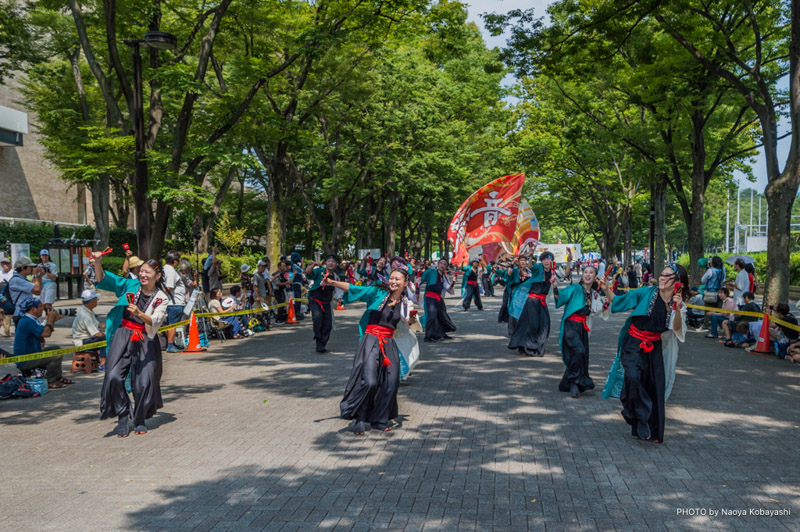
Super Yosakoi 2026 Held in Harajuku and Omotesando!
Harajuku Omotesando Genki Matsuri Super Yosakoi 2026 will be held on August 29 and 30. Dancers perform at Meiji Jingu and Yoyogi Park. Roads will be closed; parking is unavailable.
While Yosakoi is performed in various places, the city center is no exception. The Harajuku Omotesando Genki Matsuri Super Yosakoi 2026, one of the largest Yosakoi festivals in the metropolitan area, will be held over two days on Saturday, August 29, and Sunday, August 30, 2026. Set in the heart of Tokyo, the trendsetting Harajuku and Omotesando area, thousands of dancers from 107 teams across Japan and overseas will showcase their dynamic performances. These two days, where the solemn atmosphere of Meiji Jingu Shrine and the modern streets of Harajuku merge with heat, have become established as a major summer tradition that wraps up Tokyo's summer. This article provides a comprehensive overview of this passionate festival's historical background, its connection to the birthplace Kochi, and comparisons with other festivals.
The History of Harajuku Omotesando Genki Matsuri Super Yosakoi and Its Origin#
The history of Harajuku Omotesando Genki Matsuri Super Yosakoi dates back to 2001. At that time, amid a lingering economic downturn and a sense of social stagnation after the bubble economy collapsed, the local shopping district (Harajuku Omotesando Keyaki-kai) took the lead to plan this festival with the strong desire to restore vitality to the town and give dreams and hope to the young people who will shape the future.
Meiji Jingu Shrine, the symbol of Harajuku, fully cooperated in this endeavor. By being positioned as a dedication festival (Hono Matsuri) to honor the virtues of Emperor Meiji and Empress Shoken, the enshrined deities of Meiji Jingu, the festival gained high prestige and a sense of local unity.
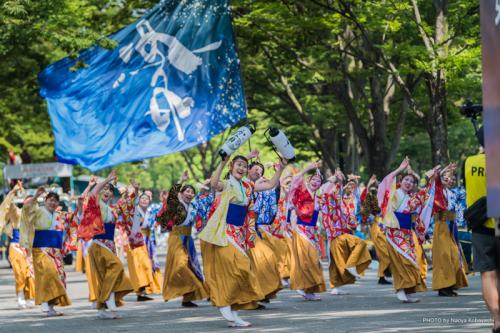
The groundbreaking attempt to dance traditional Yosakoi in the middle of a metropolis fascinated many participants and spectators from its first year, and rapidly grew into a summer event representing Tokyo. Although it started with only a few dozen teams, its scale has expanded year by year, and it has now established itself as the largest Yosakoi festival in the metropolitan area with over 100 teams gathering from all over the country. A grassroots activity that began with the revitalization of the shopping district has now transformed into a massive festival that transmits culture to all of Japan and the world.
Basic Rules of Yosakoi and the Free Expression of Super Yosakoi#
Yosakoi originally originated in Kochi Prefecture, but it is characterized by an extremely high degree of freedom in dance and music. However, to maintain its identity as Yosakoi, a few absolute basic rules exist. The first rule is that dancers must dance while holding and sounding Naruko clappers in their hands. Naruko were originally tools used in fields to scare away birds, but in Yosakoi, they function as an important instrument to mark the rhythm. The second rule is that the music used must include a phrase from the Yosakoi Naruko Dancing song. The third rule is that the basic style must be a parade dance (Nagashi-odori) where dancers move forward while performing.
As long as these minimal rules are observed, the costumes, music genres, and choreography are left to the discretion of each team. In Super Yosakoi, this freedom is demonstrated to the fullest, allowing spectators to enjoy one-of-a-kind dance performances that fuse traditional Japanese styles with modern and diverse genres such as street dance, hip-hop, jazz dance, rock music, and electronic music. Dancers' costumes are also highly diverse, ranging from traditional Happi coats and kimono styles to glamorous costumes arranged in a modern style, ensuring that the audience is never bored visually.
Column: The Sound of Energy Played by Naruko
The charm of Super Yosakoi is not just in watching, but also in the brisk sound of the Naruko clappers played by the dancers echoing throughout the town. Each team prepares custom Naruko to match their costumes and music, and paying attention to their colors and shapes makes the festival even more enjoyable.
Connection and Comparison with the Birthplace Kochi Yosakoi Festival#
Harajuku Omotesando Genki Matsuri has shown sincere respect to the original Yosakoi Festival in Kochi Prefecture, and from the planning stage, has maintained close coordination with Yosakoi organizers in Kochi to pass down the tradition correctly. Even today, Kochi Prefecture, Kochi City, and the Kochi Chamber of Commerce and Industry are listed as sponsors, and staff from Kochi are involved in the operation and judging. This ensures a system where visitors can experience the heat and high technical level of the birthplace while remaining in Tokyo.
In the 2026 festival, 22 highly skilled teams from Kochi will travel to Harajuku to showcase their refined dance styles. While the original Yosakoi in Kochi has a traditional heat closely linked to local shopping districts, Harajuku's Super Yosakoi has the brilliance of a cultural showcase where diverse teams from all over Japan and overseas compete in the latest trendsetting location. The fusion of these two different personalities in Harajuku expresses the diversity and depth of Yosakoi culture.
Comparison with Other Major Festivals in Tokyo#
Many famous festivals are held in Tokyo during the summer, but Super Yosakoi has a unique charm that distinguishes it from others. The table below summarizes the key differences between Super Yosakoi, Tokyo Koenji Awaodori, and Asakusa Samba Carnival, which are also held in late August.
| Festival Name | Music and Dance Style | Main Features and Charm |
|---|---|---|
| Harajuku Omotesando Super Yosakoi | Dancers use Naruko clappers. As long as a phrase of the traditional song is included, music and costumes are extremely free, ranging from rock to dance music. | Set in the Meiji Jingu forest and the trendsetting Omotesando. A modern festival where diverse teams gather to compete with creative performances. |
| Tokyo Koenji Awaodori | Two-beat accompaniment played by bells, drums, and shamisen. Dancers follow traditional men's and women's dance styles. | Boasting a history of over 60 years. Characterized by a community-based atmosphere led by shopping districts and the intense unity of teams. |
| Asakusa Samba Carnival | Passionate rhythms played by samba percussion bands (Bateria). Splendid steps and gorgeous costumes. | Recreating the original Rio Carnival in Brazil. It is a competition format, characterized by visual splendor and overwhelming energy. |
In this way, while Awaodori emphasizes traditional forms and inherited beauty, and Samba Carnival explodes with passionate Latin rhythms, Super Yosakoi's biggest difference is its pursuit of modern self-expression based on traditional rules. The high originality of each team stands out, filled with a dynamism that keeps spectators engaged until the end.
Highlights and Recommended Viewing Spots of the 2026 Festival#
Super Yosakoi 2026 will be held simultaneously across multiple venues on Saturday, August 29, and Sunday, August 30. Each venue offers a different charm.
1. Harajuku-guchi Stage (Meiji Jingu Torii-mae Stage)
A special stage set against the backdrop of the grand torii gate of Meiji Jingu Shrine. The performances in this solemn atmosphere convey a sacred beauty. This is one of the main stages where teams put in their greatest effort, showcasing brilliant performances worthy of dedication.
2. Omotesando Avenue (Parade Dance)
The parade dance along Omotesando Avenue, held from the afternoon on Sunday, August 30, is the highlight of the festival. Omotesando, which is usually busy with traffic, becomes a pedestrian zone, and the sight of dancers moving forward under the keyaki trees is spectacular. Spectators along the streets get highly excited, and the energy of the parade in the middle of the city is beyond words.
3. Yoyogi Park Stage and NHK Keyaki Namiki
Dances can be enjoyed in the spacious outdoor area of Yoyogi Park and the adjacent tree-lined avenue in front of NHK. Dancers and spectators are very close here, creating an intimate heat. It is a perfect spot to experience the dancers' dynamism up close under the sunlight filtering through the trees.
Enjoy Local Delicacies at Local Gourmet Fair Jiman-ichi 2026#
Another major highlight of Super Yosakoi is the Local Gourmet Fair Jiman-ichi 2026, held simultaneously at the Yoyogi Park B-area Event Square. Food booths from Kochi Prefecture, the birthplace of Yosakoi, and all over Japan gather here to bring local flavors together, heightening the festival's excitement.
The most popular dish is Kochi's specialty, Katsuo no Tataki (seared bonito). The bonito seared over straw fire on-site is fragrant and delicious. Kochi's local sake, specialty yuzu drinks, and regional B-grade gourmet foods are also lined up. Dancers who gather from across the country also visit between performances, making it a lively place for food-based exchange between dancers and spectators. Enjoying delicious food and drinks along with the excitement of the performances is a unique charm of Super Yosakoi. Oh! I want to eat bonito!
Spectator Manners and Precautions to Enjoy the Festival Safely#
To enjoy Super Yosakoi comfortably amid the large crowds every year, observing proper manners and precautions is essential. First, Harajuku and Omotesando in late August can be extremely hot and humid. Avoid using parasols in crowded areas as they can be dangerous, and carry hats and towels instead. Keep yourself hydrated and replenish salt to prevent heatstroke. Also, follow staff instructions along the parade routes and near the stages, and watch from the designated areas without leaning out.
When taking photos or videos, note that the use of tripods or monopods is restricted in some areas, and be careful not to block the view of other spectators. To protect the beautiful streets, remember to take your trash home or separate it for recycling. Experience the dancers' overflowing energy in the streets of Harajuku and Omotesando where tradition and innovation intersect, and make wonderful summer memories.
| Schedule | Performance Time | Main Venues |
|---|---|---|
| August 29 (Sat) | 10:00–19:30 | Meiji Jingu Harajuku-guchi, Yoyogi Park, Keyaki Namiki, etc. (*No parade on Omotesando Avenue) |
| August 30 (Sun) | 10:00–17:00 | Meiji Jingu Harajuku-guchi, Yoyogi Park, Keyaki Namiki, Omotesando Avenue (Parade starts from 11:30) |