Autumn Flavors 2026! Saury and Salmon Catch Forecasts vs. Reality
Explore the 2026 autumn seasonal fish in Japan. Check the latest catch forecasts for Pacific saury, autumn salmon, and return bonito, along with delicious recipes and famous fishing ports.
Although hot days continue, autumn flavors are being shipped from ports with early landings without waiting for next week, and are starting to appear in stores. Especially from late August to early September, the transition from summer to autumn brings a major shift to autumn seasonal seafood. However, due to global climate change and rising sea temperatures, the marine environment surrounding Japan's popular fish that color our dining tables changes every year. For this autumn's seasonal fish, strict fishing conditions are predicted, with clear divisions between good and bad catches depending on the species. This article focuses on "Pacific Saury," the main star of autumn flavors, along with "Autumn Salmon" and "Return Bonito" which are currently in season, explaining the latest catch information, the status of domestic and international fishing grounds, famous fishing ports, and the best ways to enjoy them.
Current Status and Latest Forecasts for the 2026 Saury Fishery#
While saury represents autumn in Japan, the 2026 fishery is predicted to have an exceptionally tough start. According to the long-term fishery forecast announced by the Japan Fisheries Research and Education Agency in July, the amount of saury migrating to coastal waters (from eastern Hokkaido to Joban region) from August to December is expected to fall below last year's record-low catch. The saury resource itself is at a historic low, preventing schools from migrating south to Japanese waters.
As a result, primary fishing grounds have shifted to high seas (international waters) far from Japan. In these high seas, not only large Japanese vessels but also foreign ships from Taiwan, China, and South Korea are operating, leading to intense competition. Recently, due to global conflicts like the war in Ukraine and issues in Iran, fuel and labor costs have soared, making the round trip to distant fishing grounds a major cost burden. The sizes of caught saury are mostly small, with 1-year-old fish weighing 100 to 110 grams predicted to be the mainstay.
Major Saury Fishing Ports and Traditional Brands#
In saury fishing, several ports boast high national recognition. These ports are equipped with advanced facilities to quickly process and ship freshly caught saury.
1. Hanasaki Port, Hokkaido (Nemuro City)
Hanasaki Port boasts the highest saury landings in Japan. Taking advantage of its proximity to North Pacific fishing grounds, large quantities of fresh saury are landed here early in the season and shipped rapidly. Every autumn, the "Nemuro Saury Festival" is held here, serving charcoal-grilled saury, making it a regional symbol. In contrast to the government forecast, the new saury landed in Nemuro City on the 17th of this week was large and fatty, allowing officials to breathe a sigh of relief. Retail prices are around 200 to 600 yen, similar to average years. What a relief. If landing numbers rise, prices will stabilize further.
2. Kesennuma Port (Miyagi Prefecture) and Ofunato Port (Iwate Prefecture)
The Sanriku Coast's Kesennuma and Ofunato ports serve as major bases on the main island. Vessels operating off the Sanriku coast enter one after another, leading to lively auctions. Saury caught in the cold Sanriku waters with firm flesh and moderate fat have high brand value, highly regarded in markets like Toyosu.
Column: Points to Identify Premium Saury
When selecting delicious saury at stores, choose those with a blue-black shiny back and a silver belly. A yellow beak is proof of high fat content and freshness. A thick body that stands straight and firm when held is of excellent quality.
Crisis of "Autumn Salmon", Another Star Announcing Autumn#
Autumn salmon faces a bleak outlook. Landings in Hokkaido, which have been halving every year, are expected to drop to only about 6% of their peak years. Naturally, the price of salmon roe (Ikura) has risen significantly.
This historic poor catch is caused by rising ocean temperatures due to global warming. High coastal water temperatures in spring, when fry migrate to the sea, and deteriorated feeding environments in the North Pacific have caused the number of returning salmon to plummet. While long-term measures such as establishing closed areas and improving release methods are underway, they have not yet shown clear effects.
Saviour of This Autumn? Recovery of Fatty "Return Bonito"#
While saury and salmon face tough predictions, bonito is providing bright news for autumn 2026. Despite severe catches last year due to ocean anomalies, stable catches have been maintained since spring, and a steady landing is expected for the autumn season.
Return bonito refers to bonito that migrated north on the Kuroshio current in spring, fed heavily in cooler waters, grew plump, and is caught as it moves south. Compared to the lean spring bonito, return bonito is rich in high-quality fat, often called "Toro Bonito". Those landed in Miyagi and Fukushima prefectures are of exceptionally high quality, expected to support Japanese dinner tables this autumn.
Comparison of Representative Autumn Fish#
We summarized the characteristics, landings, and tastes of the three representative autumn fish in a comparison table.
| Fish Species | 2026 Forecast & Characteristics | Famous Landing Ports | Taste & Appeal |
|---|---|---|---|
| Pacific Saury | Very severe poor catch forecast. Mainly high seas fishing with many small fish. | Hanasaki (Hokkaido), Ofunato (Iwate), Kesennuma (Miyagi) | Unique bitter innards and fragrant skin. Salting and grilling enhances the fat's flavor. |
| Autumn Salmon | Historic poor catch forecast. High sea temperatures lower fry survival rates. | Shibetsu (Hokkaido), Nemuro (Hokkaido), Miyako (Iwate) | Flesh is lean and suitable for simmering or baking. Plump salmon roe is also attractive. |
| Return Bonito | Steady catches expected. Extremely rich in fat and of high quality. | Kesennuma (Miyagi), Katsuura (Chiba), Yaizu (Shizuoka) | Rich, fatty, and savory flavor. Searing creates a fragrant, delicious Tataki. |
Delicious Recipes and Cooking Methods to Fully Enjoy Seasonal Flavors#
Here are recommended cooking methods to bring out the best flavors of freshly caught fish at home.
1. Saury: Classic Salt-Grilled with Grated Daikon
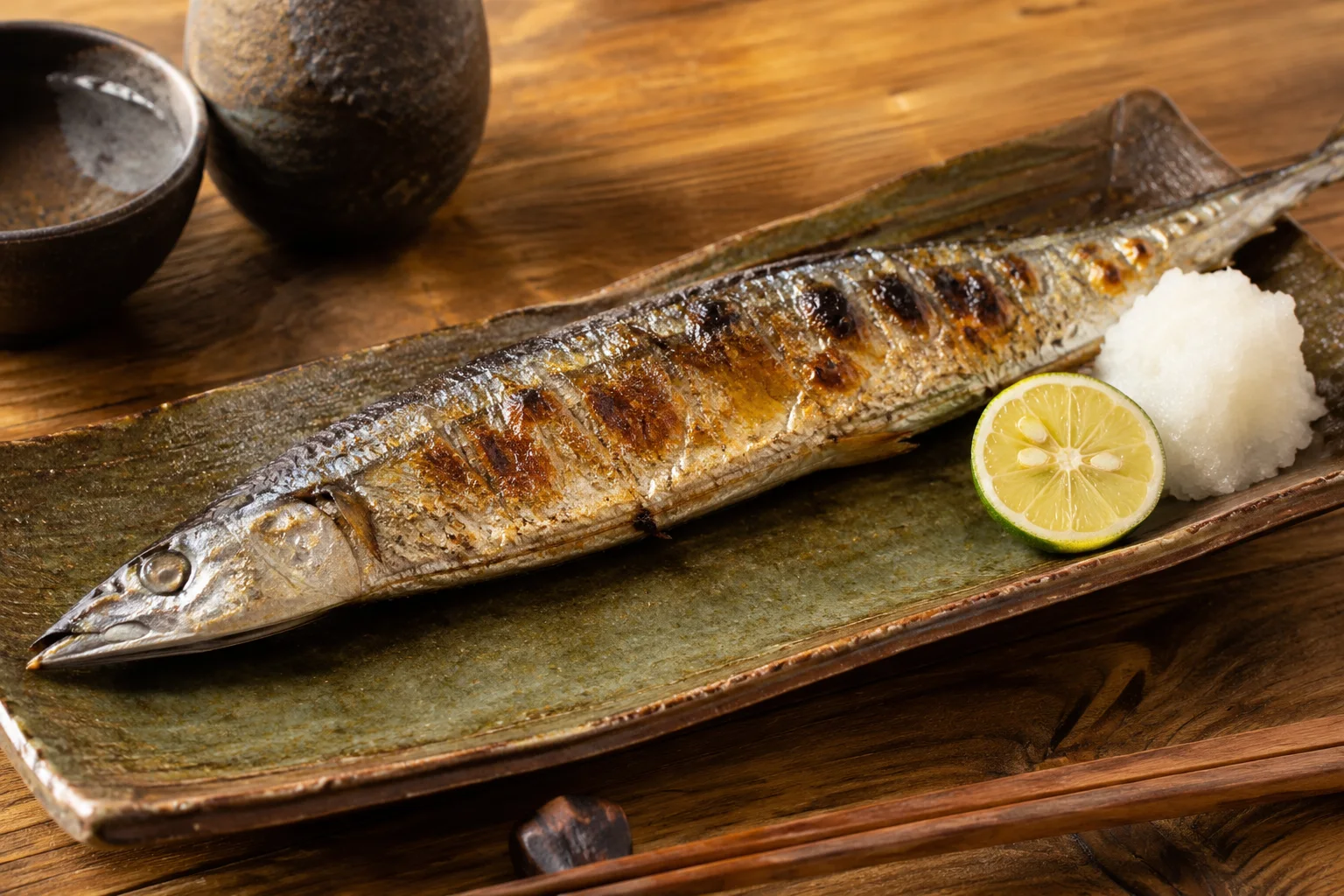
Fresh saury is best "salt-grilled." Sprinkle salt on the fish 30 minutes before grilling, wipe off excess moisture, and grill over high heat. The bitter innards are delicious if the fish is fresh. Serving with grated daikon radish and citrus juice like Sudachi or Kabosu enhances the sweetness of the fat. Thinly sliced fresh saury sashimi is also an autumn luxury.
2. Autumn Salmon: Traditional "Chanchan-yaki"
Autumn salmon, which is firm and lean, becomes delicious when combined with oil or miso. "Chanchan-yaki," a Hokkaido local dish, is prepared by placing a salmon fillet over vegetables like cabbage, onions, and shimeji mushrooms on a hot plate, and steaming it with a sweet-savory miso sauce and butter. It makes a perfect side dish for rice.
3. Return Bonito: Fragrant Straw-Seared Tataki with Garlic and Soy Sauce
For fatty return bonito, "Tataki" is highly recommended. Sear the skin side quickly, chill immediately, and slice thickly. Serve with sliced garlic, green onions, shiso leaves, and ginger, along with soy sauce or ponzu. Wasabi soy sauce is also a wonderful way to enjoy return bonito sashimi.
The seasonal fish coloring Japan's autumn each have unique backgrounds and flavors. While catch conditions are challenging, let's enjoy these seasonal delicacies with gratitude for the ocean's bounty.