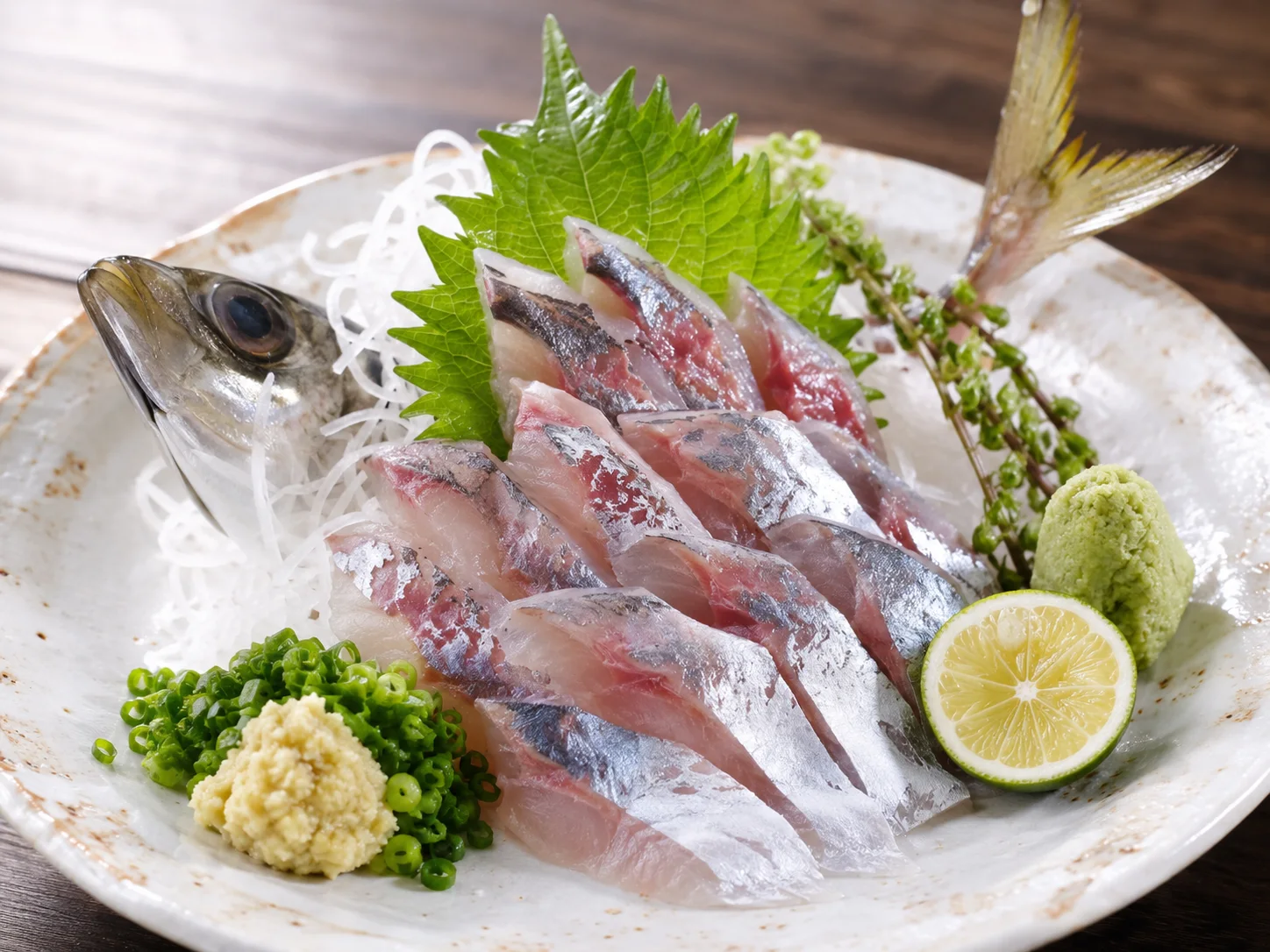
3 Major Summer Fish in Japan: Hamo, Ayu, and Ma-aji (July)
Discover 3 major summer fish in Japan on July: Hamo, Ayu, and Ma-aji. Explore their fishing status, market price trends, brand variations, and delicious recipes.
The end of the rainy season is expected around the 19th of July, and summer is approaching. In Japan's rich oceans and clean rivers, the major seasonal fish are filled with vitality, prompting food lovers to say, "Now is the best time to eat them!" These river and ocean delicacies symbolize summer food culture, stimulating our senses and providing excellent energy to overcome the hot summer.
In this article, we highlight three exquisite fish representing July: the flower of summer in Kyoto "Pike Conger (Hamo)," the queen of clear streams "Sweetfish (Ayu)," and the absolute king of the dining table "Horse Mackerel (Ma-aji)." We explain the fishing status, market price trends, coveted brand regions, and delicious ways to eat them in an easy-to-read comparison table. Read on to discover a summer feast guide that will make you want to rush to the fish market or restaurant.
Comparison of Major Seasonal Fish in July#
First, we summarize the basic seasonal status, origin, price trends, and recommended cooking methods for the three fish in a comparison table. Although they are all summer fish, they have completely different characteristics depending on whether they grow in rivers or oceans, and their ecological habits. Oh, just looking at the word 'Ayu' makes Kuroto's stomach rumble loudly!
| Fish Name | July Status & Stage | Famous Brand Regions | Market Price Trend (July 2026) | Recommended Cooking Method |
|---|---|---|---|---|
| Hamo (Pike Conger) | The best time to enjoy firm meat and clean umami before spawning. Essential for summer festivals in Kansai. | Awaji Island (Hyogo) "Beppin Hamo", Tokushima, Ehime, Yamaguchi, Oita | 1,000 to over 2,000 JPY per kg. Prices rise during summer festival seasons due to high demand. | Yubiki (blanched) with plum paste, Hamo-suki (hot pot), Tempura |
| Ayu (Sweetfish) | The transition phase from young fish to adult fish. A golden month when bones are still soft and the aroma is at its peak. | Kuma River (Kumamoto), Kano River (Shizuoka), Nagara River (Gifu), Shimanto River (Kochi) | Farmed products are stable. Wild products are rare and expensive (top quality can cost tens of thousands of JPY). | Salt-grilled (on high, distant heat), Segoshi (thin bone-in slices), Tempura |
| Ma-aji (Horse Mackerel) | The peak season when the fish accumulates high-quality fat for spawning, making the sweetness and umami strongest. | "Seki Aji" (Oita), "Donchitchi Aji" (Shimane), "Kogane Aji / Kin Aji" (Chiba) | Several hundred to over 1,000 JPY per kg. High-quality brands are expensive, but standard ones are very affordable. | Sashimi, Tataki, Namerou, Deep-fried (Aji fry), Salt-grilled |
*Market prices vary depending on wholesale market trends, weather and water temperature changes, and daily catch amounts. When purchasing, check the origin and whether it is wild or farmed.
Kyoto's Summer Flower "Hamo": Essential Festival Fish and Artisan Skills#
Speaking of summer in the Kansai region, especially Kyoto and Osaka in July, "Hamo (Pike Conger)" is an absolute necessity. With its elegant white meat and deep umami, Hamo has been highly prized as the ultimate summer delicacy since ancient times.
1. Amazing Vitality and Kyoto's Food Culture
The deep connection between Hamo and Kyoto stems from the fish's strong vitality. In the era before refrigeration, Hamo was one of the very few marine fish that could be transported alive to landlocked Kyoto during the hot summer. Surviving the hot journey, Hamo was valued by Kyoto citizens as the "vitality of the sea." As a result, Hamo cooking methods were highly refined in Kyoto, and the Gion Festival in July is also known as the "Hamo Festival," with the entire city celebrating Hamo culture.
2. The Art of "Hone-kiri" (Bone Cutting)
To enjoy Hamo, the outstanding knife technique called "Hone-kiri" is essential. Hamo has many hard, fine bones throughout its body. Pirotechnicians cut the meat and small bones at regular intervals, leaving only the skin intact. Master chefs make 24 to 26 cuts per 3 cm. When heated, the meat opens beautifully like a peony flower, creating an exquisite texture.
3. Awaji Island's "Beppin Hamo" and Delicious Recipes
Awaji Island in Hyogo Prefecture is famous for Hamo. Hamo around Nushima Island in the south has soft skin and plump, sweet meat, branded as "Beppin Hamo" or "Golden Hamo."
The best way to eat it is "Yubiki." Briefly blanched in hot water and cooled in ice water, it is served with refreshing plum paste (ume-niku) or vinegar miso. "Hamo-suki" (Hamo hot pot) with Awaji Island's sweet onions is another local specialty that perfectly matches the sweetness of onion and Hamo umami.
【Tips for Enjoying Hamo at Home】
Since bone cutting is key, it is extremely difficult to prepare raw Hamo at home. When buying, purchase pre-cut Hamo. If you buy a blanched pack, bring it to room temperature slightly before eating to enjoy the original sweetness of Hamo fat and aroma.
The Queen of Clear Streams "Ayu": July's Golden Month and River Aromas#
July is the season when "Ayu (Sweetfish)" shines brightest. Often called the "queen of rivers," Ayu is a traditional freshwater fish grown in beautiful rivers across Japan. July is highly praised by Ayu lovers as the golden month.
1. "香魚" (Aroma Fish) Eating Clean Moss
Ayu feeds mainly on high-quality diatoms (moss) attached to river stones. Eating clean moss gives Ayu a fresh, watermelon-like fragrance. Thus, it is written as "香魚" (aroma fish). In July, Ayu grows into adult fish, eating lots of moss and accumulating energy, filling its body with the best aroma.
2. From Young to Adult: Soft Bones and Rich Umami in July
In July, Ayu reaches a perfect balance. The fish has grown to accumulate moderate fat and umami, yet the bones are still soft enough to eat whole from head to tail. This is the only month to experience the full potential of Ayu.
3. Traditional Fishing and 2026 Status
"Tomozuri" (decoy fishing) is a traditional fishing method utilizing Ayu's territorial behavior. In 2026, due to rising river temperatures from global warming, Ayu's growth has been faster than usual. Some rivers report large Ayu over 20 cm in early July. However, sudden rain and high water temperatures can cause Ayu to hide (Doyou-kakure), requiring fishermen to adapt to river conditions.
4. Salt-Grilling and Segoshi
The most delicious way to eat it is "Shioyaki" (salt-grilled). Grill with coarse salt over "high, distant heat" using charcoal. The skin becomes crispy and the meat inside remains fluffy. Another luxury in July is "Segoshi" (bone-in thin slices). Extremely fresh Ayu is sliced thin with bones and enjoyed with vinegar miso or ponzu, offering a crunchy texture and fresh river aroma.
The Absolute King of the Table "Ma-aji": Peak Fat and Brand Varieties#
While Hamo and Ayu are summer stars for special days, "Ma-aji (Horse Mackerel)" is the absolute king of our daily dining table. Although available year-round, Ma-aji in July accumulates peak fat for spawning, making its sweetness and umami strongest. Kuroto also orders Aji first when going to conveyor belt sushi w
1. 回游型 "Black Aji" vs. 瀬付き型 "Yellow Aji"
There are two types of Ma-aji. The "Black Aji" migrates widely in the open ocean, having firm meat from constant movement. The "Yellow Aji (Setzuki Aji)" lives around coastal reefs, eating abundant bait. Yellow Aji grows round and fat with a golden color, featuring rich, sweet fat that melts in the mouth. July is the peak season for Yellow Aji.
2. Top Brand Mackerel in Japan
- Oita "Seki Aji": Caught by single-line fishing in the fast currents of the Bungo Channel. Shipped after nerve-tightening, it offers a perfect balance of firm texture and sweet fat.
- Shimane "Donchitchi Aji": Boasts an incredible fat content of over 10% (sometimes 20%), providing a shocking amount of umami.
- Tokyo Bay / Chiba "Kogane Aji (Kin Aji)": Plump mackerel caught in Tokyo Bay, famous for making the ultimate "Aji fry" (deep-fried mackerel).
3. Market Status and Delicious Mackerel Dishes
In July 2026, Ma-aji supply is stable, with reasonable market prices around several hundred to 1,000 JPY per kg, making it easy to enjoy at home.
For cooking, try fresh Sashimi, Tataki (mackerel mixed with ginger, shiso, and green onion), or Namerou (mackerel mixed with miso and garlic). And there's the classic "Aji fry," which surprisingly has many fans. However, a seasonal Aji fry is different. Plump mackerel caught in season is fried in a crispy batter, melting the high-quality fat inside and making the meat incredibly soft and fluffy. Enjoying it hot with soy sauce, salt, or tartar sauce is a true joy of summer.
Conclusion: Environmental Changes and the Future of Food Culture#
Hamo, Ayu, and Ma-aji represent the wisdom of Japanese food culture and fishing techniques. However, rising sea temperatures due to climate change are affecting fish growth and migration. Recently, Kuroto has been thinking that food is also a once-in-a-lifetime encounter. Due to depopulation, environmental changes, shops closing down, or chefs retiring, I feel a lot of missed opportunities lately. Why not try incorporating these special seasonal tastes of summer into your meals this weekend or today, and appreciate the richness of Japan's wonderful food culture?
【Sources】#
1. Ministry of Agriculture, Forestry and Fisheries "aff: Japanese Seafood & Seafood Season"
2. Tokyo Metropolitan Wholesale Market "Market Information & Seafood Report"
3. National Federation of Fisheries Co-operative Associations "Seasonal Seafood & Local Brands"
4. Gujo Fisheries Co-operative "Nagara River Ayu & Fishing Report"