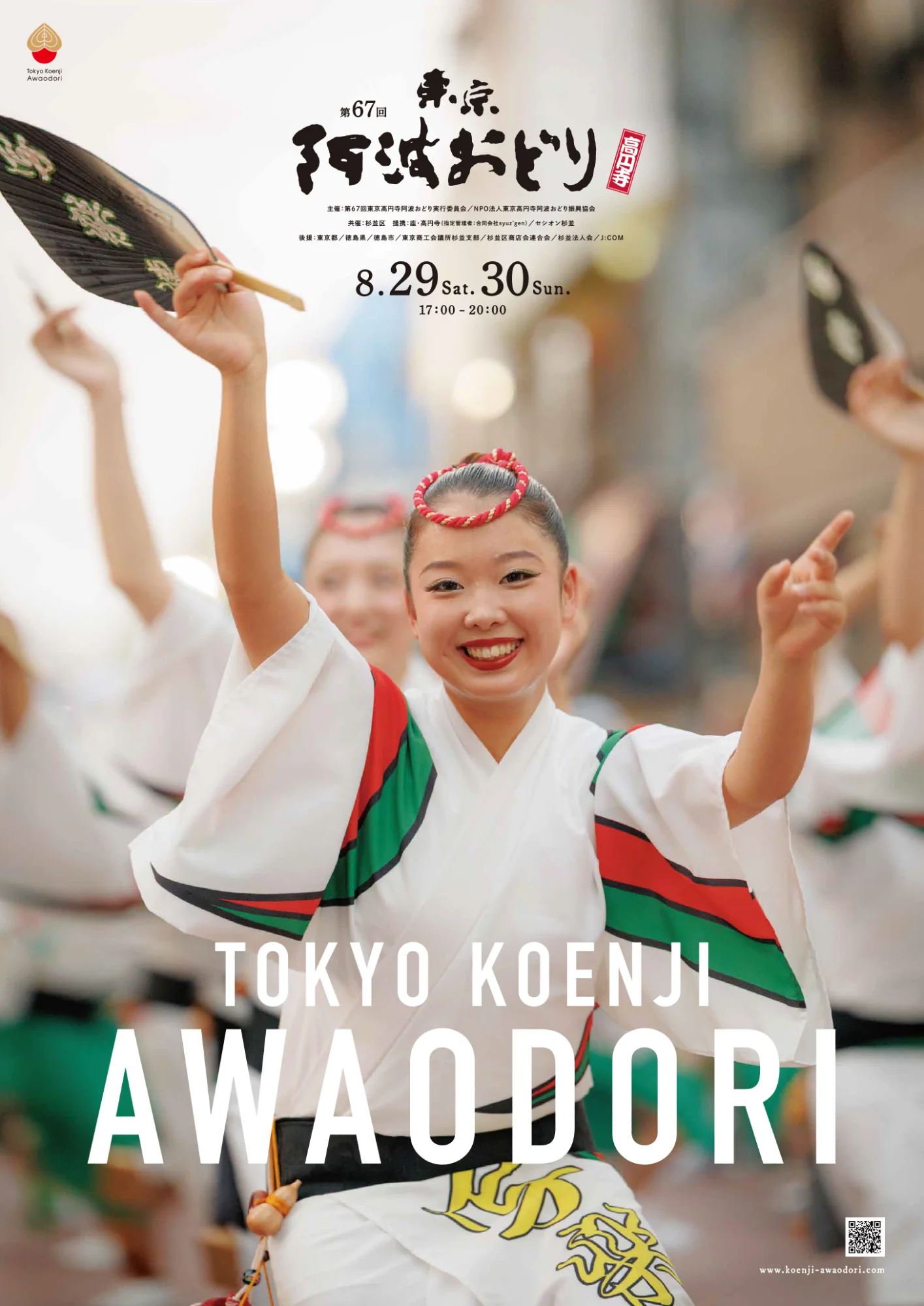
Koenji Awaodori 2026! To be held on August 29 and 30!
Koenji Awaodori, a 1-million-visitor event in Koenji (which Kurousagi thought was just a local town, but was wrong!), will feature 10,000 dancers on August 29-30, 2026!
As a regular event marking the end of summer in Tokyo's Koenji, the Tokyo Koenji Awaodori, which attracts tourists from Japan and around the world, will be held on Saturday, August 29, and Sunday, August 30, 2026. Set against the main streets and shopping districts from JR Koenji Station to Tokyo Metro Shin-Koenji Station, elite dancers from all over the country will perform brilliant dances and passionate music, filling the streets with excitement. This article covers the origins, differences from Tokushima, 2026 event details, highlights, and viewing manners.
Koenji Awaodori 2026 Overview and Revived Excitement#
The 67th Tokyo Koenji Awaodori in 2026 will run from 5:00 PM to 8:00 PM on August 29 and 30. The parade will take place at Konan-dori, around the south exit rotary of Koenji Station, and special stages in historic shopping streets like Pal Shopping Street and Look Shopping Street. Eight performance areas will run concurrently, allowing spectators to feel the dancers' breath and drum beats up close.
Drawing roughly 1 million spectators every year, this major event has grown beyond a local festival into one of Tokyo's top summer spectacles. Around 10,000 dancers forming teams called "Ren" will show off their unique styles.
Started from "Baka Odori"? The Surprising History of Koenji Awaodori#
Although Koenji Awaodori is now known as a leading traditional festival in Japan, its history dates back to 1957. At that time, Koenji was a simple downtown district. In order to compete with the huge success of the "Asagaya Tanabata Festival" held at the neighboring station and attract visitors to their own shopping streets, local youths initiated the event.
However, there was no one in Koenji who had skills or experience in Awaodori. The founders tried to copy the real Awaodori, but it began under the name "Koenji Baka Odori" (Koenji Foolish Dance), with self-taught, clumsy music and dancing. Though met with cold looks at first, the youths persisted.
Later, they invited instructors from Tokushima Prefecture to learn authentic skills. In 1963, the name was officially changed to "Koenji Awaodori". Through continuous efforts, the number of participating teams and spectators grew significantly.
Differences from Tokushima and Koenji's Unique "Ren" Culture#
The key feature of Koenji Awaodori is its unique "Ren" culture, adopting free interpretations while respecting tradition. While Tokushima's Awaodori preserves centuries-old customs, Koenji's groups evolve creatively with unique costumes, dynamic formations, and modern musical elements.
Teams are divided into "Association Ren" (local core teams), "Friendly Ren" (famous teams from Tokushima/other regions), and corporate or student teams. Local core teams practice year-round, showing top-tier skills.
The table below summarizes the main team classifications:
| Ren Type | Key Members | Features and Highlights |
|---|---|---|
| Association Ren | Local residents & fans | Practice year-round, delivering highly refined, traditional yet dynamic dances representing Koenji. |
| Friendly Ren | Tokushima and strong teams | Bring authentic techniques and traditions directly to Tokyo, showing the essence of positive Awaodori. |
| Student / Corporate Ren | University clubs & employees | Bring youthful energy, creative costumes, and modern performances to excite the crowd. |
Musical Instruments and Dance Styles: Male vs. Female Dances#
Awaodori is only complete with the live accompaniment of "Narimono" (musical instruments). Each instrument plays a vital role:
- Kane (Gong): Dictates the tempo of the music. Its sound is the step standard for all dancers.
- Taiko (Drums): Large and small drums create heavy bass and high rhythm beats to form the musical base.
- Shinobue & Shamisen: Flutes and lutes play melancholic yet cheerful melodies to enhance the festival mood.
Dancers perform in two major styles to this two-beat rhythm:
[Viewing Tips] Enjoying the contrast of Male and Female Dances
Awaodori features the dynamic, humorous "Male Dance" and the elegant "Female Dance." Male dancers bend low and dance powerfully with fans or lanterns. Female dancers wear woven straw hats, yukata, and geta, dancing gracefully with upraised arms. Focus on this dynamic contrast.
Stage Performance vs. Street Parade#
The charm of Koenji Awaodori is not just the street parade. Stage shows are held at squares and inside arcade shopping districts.
In the street parade, the leading lantern shows the team name, followed by female dancers, male dancers, and the musicians.Dancers move in unison, and the close distance from the crowd in narrow streets lets you feel their high heat.
On the other hand, the stage shows feature creative formations, circular patterns, and complex shifts. These are original performances telling stories designed by each team.
Koenji Awaodori Spectator Guide#
As 1 million people visit, severe crowding occurs. Proper planning and etiquette are essential for a safe experience:
- Arrive early and check paths: Crowds build hours before the 5:00 PM start. Follow staff directions and walk slowly through one-way systems.
- Heat protection and hydration: Late August in Tokyo remains very hot. Bring drinks, stay hydrated, wear hats, and wear light clothing.
- Photo etiquette: Do not block others' views. Avoid using tripods or selfie sticks in crowded areas, and respect dancers' privacy.
Impact on Local Economy and Community#
The long success of Koenji Awaodori lies in its massive positive impact. Restaurants and shops offer special stalls and menus, filling the streets with economic energy.
Even more vital is the cross-generational community bond. Local teams include members from children to seniors, building tight networks through year-round practice. This bond forms the basis for local disaster prevention and mutual support.
Blending tradition with modern creativity, Koenji Awaodori will continue to shine as Tokyo's proud culture. Visit Koenji in late August and feel this pure energy live!