Tickets Sold Out! ROCK IN JAPAN FESTIVAL 2026 Takes Place Next Month!
ROCK IN JAPAN FESTIVAL 2026 takes place in Chiba this September. Tickets are sold out. Here is an overview of the event's history, venue, and highlights.
Japan's flagship open-air music event, "ROCK IN JAPAN FESTIVAL" (commonly known as "Rockin"), will take place next month at Chiba City Soga Sports Park in September 2026. Drawing hundreds of thousands of passionate music fans each year as one of the country's largest mega-festivals, it has firmly established itself as the defining celebration bridging the end of summer and the onset of autumn. Renowned for its stellar lineup of top artists, vibrant food villages, and immaculate venue infrastructure, this festival delivers an unmatched fan experience. As tickets are already completely sold out, this article provides an in-depth look into the event's history, relocation legacy, comparison with other major festivals, venue hospitality, and future impact.
ROCK IN JAPAN FESTIVAL 2026 Event Overview#
In 2026, ROCK IN JAPAN FESTIVAL 2026 is scheduled across 5 days over two consecutive weekends, including a three-day national holiday weekend in September. Below is the basic overview of the festival.
| Item | Details |
|---|---|
| Event Name | ROCK IN JAPAN FESTIVAL 2026 |
| Dates | September 12 (Sat) & 13 (Sun), 2026 September 19 (Sat), 20 (Sun) & 21 (Mon/Holiday), 2026 |
| Venue | Chiba City Soga Sports Park (1-20 Kawasaki-cho, Chuo-ku, Chiba City, Chiba) |
| Organizer | rockin'on japan / rockin'on inc. |
| Official Website | ROCK IN JAPAN FESTIVAL Official Website |
In response to extreme August heatwaves driven by global climate change and to ensure attendee health and safety, the festival shifted its schedule from early August to mid-September. This allows festivalgoers to immerse themselves in top-tier music under cooler, refreshing autumn breezes.
From Hitachinaka to Soga: History and the Drama of Relocation#
ROCK IN JAPAN FESTIVAL originated in 2000 at Hitachi Seaside Park in Hitachinaka, Ibaraki Prefecture. Starting as a modest two-day event featuring just 16 artists and 60,000 attendees, it expanded exponentially over two decades. The lush natural expanse of Hitachinaka became a sacred ground for rock enthusiasts, culminating in 2019 with a record-breaking 337,000 attendees over five days across three weekends.
However, the COVID-19 pandemic forced cancellations in 2020 and 2021. The 2021 cancellation, coming right before the event following urgent requests from local medical associations, was an agonizing decision. In search of strict infection control and sustainable longevity, the organizers made the bold choice in 2022 to relocate the festival to Chiba City Soga Sports Park.
While initially met with surprise by longtime fans, this move successfully transformed Rockin into an accessible, next-generation urban festival. In 2024, celebrating its 25th anniversary, the festival hosted a historic double edition in both Soga and Hitachinaka. Soga Sports Park has now solidified its status as the festival's permanent modern home.
The Overwhelming Appeal of Soga Sports Park as an Urban Venue#
Chiba City Soga Sports Park is celebrated for its outstanding transit accessibility and top-notch infrastructure.
First and foremost is transportation convenience. Situated just a 15-minute walk from JR Soga Station (serviced by the Keiyo, Uchibo, and Sotobo Lines), the venue is a direct 40-minute rapid train ride from Tokyo Station. Compared to the lengthy shuttle bus rides required in the Hitachinaka era, travel friction for day-trippers and long-distance travelers has been drastically reduced.
Second is the flat, seamless layout. Adjacent to Fukuda Denshi Arena, the park grounds feature resilient turf, clay, and paved walkways, preventing severe muddy conditions during rain. The lack of major terrain obstacles allows attendees to walk between main stages in mere minutes, making it effortless to catch overlapping sets across different stages.
Furthermore, the venue features extensive gourmet food booths ("Fes-Meshi"), air-conditioned indoor rest areas, and efficiently organized restroom facilities, offering the highest level of hospitality in Japanese outdoor festivals.
Smart Operations: Facial Recognition and Digital Ticketing#
Another distinguishing feature of the festival is its pioneering adoption of advanced IT solutions. The integration of digital ticketing and facial recognition entry has set a new benchmark in Japan's live entertainment sector.
Attendees register their portrait photo via the official app prior to the event, enabling instantaneous biometric check-in at the gates. This eliminates paper ticket inspections and ID checks, ensuring swift, queue-free entry even during peak morning rushes while completely wiping out unauthorized secondary ticket scalping.
Additionally, the venue operates on a 100% cashless payment model for food, beverages, and merchandise. Fast contactless transactions keep lines moving briskly, maximizing the time fans spend enjoying live music.
Comparison with Japan's Other Major Music Festivals#
To highlight Rockin's unique standing in Japan's music ecosystem, here is a comparison with other prominent domestic festivals.
| Festival Name | Key Distinctions | Genre & Atmosphere |
|---|---|---|
| ROCK IN JAPAN FESTIVAL | Dedicated exclusively to Japanese rock and pop acts. Gathers Japan's biggest domestic chart-toppers. |
Japanese rock, pop, and mainstream acts. Clean, welcoming, and accessible atmosphere. |
| SUMMER SONIC | Dual-city urban festival in Makuhari and Osaka. Features major global headliners and international stars. |
Hybrid of western and domestic acts. Urban stadium and indoor arena stages. |
| FUJI ROCK FESTIVAL | Mountain festival held at Naeba Ski Resort, Niigata. The pioneer of Japanese outdoor rock festivals. |
Alternative, indie, and international acts. Immersion in nature and camping culture. |
Unlike SUMMER SONIC or FUJI ROCK, which rely heavily on overseas acts, ROCK IN JAPAN FESTIVAL focuses exclusively on Japanese domestic music. This clear identity gives it unrivaled appeal across all demographics, from casual listeners to hardcore music aficionados.
Evolving Stages and Artist Lineup Diversity#
The festival's programming reflects the dynamic evolution of Japan's contemporary music landscape. While originally centered on traditional rock bands, the lineup has expanded to encompass pop icons, singer-songwriters, hip-hop artists, dance & vocal groups, idol units, and anime song creators.
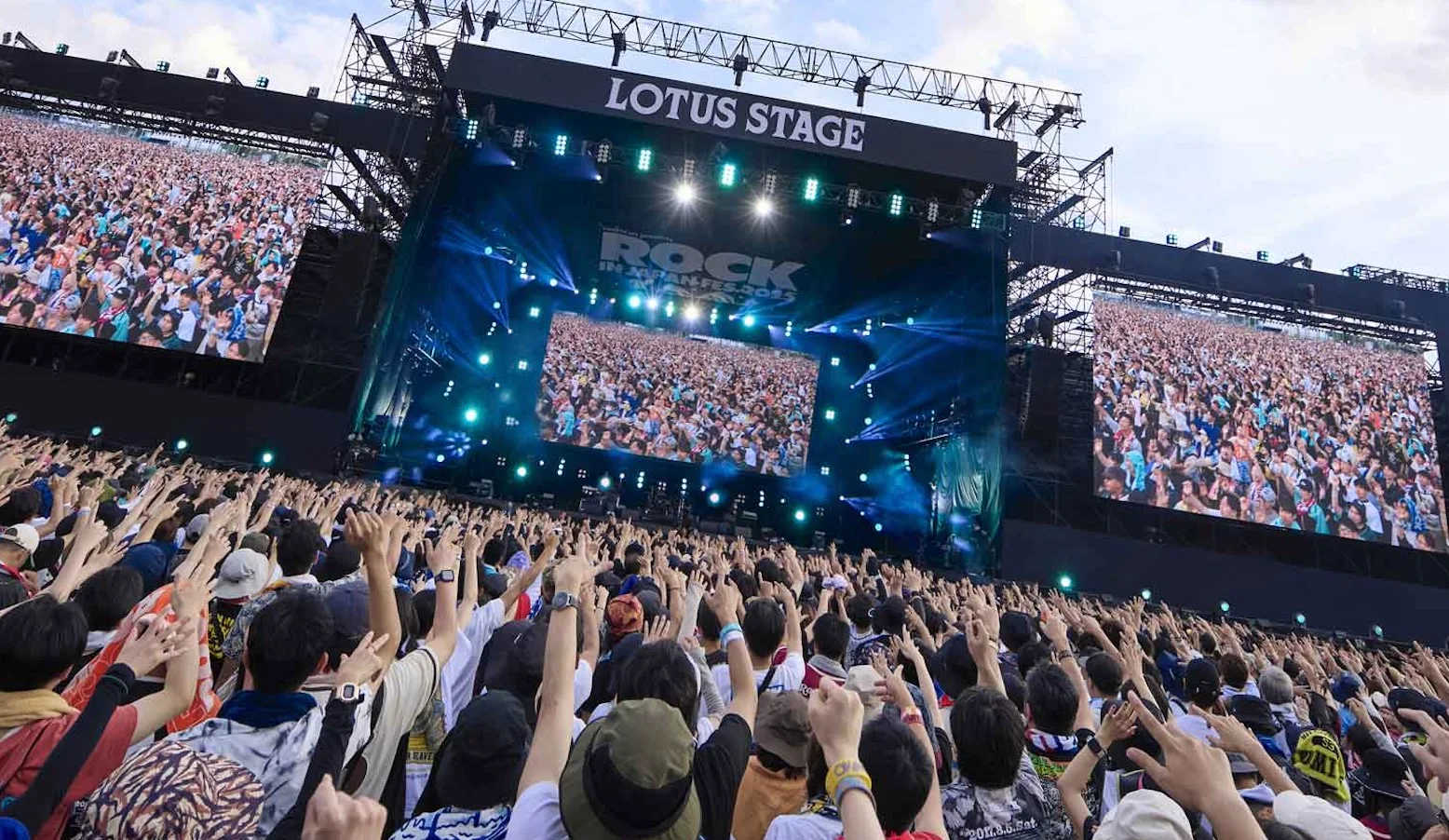
The grounds feature strategically laid-out stages: colossal main platforms like LOTUS STAGE and GRASS STAGE host national superstars, while intimate stages such as HILLSIDE STAGE and PARK STAGE spotlight emerging indie talent and innovative sonic pioneers.
This inclusive curation has turned Rockin into a multi-generational festival where veteran fans who experienced Hitachinaka in their youth now bring their children to discover new sounds together.
Economic Ripple Effects and Community Harmony#
Hosting ROCK IN JAPAN FESTIVAL delivers substantial economic benefits to Chiba City and neighboring municipalities. With over 200,000 visitors over five days, local hotels, restaurants, and transit networks experience tremendous surges in demand.
Organizers work closely with Chiba City on thorough waste sorting, noise mitigation, and safety management, fostering strong mutual trust and bolstering Chiba's reputation as a premier sports and cultural hub.
Attendee Guide: Heat and Weather Preparation#
While shifting to September avoids the worst midsummer heatwaves, daytime temperatures can still exceed 30 degrees Celsius. Staying prepared is vital.
- Hydration & Electrolytes: Carry sports drinks and salt tablets to prevent dehydration.
- Sun Protection: Hats, sunglasses, sunscreen, and cooling towels are essential.
- Rain Gear: Umbrellas are prohibited in the venue; bring lightweight rain ponchos.
- Footwear: Supportive athletic sneakers are strongly recommended for paved grounds.
As September coincides with typhoon season, fans should monitor real-time event updates via the official mobile app and social channels.
Conclusion: The Future of Japan's Premier Rock Festival#
From its roots in Hitachinaka to its modern evolution in Soga Sports Park, ROCK IN JAPAN FESTIVAL continues to lead the Japanese live music industry. The 2026 edition promises an unforgettable experience of top-tier Japanese music in optimal autumn conditions.