Yamaguchi Tanabata Chochin Matsuri 2026
Experience the Yamaguchi Tanabata Chochin Matsuri in August 2026. Explore its 600-year history from the Ouchi clan, the glowing lantern tunnels, and safety tips.
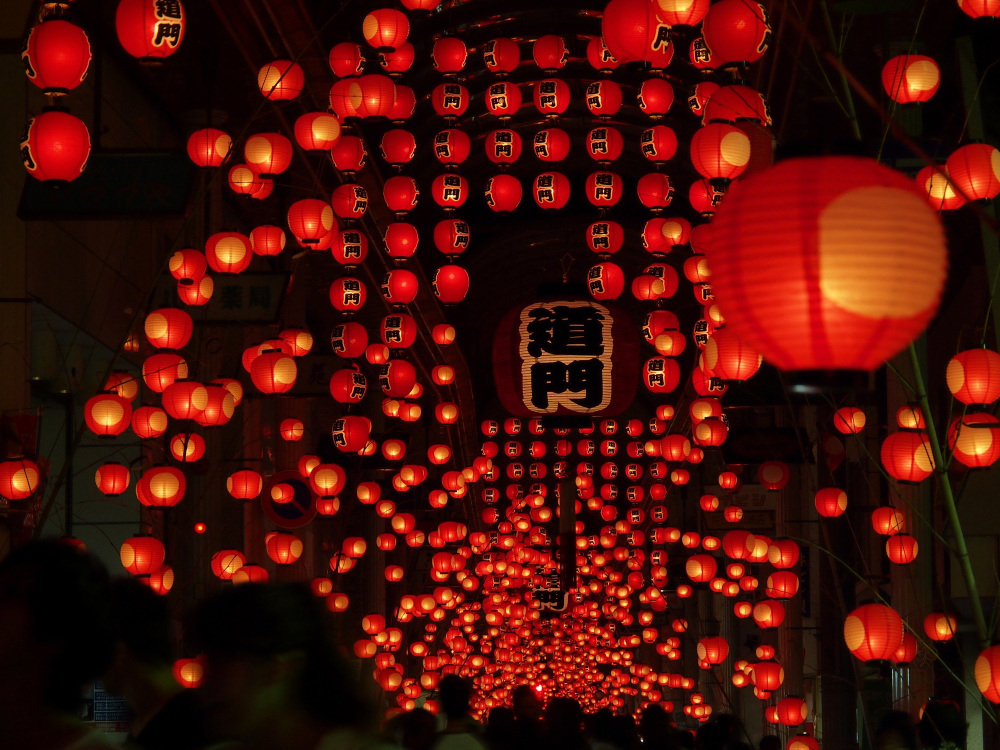
Hearing about paper lanterns brings back childhood memories for Kuroboo, of going to the family grave during Obon with parents, using the lantern's light to guide ancestral spirits, being careful not to let the candle go out, bringing the spirit home, and transferring the flame to the altar's candle. Every year on August 6 and 7, the central shopping districts and station streets of Yamaguchi City are wrapped in the light of tens of thousands of crimson flames for the famous "Yamaguchi Tanabata Chochin Matsuri." This is an extremely mystical traditional event with a history of about 600 years. While Tanabata and lantern festivals are held throughout Japan, the defining feature of this festival is that almost all the lanterns use "real candles," with local residents and volunteers lighting each one by hand. The flickering, warm red light of real flames, which cannot be replicated by LED or electric lights, dyes the streets and draws visitors into a mystical world. This article details the historical roots of this festival starting with the prayers of the Ouchi clan, its diverse highlights such as the "Sudare Chochin" (bamboo poles draped with dozens of lanterns), volunteer efforts to maintain the tradition, recommended viewing spots, and the safety guide for the 2026 event.
History and Origin: Japan's Only "Festival of Fire" Born from Ouchi Clan's Prayers#
The origin of the Yamaguchi Tanabata Chochin Matsuri dates back to the era of the Ouchi clan, the feudal lords of the Muromachi period. According to one theory, it began around 1413 when Ouchi Moriharu, the 26th head of the clan, lit high lanterns on bamboo grass to pray for the deceased spirits of his ancestors. This practice later spread among commoners, establishing itself as an Obon ritual for ancestral memorial services.
During the Muromachi period, Yamaguchi flourished as the "Kyoto of the West," actively incorporating the elegant culture of Kyoto. The Buddhist Bon lantern custom merged with the Tanabata star festival, evolving over centuries into the unique "Tanabata Chochin" format. Even after the Mori clan moved the capital to Hagi in the Edo period, the residents of Yamaguchi proudly protected this festival, preserving it through the Meiji, Taisho, and Showa eras to the present day.
Today, the countless lanterns cover the streets like tunnels. It is not just a beautiful sight but a deep symbol of community spirit for Yamaguchi citizens. The fact that they have stuck to real flames for hundreds of years, without replacing them with electric lights, proves the high cultural value of this festival.
The paper lanterns used in this festival have a unique oval shape that narrows at the top and is flat at the bottom, affectionately known as Yamaguchi's "Red Chochin."
Highlights and Features: "Sudare Chochin" and Giant Float Trees#
During the festival, several spectacular symbols appear in the shopping districts and main avenues of Yamaguchi. Here are the representative displays and their structures.
The most iconic is the "Sudare Chochin" (帘提灯). Thick bamboo poles several meters long are placed horizontally, from which numerous red lanterns are hung vertically. These are decorated across the shopping district arcades and streets, covering the pedestrian passageways with a tunnel of red light. The sight of tens of thousands of lanterns swaying in the breeze is breathtaking.
| Display Category | Key Features and Viewing Points |
|---|---|
| Sudare Chochin | A dense array of red lanterns forming a light tunnel over shopping arcade walkways and station streets. |
| Chochin Tree | A giant tower of light, standing over 10 meters tall on a thick bamboo pillar, decorated with hundreds of lanterns in a pyramid shape. |
| Chochin Yamakasa | Sparkling floats decorated with numerous lanterns, carried dynamically through the streets by local men with energetic chants. |
The key feature of these lanterns is the use of "real candles." At the 7:00 PM lighting time, shop owners, local residents, and student volunteers grab long lighting rods to light the candles at the bottom of tens of thousands of lanterns. This manual process is an important part of the solemn atmosphere.
Preservation and Safety: Behind the Scenes of Fire Safety#
Festivals using "real candles" are rare in Japan, and managing them safely requires thorough preservation and safety measures. Because candles can catch the paper of the lantern due to wind or shaking, "safety volunteers" with buckets and extinguishers patrol each block during the festival. Training is conducted to quickly cut down and extinguish any lanterns that catch fire. This cooperation to ensure fire safety is the hidden hero of the festival's survival.
In an era where safety and efficiency are prioritized and fun playground equipment is removed from parks, it is truly wonderful that they prioritize flavor and imagery and do not switch to LEDs.
2026 Visitor Guide: Main Venues and Recommended Areas#
The festival is held across a wide area from Yamaguchi Station Street to the central shopping district, Park Road, and temples linked to the Ouchi clan. Here are the key areas.
The features of the visiting areas are summarized below:
| Venue Name | Features and Viewing Advice |
|---|---|
| Central Shopping District | The highest density of Sudare Chochin. Being covered, it is less affected by wind, allowing visitors to walk through a stable red light tunnel. Many stalls and event stages are here. |
| Station Street | The wide road from Yamaguchi Station to Park Road becomes a pedestrian heaven. The best area to watch the giant Chochin Trees and Chochin Yamakasa. |
| Historical Ouchi Area | Lanterns are lit around historic temples linked to the Ouchi clan like Ryufukuji and Joeiji. Away from the bustle, visitors can experience the original Buddhist solemn atmosphere. |
Rules and Heat Safety for 2026#
The 2026 festival will be held on August 6 and 7. Due to the use of real fire, strict safety rules are in place.
Please be careful with photography and walking. High-angle shooting with selfie sticks or tripods is dangerous as they can catch the low-hanging lanterns and cause fires. Do not touch the hanging lanterns. August in Yamaguchi is hot and humid, so heat safety is essential. Please take your trash home and help keep the festival safe.
The Yamaguchi Tanabata Chochin Matsuri, woven by the passion of citizens and the flickering of real flames, is a cultural legacy that shines brighter in a digital society. We invite you to visit Yamaguchi in the summer of 2026 to experience these warm red lights.