Tokushima Awa Odori 2026: History & Highlights
Explore Tokushima Awa Odori in August 2026. Discover its 400-year history, male vs. female dance styles, the acoustic sound of Narimono, and key venues.
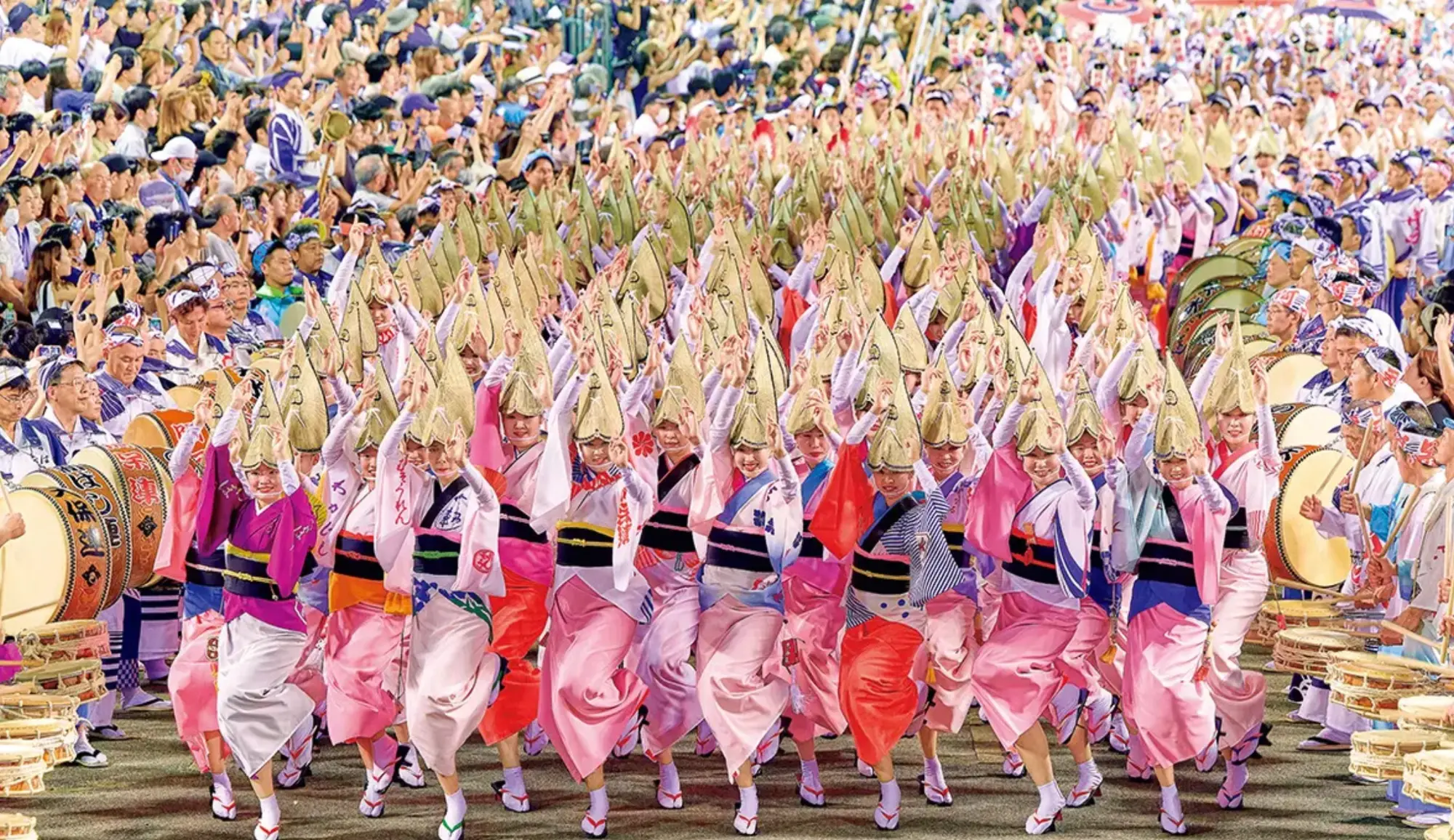
While the name "Awa Odori" is known to many, experiencing it live is a completely different sensation. Held every August in Tokushima City, the Awa Odori is one of Japan's largest citizen-led traditional performing arts, boasting over 400 years of history. During the festival, the entire city is filled with the sounds of "Yoshiko" songs and a bouncy two-beat rhythm, drawing over one million tourists and dancers to Tokushima. The sight of male dancers dynamically moving with lanterns and female dancers gracefully gliding in straw hats and tall wooden geta clappers is mesmerizing. Although branches have spread nationwide and globally, experiencing Awa Odori in its birthplace is unique. This article details the historical roots, the structure of the "Ren" dance groups, the musical ensemble, key highlights, and the 2026 visitor guide.
History and Origin: A "Citizen's Festival" Preserved for 400 Years#
The origin of Awa Odori is believed to stem from three main streams: ancestral Buddhist dances (Bon Odori), the lively "Furyu" town pageants, and the Tokushima Castle celebration of 1587, when feudal lord Hachisuka Iemasa distributed sake and ordered the town to dance freely to celebrate the castle's completion.
During the Edo period, the dance exploded in popularity among commoners. Indigo merchants financed elaborate costumes and instruments, driving the festival's scale. Despite temporary bans by the shogunate, the citizens' passion survived. Even through wartime disruptions, it was quickly revived as a symbol of hope and vitality.
The famous chant, "Dancing fools and watching fools, both are fools alike, so why not dance?" embodies its democratic spirit. On the streets, all class barriers dissolve, and everyone becomes an equal participant. This open spirit is why Awa Odori has survived and flourished for over 400 years.
The festival's official theme song is "Yoshiko" (Yoshiko-bushi). The famous chant "Erai-yaccha, Erai-yaccha, Yoi-yoi-yoi-yoi" derives from this traditional melody.
The Structure of "Ren" Dance Groups and Participants#
Dancers perform in teams called "Ren." These range from community and school groups to corporate sponsored teams and the highly professional "Yumeiren" groups, who practice year-round to preserve the highest art of the dance.
The Yumeiren groups showcase spectacular choreography and synchronized movements. With members ranging from young children to seniors, these groups serve as vital cultural links, passing down traditional techniques within families and local communities.
| Types of "Ren" | Key Features and Members |
|---|---|
| Yumeiren (Famous Ren) | Professional dance troupes preserving the art form. They display highly refined choreography, unique costumes, and live acoustic music. |
| Corporate & Civic Ren | Teams formed by local businesses or community groups. They promote camaraderie and bring great energy to the parade route. |
| Student & Child Ren | Formed by local schools and universities. They represent the next generation of dancers, performing with youthful energy. |
During the festival, each Ren marches through the designated streets, led by tall paper lanterns bearing the team's name, followed by synchronized rows of dancers and a live acoustic musical ensemble at the rear.
Male vs. Female Dance Styles: Dynamic Contrast of Two Aesthetics#
A key charm of Awa Odori is the sharp contrast between its male and female dance styles, which beautifully complement each other.
The "Male Dance" (Otoko-odori) is performed in short happi coats or yukatas with tucked hems. Dancers bend their hips low, holding fans or paper lanterns, moving dynamically and humorously. It emphasizes individual style and physical energy. The "Female Dance" (Onna-odori) is performed in elegant yukatas, deep straw hats (Amigasa), and tall wooden geta clappers. Gliding on the tips of their geta with perfectly straight backs, the female dancers display exquisite grace. This combination of dynamic masculinity and elegant femininity creates a beautiful harmony on stage.
Narimono (Acoustic Music): The Pulse of the Dance#
The rhythm is driven by the "Narimono" acoustic ensemble marching behind the dancers. In Awa Odori, electronic sound equipment is avoided, relying entirely on the raw acoustics of traditional instruments to fill the festival atmosphere.
Below are the primary instruments and their roles:
| Instrument | Role and Sound Features |
|---|---|
| Shamisen | Provides the base melody and tempo. Its strings provide an elegant backdrop, especially for the female dance style. |
| Flute (Shinobue) | Plays high-pitched melodies that soar above the drums, enhancing the excitement and leading the tempo. |
| Kane (Gong) | Acts as the metronome of the group, producing sharp metallic sounds that dictate the tempo of both dancers and musicians. |
| Drums (Taiko) | Fills the streets with deep bass vibrations, driving the dancers' steps and elevating the crowd's energy. |
Visitor Guide 2026: Venues and Safety Measures#
The 2026 Awa Odori will take place from August 12 to 15 in central Tokushima City. The entire city center turns into a massive parade ground. Here is a guide to the main viewing areas.
| Venue Types | Key Features and Viewing Tips |
|---|---|
| Paid Venues (Aibahama, etc.) | Large spectator stands erected along the parade route. Best for watching top Yumeiren teams showcase structured choreography in comfort. Tickets must be purchased in advance. |
| Free Parade Venues | Street-level parade routes with no stands. You can stand close to the dancers and feel the direct energy of the drums. |
| Niwakaren (Impromptu Ren) | An impromptu dance group open to tourists. Anyone can join in and experience the joy of dancing first-hand. |
August in Tokushima is extremely hot and humid, with nighttime temperatures often staying above 30 degrees Celsius. Wear light clothing, stay hydrated, and respect local guidelines to ensure a safe and enjoyable festival experience.
Awa Odori's dynamic rhythm must be experienced in person. We invite you to visit Tokushima in the summer of 2026 to witness this 400-year-old heartbeat.