Hokkaido's Oldest "Ubagami Daijingu Togyosai" to Be Held on August 9! Magnificent Floats Parade
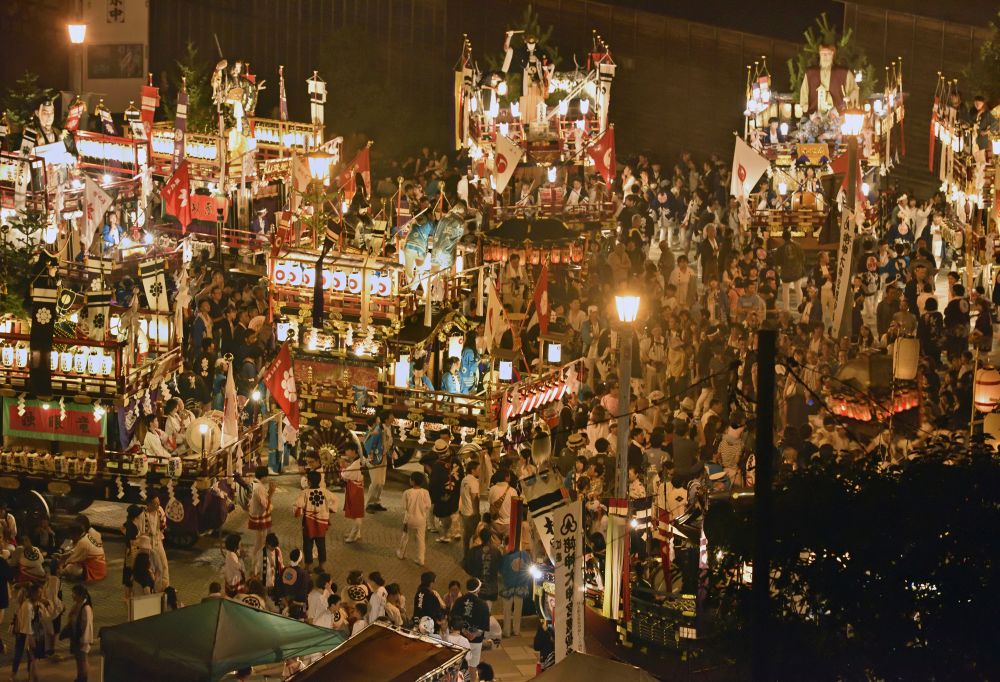
Held Aug 9 in Esashi, Hokkaido's oldest festival Ubagami Togyosai has a 380-year history of herring-catch gratitude, with 13 gorgeous parade floats and Kyoto-style Gion Hayashi music.
Historical Background of Ubagami Daijingu Togyosai and the "Orii Legend"#
The origin of herring fishing in Esashi and the founding of Ubagami Daijingu are deeply connected to a mysterious legend of an old woman named "Orii." Orii-baasan, who lived in this land, had a mysterious power to hear messages from the spirits. One day, she received a small bottle from an old man who appeared on Kamome Island, who told her, "If you throw this into the sea, herring will come." When she threw it in as told, the sea of Esashi was filled with herring the next morning, turning it white. The bottle from this legend remains stuck in the seabed near Kamome Island as the "Heishi Rock." The small hermitage where Orii-baasan was enshrined is said to be the beginning of the current Ubagami Daijingu.
The origin of the festival dates back about 380 years to the Kanei era (1624–1644). Esashi was then one of the leading trading bases for Kitamaebune ships on the Sea of Japan, yielding immense wealth from herring fishing. Fishermen and merchants facing the harsh northern seas prayed to Ubagami Daijingu for safety, rich catches, and their families' health. This gratitude is the origin of the Togyosai, which has continued uninterrupted to this day. Refined over history, this festival retains its brilliant early Showa era style, designated as a Hokkaido Tangible Folk Cultural Property and Hokkaido Heritage for its high cultural value.
History and Faith of Hokkaido's Oldest Shrine, "Ubagami Daijingu"#
Ubagami Daijingu is one of the oldest shrines in Hokkaido, with origins tracing back to the 4th year of Kempo (1216) or earlier. It started as a hermitage dedicated to Orii-baasan on Kamome Island and was later moved to its current location. For Esashi residents, the shrine was not just a local deity, but an absolute guardian of the sea's bounty and maritime safety. Even today, many fishery workers, shop owners, and citizens visit daily to pray. The Togyosai is a sacred occasion where the shrine's deities parade through town on palanquins once a year, a time of celebration for which residents dedicate their year's passion.
"Kamigata Culture" Brought by Kitamaebune and Its Link to Kyoto's Gion Festival#
Understanding the cultural link to main-island Japan, especially the Kansai region, is essential to understanding Esashi's festivals. The Kitamaebune ships trading on the Sea of Japan from the Edo to Meiji periods were not just transport for rice, salt, and herring, but "moving cultural transmitters" bringing advanced culture and art. They brought the Kamigata culture of Kyoto and Osaka directly to Esashi, where it fused with local faith to form the gorgeous festival style seen today.
This influence is clear in the floats' decoration and parade style. The gorgeous draperies and tapestries decorating the floats feature exquisite Nishijin weave and gold thread embroidery from Kyoto. The Hayashi music played during the parade draws from Kyoto's Gion Hayashi, with a unique elegance added by the shamisen alongside drums and flutes. The Ubagami Daijingu Togyosai can be called the "essence of Gion culture blooming in the north," keeping the stylish and luxurious spirit of the port town Esashi alive.
The Magnificent 13 Parade Floats "Yama" and Their Cultural Value#
The main attraction of the Togyosai is the 13 parade floats, called "Yama" in Esashi, carefully preserved by each neighborhood. They consist of one ship-shaped float, "Matsuho-maru," modeling a Kitamaebune ship, and 12 imperial carriage-style floats carrying dolls of mythical figures or historical warriors. Many of these dolls were made by famous artisans in Honshu during the Edo and Meiji periods, possessing high artistic value in their designs and carvings.
| Float Name | Pronunciation | Main Design / Doll Motif & Features |
|---|---|---|
| Matsuho-maru | Matsuho-maru | Ship-shaped float modeling a Kitamaebune. A symbol of rich catches and maritime safety. |
| Ebisu-yama | Ebisu-yama | Enshrines "Ebisu," one of the Seven Lucky Gods. Prays for business prosperity and abundant fishing. |
| Jinko-zan | Jinko-zan | Dedicated to Empress Jingu. Characterized by luxurious Nishijin-weave drapery and tapestry. |
| Genji-yama | Genji-yama | Motifed on Minamoto no Yoshitsune. The young and gallant warrior figure draws attention. |
| Giko-zan | Giko-zan | Dedicated to Tokugawa Mitsukuni (Mito Komon). A prestigious float valuing scholarship and virtue. |
| Shobu-zan | Shobu-zan | Dedicated to a warrior symbolizing valor. Features strong and brave decorations. |
| Shinei-zan | Shinei-zan | Built for new-era prosperity, showing modern harmony and beautiful carvings. |
| Hoei-zan | Hoei-zan | Prays for bountiful harvests and regional peace, shining with gorgeous decorations. |
| Masamune-yama | Masamune-yama | Dedicated to the "One-Eyed Dragon" Date Masamune. Features a black-lacquered helmet with a crescent moon. |
| Homare-yama | Homare-yama | Dedicated to national honor and regional development, with a beautiful warrior doll. |
| Nanko-zan | Nanko-zan | Dedicated to Kusunoki Masashige. A prestigious float passing on the spirit of loyalty. |
| Kyufuku-zan | Kyufuku-zan | True to its name of "seeking fortune," it features auspicious treasure motifs. |
| Seisho-zan | Seisho-zan | Dedicated to Kato Kiyomasa. A brave float themed on the tiger-hunting legend. |
These floats are not just beautiful, but deeply tied to each neighborhood's history and identity. Assembling, polishing, and parading them once a year is the residents' greatest pride. Some floats are permanently exhibited at the Float Museum, allowing visitors to experience Esashi's deep culture year-round.
"Memory of Sound" Passed Across Generations: Hayashi Practice and Succession#
The "Esashi Hayashi" music is an indispensable part of the Togyosai. While drawing from Kyoto's Gion Hayashi, it has evolved into a melody combining Esashi's unique sorrow and dynamism. Every June, as summer approaches, the sounds of flute and drum practice begin echoing from local community centers.
Practice is led by veteran adults teaching local elementary and junior high school students. With no sheet music, they use the traditional method of oral instruction and physical memory. Starting with holding the drumsticks, they practice basic rhythms for weeks before syncing with flutes and shamisens. Through months of rigorous practice, children realize their role in the festival and bond with adults. By the festival, they board the floats as accomplished players, filling the streets with music. This "memory of sound" is the key reason Esashi's community remains so strong.
Contrast with Esashi Oiwake: "Static" Oiwake and "Dynamic" Togyosai#
Another representative tradition of Esashi is "Esashi Oiwake," a folk song sung by historical migrants expressing sorrow for their hometowns. Often called Japan's most difficult folk song, its melody is mournful and lonely, expressing the "static" mental landscape of people living in harsh nature.
In contrast, the Ubagami Daijingu Togyosai is the height of "dynamic" culture. The energetic shouts of youth, intense beats of drums, and floats parading through narrow streets are full of vitality. Esashi gains unique cultural depth by possessing both the static Oiwake and dynamic Togyosai. This duality is the hidden charm that draws travelers to Esashi.
Three-Day Schedule and the Climax of Excitement#
The Ubagami Daijingu Togyosai takes place over three days on August 9, 10, and 11, following specific rituals and routes. Each day offers unique highlights for visitors.
【August 9】Yoimiya Festival and Float Parade#
The first day begins with a ritual to purify the assembled floats and welcome the deities' spirits. In the afternoon, neighborhoods conduct float parades. At dusk, when lanterns are lit, a fantasy of lights floats along the old streets. It is a day of rising excitement before the main parades.
【August 10】Main Festival - Downtown Parade#
On the second day, 13 floats form a formal procession accompanying the portable shrine through Esashi's downtown area. Under the summer sun, gold leaf, carvings, and colorful dolls stand out brilliantly. Spectators pack the roadsides, cheering to the rhythm of Hayashi music.
【August 11】Main Festival - Uptown Parade and "Yadoiri-no-Gi"#
On the final day, floats parade through the uptown area. The climax is the "Yadoiri-no-Gi" ritual held at Ubagami Daijingu at night. As the portable shrine returns, youth carry it up the stairs lit by shaking torches. Simultaneously, 13 floats play "Tateyama-bayashi" together, bringing the excitement to its peak.
Comparison with Other Japanese Festivals: A Unique Position#
While there are many float festivals in Japan, the Ubagami Togyosai is unique in its history and cultural integration. Unlike the famous "Aomori Nebuta" or "Akita Kanto" festivals in northern Japan, which focus on dynamic energy from Star Festivals, the Ubagami Togyosai directly absorbed Kyoto's Gion Festival style via Kitamaebune trading, harmonizing elegant quietness with dynamic heat.
Also, while Gion Festival prays for pestilence protection, the Ubagami Togyosai is based on gratitude for herring fishing. Thus, prayers for catches and maritime safety are prominent, symbolized by the ship-shaped Matsuho-maru. It maintains its local identity as a community festival rather than becoming over-commercialized, keeping its 380-year-old style intact.
Challenges in Modern Society and Succession to the Future#
Like many regional cities in Japan, Esashi faces declining birthrates, aging populations, and depopulation. The population has decreased since the herring fishing boom. However, the residents' passion for the Togyosai does not change, serving as a pillar of community bonding in difficult times.
During the festival, youth who moved to Tokyo or Sapporo return home. They enjoy reunions, pull the floats' ropes, and play music. For people born in Esashi, the festival is a ritual to confirm their identity and love for their hometown. Recently, the festival has accepted volunteers from outside to pull floats, adapting to keep the tradition alive.
Epilogue: Keeping the Light of History Burning#
The 2026 Ubagami Daijingu Togyosai began with a solemn sense of history in Esashi. The memory of Kitamaebune trading and Gion Hayashi music passed over 380 years will continue to take root in the northern land. This heartbeat preserved by Esashi's people will remain as an unforgettable summer memory for travelers.