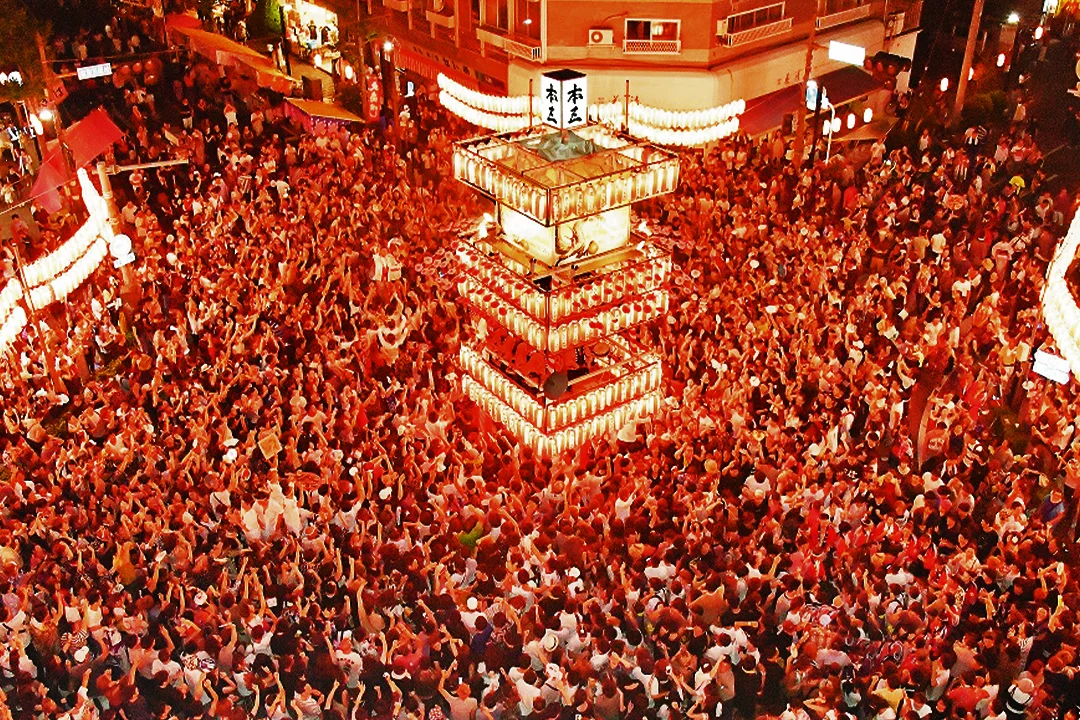
You Don't Know Gunma's Kiryu Yagibushi Matsuri Yet! Heat of Bon Odori & Floats
Gunma is a popular prefecture featured in manga. The unique Kiryu Yagibushi Matsuri, starting on August 7, 2026, for 3 days, is a traditional festival inherited since the Edo period.
The 63rd Kiryu Yagibushi Matsuri, a signature midsummer festival of Northern Kanto, will be held in Kiryu City, Gunma Prefecture, for three days from Friday, August 7 to Sunday, August 9, 2026. Attracting around 500,000 tourists every year and wrapping the entire city in excitement, this festival features a unique combination of the massive bon dance of "Yagibushi" (the soul of Kiryu citizens) and the historic, prestigious "Kiryu Gion Matsuri" boasting over 370 years of history. In this article, we explore the "stillness and motion" of this festival, its deep connection with the local weaving industry, the historical roots of Yagibushi, and a comparison with other leading Japanese bon dances to examine its appeal from multiple perspectives.
The Dual Nature of Kiryu Yagibushi Matsuri: Prestigious "Gion" and Popular "Yagibushi"#
Essential to understanding the Kiryu Yagibushi Matsuri is the existence of two distinct historical streams within a single festival. One is the traditional and prestigious "Kiryu Gion Matsuri," which dates back to the early Edo period. The other is the energetic folk song "Yagibushi," which arose between the late Meiji and early Taisho periods and became the main attraction of the festival in the late Showa period.
The Kiryu Gion Matsuri began in Meiji 2 (1656), modeled after the Gion Festival in Kyoto, as a sacred ritual to pray for the eradication of epidemics and a bountiful harvest. The magnificent floats (hoko) and stages owned by the neighborhoods of Kiryu Shinmachi paraded through the town, gaining fame throughout the Kanto region. On the other hand, Yagibushi is an open folk amusement where anyone can freely join the dance circle to the upbeat rhythm of flutes, drums, and wooden barrels. The coexistence of the formal sacred ritual and the wild, inclusive festival frenzy is the greatest appeal of the Kiryu Yagibushi Matsuri.
The Kiryu Gion Matsuri and Magnificent Floats Supported by a Prosperous Weaving Industry#
Kiryu City has long been dubbed "Nishijin in the West, Kiryu in the East," leading Japan's weaving industry. From the Edo period to the early Showa period, the weaving industry brought immense wealth to this region. Against this wealthy economic backdrop, townspeople competed to build the spectacular floats paraded in the Kiryu Gion Matsuri. Rather than mere festival tools, they were "mobile artworks" that synthesized the top-tier skills of Kiryu's craftsmen and the pride of its citizens.
Particularly famous are the "Okina Hoko" of Honcho 3-chome and the "Shichome Hoko" of 4-chome. Completed in Bunkyu 2 (1862), the Okina Hoko is a double-decked Edo-style float adorned with a Noh carving of "Okina" at the top to pray for peace. Meanwhile, the Shichome Hoko, completed in Meiji 8 (1875), is a multi-tiered Kiryu-style float reaching approximately 10 meters in height, making it one of the largest in the Kanto region. At its apex sits a lifelike "iki-ningyo" doll of the deity Susanoo-no-Mikoto, crafted by the legendary dollmaker Matsumoto Kisaburo from the late Edo to early Meiji periods, which continues to awe onlookers. The "Hiki-chigai" (float crossover), where these massive floats face off and pass each other while competing with their festival music, is a moment that showcases the unchanged weight of tradition since the Edo period.
The Hidden Roots of the Folk Song "Yagibushi" and Its Spread#
Although "Yagibushi" is now synonymous with the festival, its birthplace is actually not in Kiryu, but in neighboring Ashikaga City, Tochigi Prefecture. The prototype of Yagibushi is believed to be the "Shinbo Kodaiji-bushi," a chanting song transmitted from Echigo Province (now Niigata Prefecture) in the late Edo period. It settled as a bon dance song around Yagi Post Town (now near Hanekari-cho, Ashikaga City) along the Nikko Reiheishi Road and came to be called "Echigo Kudoki."
The person who developed this song into the modern "Yagibushi" was the first Horigome Genta (real name: Watanabe Gentaro, 1872–1943). Working as a horse handler, he took songs sung among travelers on the road and integrated unique melodies and fast-paced rhythms. Furthermore, by adding a distinctive wooden barrel-tapping percussion to the music, he created an unprecedentedly light and dynamic sound. In Taisho 3 (1914), when this song was released as a record by Nippon Columbia, it was named "Yagibushi" after its birthplace "Yagi Post Town," becoming a national hit and a famous folk song.
The Integration of the Showa Period: How Multiple Festivals Became the "Kiryu Yagibushi Matsuri"#
The current style of the festival was established in the mid-Showa period after historical transitions. Previously, many small-scale events, including the Gion Matsuri, Tanabata Matsuri, Port Matsuri, and Textile Matsuri, were held separately from summer to autumn in Kiryu. However, in the late 1950s and early 1960s, amidst industrial shifts in the weaving sector and demographic changes, momentum gathered to merge these festivals to revitalize the entire region.
To boost tourism and preserve traditions, the "Kiryu Matsuri" was born in August Showa 39 (1964) by integrating major summer festivals. Later, leveraging the national fame of "Yagibushi," the name was officially changed to the current "Kiryu Yagibushi Matsuri" in Showa 63 (1988). This history of integration brought the prestigious float parades of the Gion Matsuri and the inclusive, energetic bon dances of Yagibushi together into one grand, unified package.
Comparison with Other Leading Japanese Bon Dances and Traditions#
Comparing the Kiryu Yagibushi Matsuri with other famous bon dances in Japan highlights its uniqueness. Here, we outline the differences between it and the "Awa Odori" of Tokushima, the "Gujo Odori" of Gifu, and the "Nishimonai Bon Odori" of Akita.
| Festival Name (Location) | Origin & History | Main Style | Music & Accompaniment Features | Ease of Audience Participation |
|---|---|---|---|---|
| Kiryu Yagibushi Matsuri (Kiryu City, Gunma) |
Fusion of the 1656 Gion Matsuri and the Taisho-era Yagibushi | Circle dance surrounding multiple large wooden towers (yagura) erected on the streets | Flute, drums, gongs, and a fast-paced percussion created by tapping wooden barrels | Extremely High (Walk-ins welcome, casual attire, anyone can join) |
| Awa Odori (Tokushima City, Tokushima) |
Originated in 1587 to celebrate the construction of Tokushima Castle | Processional dance performed by groups called "Ren" parading through streets | Shamisen, drums, gongs, and bamboo flutes playing the 2-beat "Yoshiko" rhythm | Somewhat Limited (Mainly spectated, but participation is possible in "Niwaka-ren" groups) |
| Gujo Odori (Gujo City, Gifu) |
Encouraged during the Kan'ei era (1624–1644) to promote social harmony | Circle dance moving through squares and streets. Famous for all-night dancing (Tetsuya Odori) | Live music featuring shamisen, drums, flutes, and singers. The sound of clacking geta clogs is also essential | Extremely High (Tourists wear geta and dance together until morning) |
| Nishimonai Bon Odori (Ugo Town, Akita) |
Originated from a monk's dance during the Shoa era (1257–1259) | Circle dance where performers wear Hikosa hoods or woven hats to represent the deceased | Wild folk music featuring shamisen, drums, flutes, and gongs accompanied by improvisational songs | Low (Highly artistic dance by preservation society members, primarily for spectating) |
As shown above, the Kiryu Yagibushi Matsuri perfectly blends the spectacle of the Awa Odori with the inclusive participation of the Gujo Odori. In particular, the dry percussion of the wooden barrels adds an overwhelming speed and frenzy found in no other bon dance.
Key Highlights and Challenges of Passing the Tradition to the Next Generation#
At this year's Kiryu Yagibushi Matsuri, efforts to protect traditions and innovative attempts to attract new generations will occur simultaneously. Keep an eye out for these key points when visiting:
【Kiryu Yagibushi Matsuri Highlights Guide】
1. Massive Wooden Towers (Yagura) on Honcho and Suehirocho Streets:
During the festival, multiple massive wooden towers appear on the main streets. At night, singers and instrumentalists mount each tower, surrounded by countless dancers. Each tower has a slightly different tempo and singing style, so exploring the streets to find your favorite is part of the fun.
2. Resumption of the Traditional "Float Crossover":
The crossover of the floats from Honcho 3-chome and 4-chome is a precious event that conveys the prestigious Gion Matsuri traditions. Beyond observing the carvings and Matsumoto Kisaburo's dolls close-up, experience the tension as massive floats pass each other at close range to powerful music.
3. "Dance Yagibushi" Linking to the Next Generation:
"Dance Yagibushi," which arranges the traditional Yagibushi rhythm into modern hip-hop or jazz dance beats, is drawing attention. Groups of local students and youth showcase gorgeous performances, breathing new life into the traditional performing art.
Conclusion: Head to Kiryu in Summer, Where History and Frenzy Cross#
What I feel while writing about this festival is the Japanese spirituality of taking the influence of Kyoto's ancient Gion Matsuri, spreading it nationwide, and allowing each region to evolve it uniquely into an original form. Throughout Japan's history, whether adopting culture from ancient China, medieval Europe, or modern America, the foundation of our ability to arrange foreign cultures in a Japanese style and make them our own lies in this spirit of fusion and sublimation—neither blindly accepting nor completely rejecting—which can be clearly seen in the spread of such festivals.
The Kiryu Yagibushi Matsuri is a festival showing a beautiful harmony between the prestigious, 370-year Gion Matsuri tradition and the raw popular energy of Yagibushi. The memory of the weaving industry that once enriched the area survives in the beautiful floats, while the light rhythm of Yagibushi continues to energize modern citizens. During the three days starting August 7, 2026, experience the weight of history and the summer heat-defying frenzy for yourself in Kiryu.
【Sources】#
1. Kiryu City Hall: "Kiryu Yagibushi Matsuri Official Guide"2. Kiryu Chamber of Commerce and Industry: "History and Overview of Kiryu Yagibushi Matsuri"
3. Gunma Prefecture Culture Division: "Roots and Transition of Gunma's Folk Art Yagibushi"