Technique Contest: Event Info and Highlights of Akita Kanto Festival 2026
Akita Kanto Festival (Aug 3-6): giant bamboo poles with candles. Discover technique, schedule, and access info.
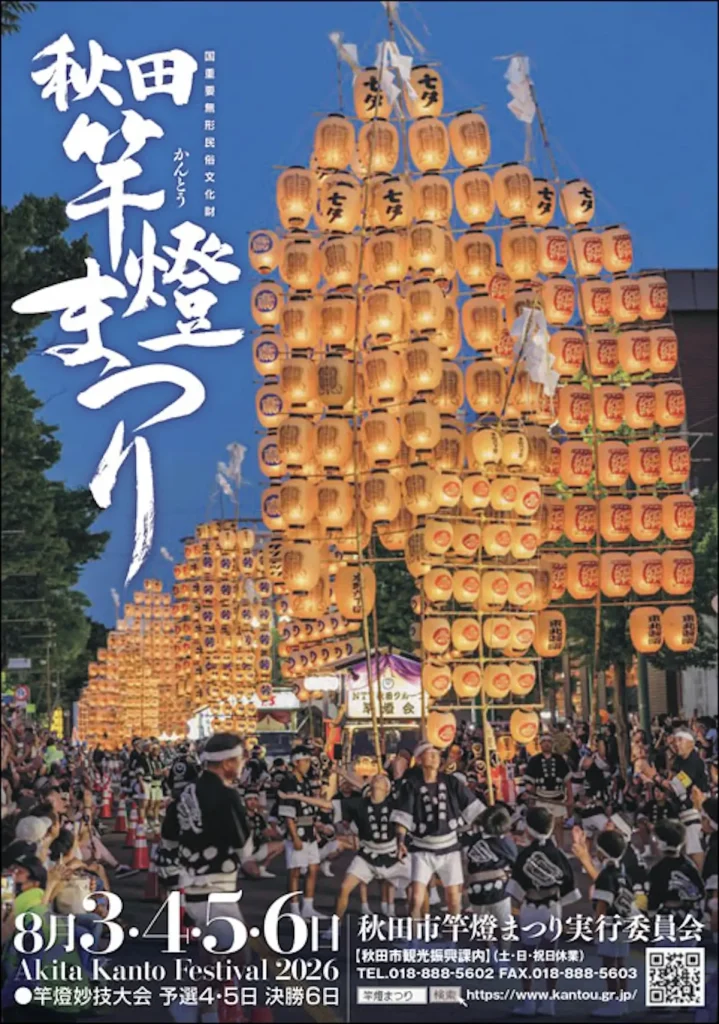
The Akita Kanto Festival, one of the traditional 'Tohoku's Big Three Festivals' that lights up the northern summer sky, will be held for four days from August 3 to 6, 2026, in Akita City, Akita Prefecture. Designated as a national important intangible folk cultural property, this festival is one of Japan's leading summer festivals, attracting over 1.3 million tourists every year. About 280 Kanto (bamboo poles) and around 10,000 candles flickering in the summer night breeze invite visitors to a magical world. In this article, as we conclude our introduction of Tohoku's Big Three Festivals, we provide a detailed guide covering its origins in Edo-period evil-averting rituals, the dynamic balance techniques mastered by 'sashite' (performers), schedule, and travel info.
From Evil-Averting 'Neburi Nagashi' to Prayers for a Rich Harvest#
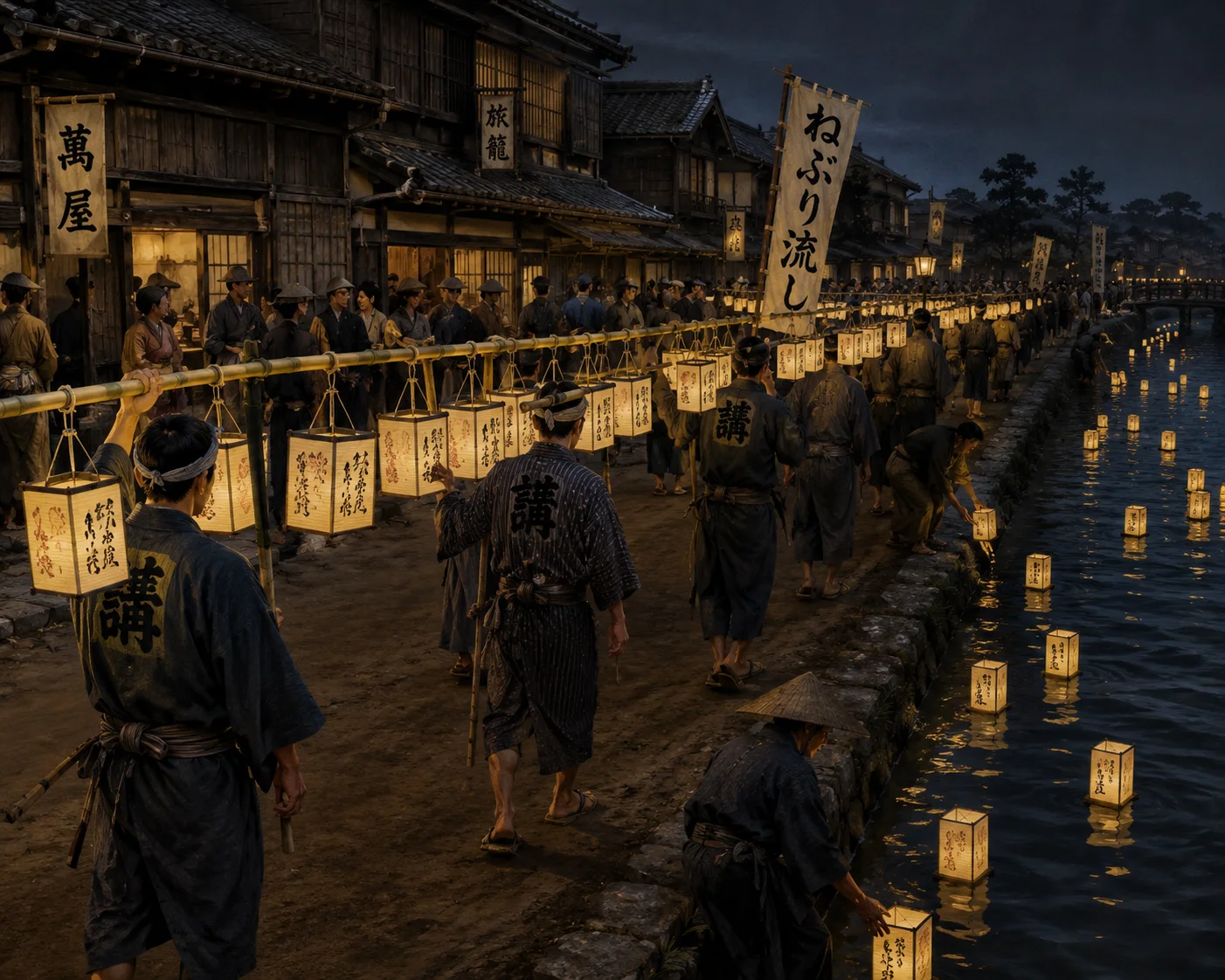
The history of the Akita Kanto Festival is said to date back to the Horeki era (1750s) in the mid-Edo period. Originally, it started as a traditional event called 'Neburi Nagashi' (sending sleep away) held during the Bon festival season to ward off disease, evil spirits, and sleepiness caused by the severe summer heat. In those days, people set up many lanterns on long bamboo poles, carried them through the streets, and finally floated them down the river to ward off bad luck.
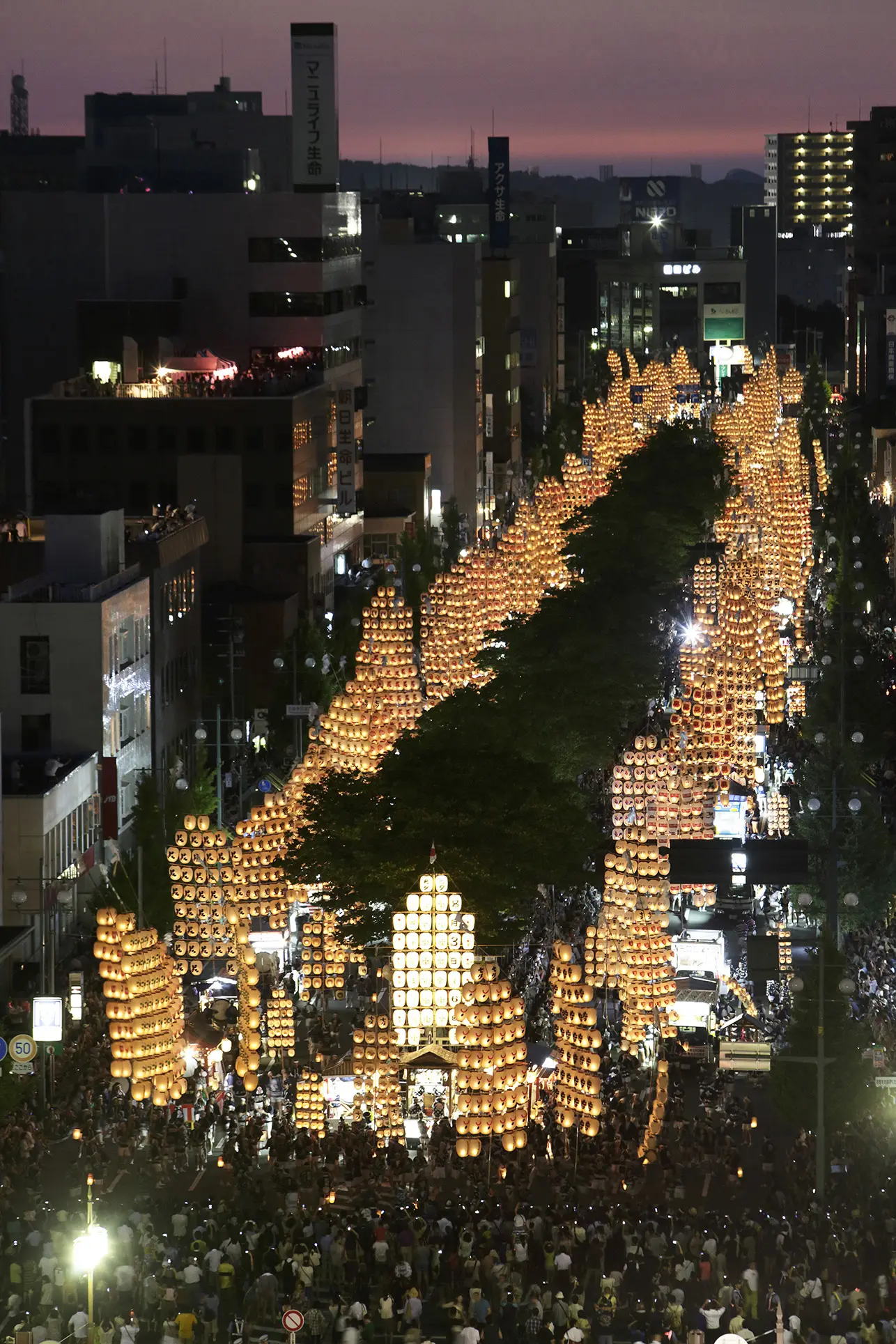
Over time, this 'Neburi Nagashi' combined with the development of rural culture and commerce in Akita, merging with prayers for a rich harvest of rice, Akita's main crop, and business prosperity. The shape of the large pole with many hanging lanterns represents a ripe ear of rice, and the protective charm at the top represents a rice straw bag. Thus, the event transformed from a simple evil-averting ritual to a festival celebrating and praying for a rich harvest.
In the Meiji period, following Emperor Meiji's visit to Akita in 1881, the festival was formally named 'Kanto' (竿燈) from a phrase in a Chinese Zen text, 'One must progress further from the top of a hundred-foot pole.' Overcoming the interruption during World War II, local preservation societies and merchants worked hard after the war to pass down traditional techniques and expand the scale, and it was designated as a national important intangible folk cultural property in 1980. Today, it continues to attract attention from all over the world as a festival inheriting Edo-period atmosphere and energetic techniques.
2026 Schedule & Event Information#
The festival dates are fixed every year from August 3 to 6. The schedule and key events for 2026 are as follows:
| Time | Key Content and Events | Location |
|---|---|---|
| From 18:15 (Daily) | Traffic regulations begin around the venue. Kanto Boulevard becomes a pedestrian zone, raising the excitement before the main performance. | Kanto Boulevard, Central Akita City |
| From 18:50 (Daily) | Kanto entry starts. About 280 Kanto representing various neighborhoods and companies form a parade and slowly enter the venue. | Kanto Boulevard area |
| 19:25 - 20:35 (Daily) | Main Kanto performance. Accompanied by drums and flutes, sashite raise the Kanto all at once, showing off amazing balance techniques. | Kanto Boulevard (Main Venue) |
| 20:35 - 21:00 (Daily) | 'Fureai Kanto' (Interaction Time). Tourists can enter the road to view Kanto up close, take commemorative photos, and try holding a mini Kanto. | Kanto Boulevard |
While many modern festivals use LED lights or electric lamps, real candles are still lit inside all Kanto lanterns today. When the wind blows, the soft, warm light characteristic of real flames flickers, creating a 'Milky Way' of light. Although lanterns sometimes catch fire due to wind or vibration, fire-extinguishing water and spare lanterns are carried by team members, showing great teamwork in exchanging them instantly.
Highlights: Five Basic Techniques and 'Tsugidake' (Adding Bamboo)#
The most exciting element of the festival is the balance technique of the 'sashite' performers who control the heavy, giant Kanto not by brute force, but by body balance.
1. Kanto Classes and Giant Sizes#
Kanto are divided into several sizes depending on the age and physique of the performer. The largest大人 size is called 'Owaka', measuring 12 meters in length, weighing about 50 kilograms, and holding 46 lanterns. Supporting this giant bamboo tower under wind pressure requires extraordinary core strength and skill.
2. Five Basic Techniques#
Sashite perform balancing acts using only five specific parts of the body without using their hands. A shout of 'Dokkoisho, dokkoisho!' echoes whenever a technique is successful:
- Nagashi (Holding & Shifting): Supporting the pole firmly with the non-dominant hand while adjusting balance and preparing for the next move with the other hand.
- Hirate (Palm): Holding the Kanto high on the palm. A dynamic technique that emphasizes the height and size of the Kanto to the audience.
- Hitai (Forehead): Moving the Kanto from the palm to the forehead, supporting it with only neck strength and core balance. Requires high concentration to read the wind.
- Kata (Shoulder): Placing the Kanto on the shoulder of the dominant arm, taking balance while tilting the upper body slightly. The most popular technique showing raw strength.
- Koshi (Waist): Placing the Kanto on the lower back, supporting it only with waist flexibility and leg strength. A high-difficulty technique that excites the crowd as the performer bends backward.
3. Shifting High with 'Tsugidake'#
As the performance progresses, sashite add new bamboo extensions (Tsugidake) from the bottom, utilizing the flexibility of the bamboo. Bending in a large U-shape under the wind, the Kanto sometimes reaches nearly 20 meters, equivalent to a 5-story building. Watching it bend almost to the breaking point while maintaining balance is thrilling.
2026 Access Guide & Tips to Enjoy the Festival#
The main venue, Kanto Boulevard, is within walking distance from JR Akita Station, offering excellent access.
Access to Akita#
• By Train: Take the Akita Shinkansen 'Komachi' to Akita Station (about 3 hours and 50 minutes from Tokyo). The main venue is a 15-minute walk from the West Exit.
• By Air: From Akita Airport, take a limousine bus to Akita Station (about 40 minutes).
• By Car: Exit at Akita Chuo IC on the Akita Expressway. Since traffic regulations are active, using public transportation is highly recommended.
Tips to Enjoy Your Visit#
The performance takes place in the middle of the road. While you can enjoy it from the sidewalk, reserving a paid seat in advance is recommended. During the 'Fureai Kanto' time at the end, make sure to walk to the center of the road to take photos with sashite and feel the weight of the traditional Kanto.
Conclusion: Visit Akita to Feel the Fire and Techniques in 2026#
The 2026 festival promises plenty of drama, including new sashite challenging heights with Tsugidake extensions. Let's pray for a rich harvest in 2026 so that Japan will not suffer from rice shortages again, and enjoy the golden ears of rice in Akita's summer sky.
【Sources】#
1. Akita Kanto Festival Sponsor Association: "Official Website"
2. Akita Prefecture Tourism Association: "Official Guide"
3. Tohoku Festival Network: "Tohoku's Big Three Festivals"