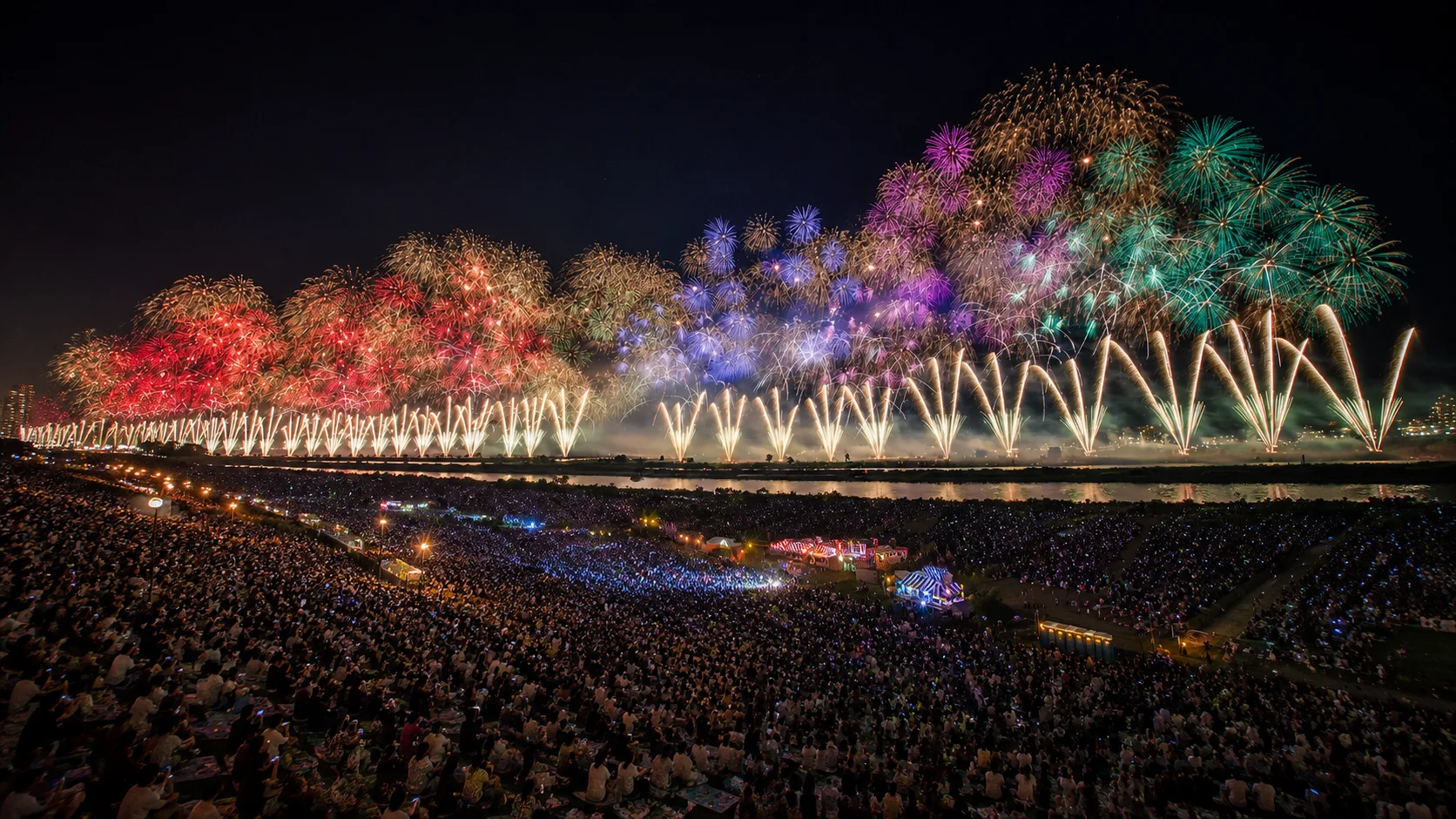
Japan Aug 1-2 Fireworks Guide
Guide to Japan's Aug 1-2 fireworks, focusing on Nagaoka's recovery history, Phoenix display, and 2026 access tips.
The first weekend of August, August 1 and 2, represents the peak of Japan's summer season, with massive fireworks festivals taking place simultaneously across the country. The great blooms of light coloring the night sky are more than just entertainment; they are cultural arts carrying local history, traditions, and the prayers of the people. This article compares major fireworks festivals nationwide held over these two days. We also spotlight the Nagaoka Matsuri Grand Fireworks Festival, which boasts one of the largest scales and deepest histories in Japan, detailing its appeal, historical background, and key highlights for 2026.
Major Fireworks Festivals on August 1–2#
First, we have compiled a list of representative fireworks festivals held across Japan on Saturday, August 1 and Sunday, August 2, 2026. Each has its own unique characteristics in terms of shell count and performances, offering distinct charms.
| Festival Name | Date | Time | Location | Total Shells | Key Features & Highlights |
|---|---|---|---|---|---|
| Edogawa Fireworks Festival | August 1 (Sat) | 19:15–20:20 | Edogawa Riverbank, Tokyo (off Metropolitan Shinozaki Park) |
Approx. 14,000 shells | Managed by the historic pyrotechnician group "Kagiya". The highlights include a breathtaking opening that launches 1,000 shells in just 5 seconds, and a massive set-piece depicting Mount Fuji. It is co-hosted with Ichikawa City on the opposite shore. |
| Itabashi Fireworks Festival | August 1 (Sat) | 19:00–20:30 | Arakawa Riverbank, Itabashi-ku, Tokyo |
Approx. 15,000 shells | Held simultaneously with the Todabashi Fireworks Festival on the opposite bank. The highlights include the launch of the "Shaku-goshun-dama" (15-inch shell), which is among the largest in Tokyo, and the "Great Niagara Falls", one of the longest in the Kanto region stretching about 700 meters. |
| Todabashi Fireworks Festival | August 1 (Sat) | 19:00–20:30 | Arakawa Riverbank, Toda City, Saitama |
Approx. 15,000 shells | Competes and collaborates with the "Itabashi Fireworks Festival" across the Arakawa River. Its main attractions are the dynamic music-synchronized fireworks linked with the Itabashi side, and the highly immersive, stereoscopic synchronization across both riverbanks. |
| Teganuma Fireworks Festival | August 1 (Sat) | 19:10–20:10 | Around Teganuma, Kashiwa & Abiko Cities, Chiba |
Approx. 13,500 shells | A vast launching site leveraging the natural scenery of Teganuma Lake. Highlights include the "Underwater Fireworks" opening in a fan shape over the water, and massive starmines launched competitively from both the Kashiwa and Abiko venues. |
| Koga Fireworks Festival | August 1 (Sat) | 19:20–20:30 | Watarase Riverbank, Koga City, Ibaraki |
Approx. 20,000 shells | Boasting one of the largest launch volumes in the Kanto region, its wide-area starmines filling the night sky are breathtaking. Additionally, a massive "Sanjakudama" shell weighing about 150 kg is launched, delivering an explosion of sound and light. |
| Okazaki Ieyasu Summer Festival Fireworks | August 1 (Sat) | 19:00–20:30 | Oto and Yahagi Riverbanks, Okazaki City, Aichi |
Approx. 20,000 shells | A highly prestigious event held at the birthplace of Tokugawa Ieyasu, carrying on the traditions of Mikawa fireworks. The elegant set-pieces and starmines set against the backdrop of Okazaki Castle are beautiful, allowing visitors to enjoy historical scenery. |
| Asaka Citizen's Festival "Saikasai" | August 1 (Sat) | 19:15–20:15 | Around Asaka Chuo Park, Asaka City, Saitama |
Approx. 9,000 shells | Held as the main event of the "Saikasai" festival. Because the fireworks are launched from a very close distance of just 100 meters from the city center, visitors can experience an overwhelming blast of sound and a shockwave of light unlike any other. |
| Lake Sagami Lake Festival Fireworks |
August 1 (Sat) | 19:30–20:30 | On Lake Sagami, Sagamihara City, Kanagawa |
Approx. 4,000 shells | Held in the unique mountainous terrain surrounding Lake Sagami. It is characterized by booming sounds that echo off the mountains like thunder. Visitors can enjoy the famous giant Niagara Falls and super ultra starmines. |
| Southern Beach Chigasaki Fireworks Festival |
August 1 (Sat) | 19:30–20:10 | Southern Beach Chigasaki, Chigasaki City, Kanagawa |
Approx. 2,000 shells | An atmospheric beach fireworks show launched from the coast of Chigasaki. The signature attraction is the "Underwater Peacock," which spreads across the water surface like a rainbow-colored peacock opening its feathers. It is a luxurious experience enjoyed alongside the sound of waves and ocean breezes. |
| Nagaoka Matsuri Grand Fireworks Festival |
August 2 (Sun) & 3 (Mon) | 19:20–approx. 21:25 | Shinano Riverbank, Nagaoka City, Niigata |
Approx. 20,000 shells (2-day total) |
One of the Three Great Fireworks Festivals of Japan. Fully utilizing the vast riverbeds of the Shinano River, it boasts a world-class scale, featuring the "Phoenix Reconstruction Fireworks" spanning about 2 km and the ultra-large "Shosanjakudama" shell. |
| Matsue Suigosai Lake Fireworks Festival |
August 1 (Sat) & 2 (Sun) | 20:15–21:00 | Around Lake Shinji, Matsue City, Shimane |
Approx. 21,000 shells (2-day total) |
One of Western Japan's largest lake-based fireworks festivals, launched from the surface of Lake Shinji. A total of 21,000 shells are fired over two days, creating a fantastic scene of colorful lights reflecting on the water. A drone show also begins at 20:00. |
| Fukaya Fireworks Festival | August 2 (Sun) | 19:00–21:00 | Arakawa Riverbank, Fukaya City, Saitama (Arakawa Kawamoto Ryokuchi) |
Approx. 4,000 shells | Held under the theme "Passionate Flowers Blooming in the Night Sky of Fukaya." Set along the Arakawa River bank looking out toward the distant Chichibu Mountains, the festival features rapid sequences of large shells and starmines, creating a beautiful contrast between serene nature and vibrant fireworks. |
*The information above is based on plans as of July 2026. Events may be modified or cancelled due to weather conditions on the day. Please check the official websites for the latest updates.
The "Special Meaning" of the Three Great Fireworks and Nagaoka's Uniqueness#
While many fireworks festivals across the country compete for attention, the "Nagaoka Matsuri Grand Fireworks Festival" in Nagaoka City, Niigata, is counted as one of the "Three Great Fireworks Festivals of Japan," alongside Akita's "National Fireworks Competition (Omagari Fireworks)" and Ibaraki's "Tsuchiura National Fireworks Competition." However, Nagaoka's fireworks hold a "special meaning" that sets them apart from these other events. While most fireworks festivals primarily focus on technological competition, tourism promotion, or regional revitalization, Nagaoka's fireworks are fundamentally rooted in "memorial services for the deceased," "reconstruction," and "prayers for peace."
While Omagari and Tsuchiura strongly present themselves as "competitions" where pyrotechnicians vie with their skills, Nagaoka focuses entirely on "stories that convey the feelings of citizens and disaster victims." By making full use of the natural canvas of the Shinano River, its style of embedding historical memories into each giant ring of fire delivers a profound emotion that transcends technique. Behind the overwhelming light coloring the night sky lies a history that must never be forgotten. This multi-layered storytelling is the core uniqueness of Nagaoka's fireworks, stirring viewers' hearts and moving them to tears.
Reconstruction from the Nagaoka Air Raid: History of Memorials and Prayers for Peace#
The origin of the Nagaoka Matsuri dates back to August 1, 1945, near the end of the Pacific War. At 10:30 PM on this day, Nagaoka City suffered a massive air raid by the U.S. military (the Nagaoka Air Raid). Numerous incendiary bombs dropped from B-29 bombers reduced about 80% of the old city area to ashes, and the precious lives of more than 1,480 citizens were lost overnight. The survivors were plunged into deep sorrow, and the entire city's functions were completely destroyed.
Yet just one year later, on August 1, 1946, the citizens organized the "Nagaoka Reconstruction Festival." Signals were raised to show that they would rise strongly from the ruins of war, mourn the lost souls, and pledge to rebuild their city. This was the predecessor of today's Nagaoka Matsuri. The fireworks festival resumed in 1948, two years after the Reconstruction Festival, and the dates of August 2 and 3 have been strictly observed ever since. This is to honor the historical context of designating August 1, the day of the air raid, as a "Day of Mourning," and launching fireworks only on the subsequent days.
Even today, on the eve of the fireworks festival at 10:30 PM on August 1 (the exact time the air raid began), all temples in the city ring their bells simultaneously, and three white memorial fireworks called "Shirakiku" (White Chrysanthemum) are quietly launched into the night sky. The origin of Shirakiku lies in the philosophy of Seiji Kase, a legendary pyrotechnician who experienced Siberian internment and dedicated his post-war life to reconstruction as a firework maker in Nagaoka. Driven by the strong conviction that "fireworks should not just be beautiful, but should be a light to guide the souls of lost comrades and victims," he designed this pure white chrysanthemum firework. Shirakiku is the very soul of Nagaoka's fireworks, offering condolences to war victims and prayers for peace, and serving as the foundation for all the spectacular programs that follow.
Recovery from the Chuetsu Earthquake: The Hope of the Phoenix#
The people of Nagaoka have faced trials not only from war but also from major natural disasters. On October 23, 2004, the "Niigata Prefecture Chuetsu Earthquake," measuring a maximum seismic intensity of 7, struck the Chuetsu region of Niigata Prefecture, causing catastrophic damage across a wide area that included Nagaoka City. Many lives were lost due to collapsed houses and violent landslides, and mountainous villages were completely isolated. Life-support infrastructure was severed, forcing tens of thousands of people into harsh evacuation shelters.
To pledge an early recovery from this unprecedented disaster and to express gratitude for the warm support received from all over the country, the "Phoenix Reconstruction Fireworks" was launched at the Nagaoka Matsuri in the following year, 2005. Set to the solemn melody of Ayaka Hirahara's masterpiece "Jupiter," fireworks shaped like golden, glowing phoenixes take flight into the night sky from multiple launch points lined along the Shinano River bank, spanning an ultra-wide layout of about 2 km. Corresponding to the song's lyric "You are not alone," the moment when the entire night sky is filled with a wall of light continues to give courage and hope to survive tomorrow, not only to the disaster victims but to all who watch. Even today, more than 20 years after the earthquake, the Phoenix continues to be launched as a symbol of Nagaoka's fireworks and as a message of encouragement to disaster-stricken areas worldwide.
In previous years, the Phoenix Reconstruction Fireworks were launched around 20:15 in the middle of the program. However, in 2026, the launch time has been changed to around 20:45. To ensure you do not miss this iconic highlight of Nagaoka's fireworks, check the program schedule carefully in advance and be careful not to miss it in the crowd.
2026 Special Performance: 120th Anniversary of Municipal Status and 100th Anniversary of the Shosanjakudama#
The year 2026 is an extremely important milestone for Nagaoka City. It marks the 120th anniversary of the city's incorporation, and at the same time, exactly 100 years since Japan's first successful launch of a "Shosanjakudama" shell in the 15th year of the Taisho era (1926).
A Shosanjakudama is a massive firework shell with a diameter of about 90 cm and a weight of around 300 kg. The technology required to launch such a heavy shell 650 meters into the air to open a giant bloom of light spanning approximately 650 meters across represents the absolute pinnacle of traditional Japanese pyrotechnics. The ground-shaking roar upon launch and the overwhelming visual impact of its explosion in the sky dwarf other fireworks in physical scale. To celebrate the 100th anniversary of the Shosanjakudama in 2026, a special memorial performance is planned: the "Great Niagara Falls" light curtain flowing from the historic Chosei Bridge over the Shinano River, occurring simultaneously with the launch of the Shosanjakudama. This collaboration, weaving the pride of craftsmen passed down since the Taisho era with history, will be the most dramatic moment in Nagaoka's night sky in 2026.
Comparison with Other Festivals: Nagaoka's Grand Scale vs. Urban Fireworks#
Comparing the "Nagaoka Matsuri Grand Fireworks Festival" with other major national events held on August 1 and 2—such as the "Edogawa Fireworks Festival", the "Itabashi Fireworks Festival", and Shimane Prefecture's "Matsue Suigosai"—reveals significant differences in the structure and approach of their appeal.
First, the Edogawa and Itabashi fireworks make use of limited urban riverbank spaces to pursue "meticulous production" and "intense close-up impact," featuring high-density starmines synchronized with music and themed state-of-the-art artistic fireworks. The true appeal of urban fireworks lies in their proximity to the spectator seating, allowing the sound to vibrate directly through the body. Meanwhile, the Matsue Suigosai, set against the beautiful surface of Lake Shinji, boasts modern entertainment focused on the "contrast between water and light," showcasing diagonal underwater fireworks and drone shows.
In contrast, Nagaoka's fireworks are characterized by a spatial design that leverages the "spatial beauty of vast nature." The extensive area provided by the mighty Shinano River is what allows the safe launch of the "Phoenix" (with a width of 2 km) and the "Shosanjakudama" (which requires a safety radius of several hundred meters). The sheer scale of each individual shell and the beautiful reflection mirroring on the water surface of the Shinano River offer an overwhelming sense of scale unique to Nagaoka, physically impossible in urban fireworks festivals. While urban shows compete in the precision of their techniques, Nagaoka wraps the audience in an "overwhelming sense of openness and a message of prayer" harmonized with nature.
Access Information and Spectator Guidelines for 2026#
Thorough advance preparation is essential when attending the Nagaoka Matsuri Grand Fireworks Festival. A massive crowd of visitors is expected again in 2026, so please pay close attention to the following points to avoid congestion and trouble.
| Category | Details & Countermeasures |
|---|---|
| Mandatory Paid Seating Only | There are no free viewing areas at the venue. Those who have not purchased tickets in advance will not be permitted to enter the riverbank and surrounding embankments. No same-day tickets will be sold. If you do not have a ticket, please do not come to the venue; instead, enjoy the event via the official television or internet broadcasts. Standing to watch in the surrounding area can cause accidents. |
| Public Transport Highly Recommended | The venue is approximately a 30-minute walk from JR Nagaoka Station (Ote Exit). Extensive traffic regulations will be implemented throughout Nagaoka City on the day, completely paralyzing the surrounding roads. Arriving by car carries a very high risk of being caught in traffic congestion and missing the start of the fireworks. We highly recommend using trains, such as JR's special temporary trains. |
| Manner Improvement Campaigns | Nagaoka City promotes the "NAGAOKA HANABI GOOD ACTION! PROJECT." Visitors are expected to observe good manners to enjoy this historic peace festival, which includes separating and disposing of trash properly, taking waste home, respecting private property by not trespassing, and preventing illegal parking on nearby roads. |
| Footwear and Clothing Tips | The Shinano Riverbed is vast, featuring many gravel paths and steep slopes. Wearing sandals or high heels poses a risk of slipping or injury. Please wear comfortable walking shoes, such as sneakers. In addition, please carry sufficient water as there is still a risk of heatstroke even during the night. |
Conclusion: An Art of Light Infused with Prayers for Peace#
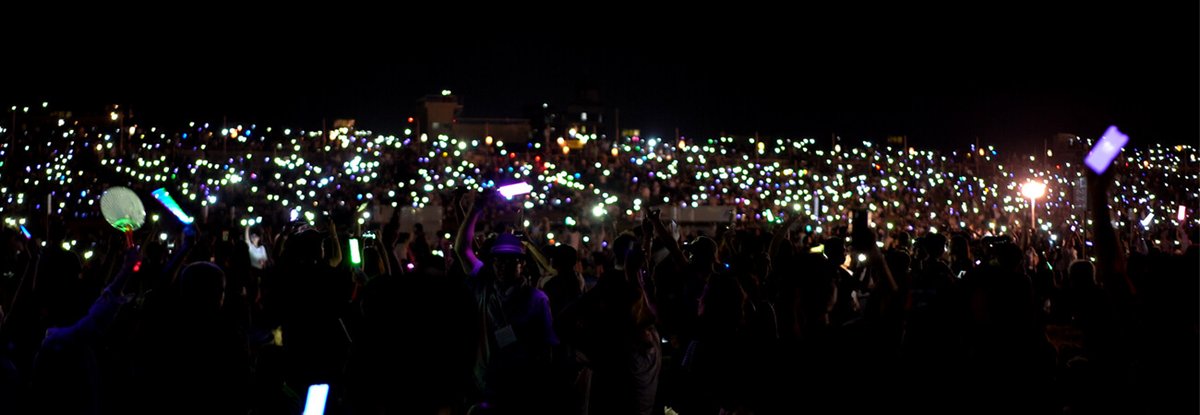
After the final fireworks of the Nagaoka Matsuri Grand Fireworks Festival fade into the night sky, spectators raise their smartphone lights to send a "light message" of appreciation to the pyrotechnicians working on the opposite riverbank. In this moment, the entire venue unites as gratitude and hopes for peace gently intertwine. Because it is not merely glamorous, but began as a memorial for air raid victims and has triumphed over numerous hardships, Nagaoka's fireworks resonate deeply within our hearts. In the summer of 2026, a milestone year celebrating the 120th municipal anniversary and the 100th anniversary of the Shosanjakudama, why not look up at the night sky while reflecting on the preciousness of peace?
【Sources】#
- Nagaoka Matsuri Committee "Nagaoka Matsuri Grand Fireworks Festival Official Website"
- Nagaoka City Hall "History and Overview of Nagaoka Matsuri"
- Edogawa Ward Office "Edogawa Fireworks Festival Official Website"
- Itabashi Fireworks Festival Executive Committee "Itabashi Fireworks Festival Official Website"