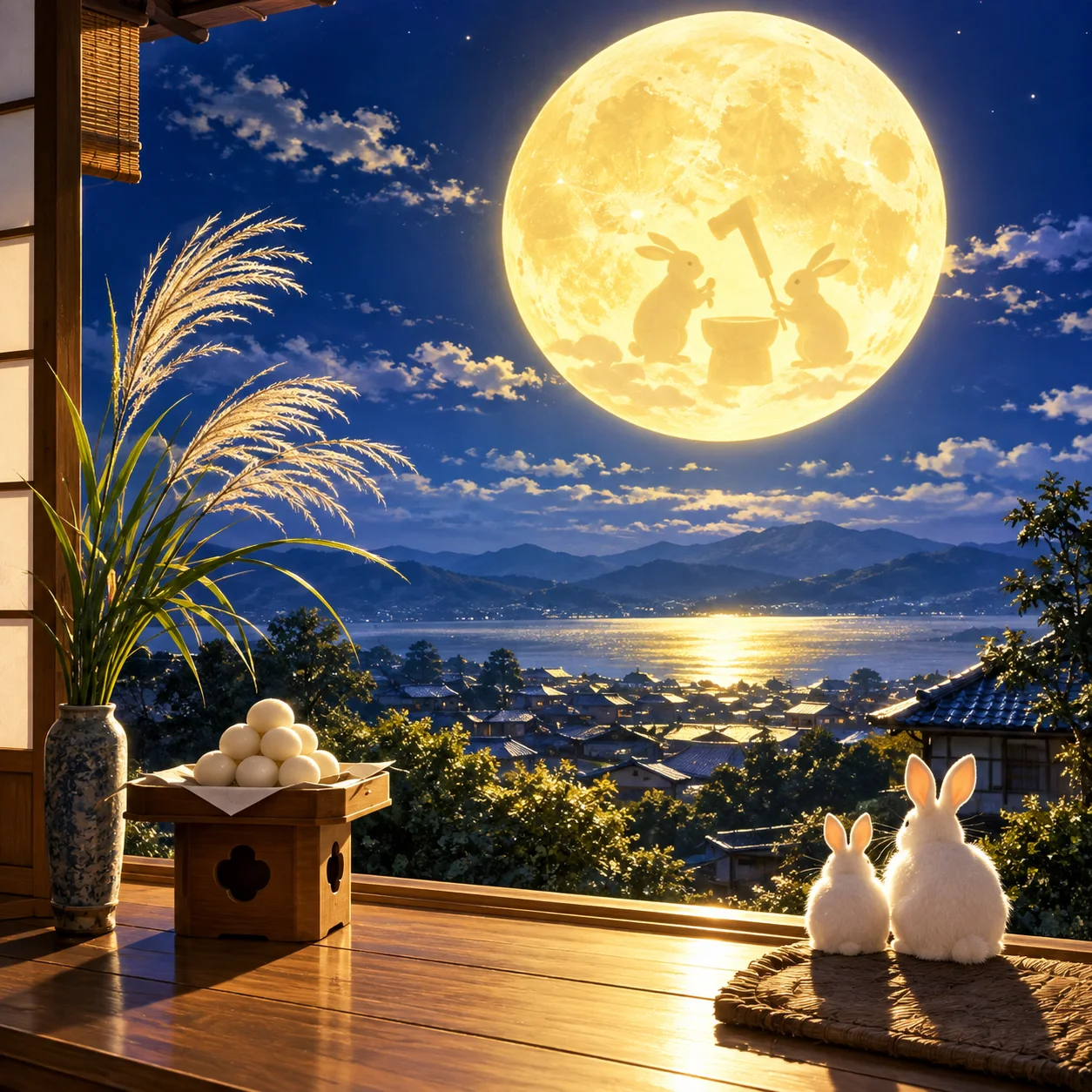
2026 Harvest Moon: Guide to Moon-Viewing & Kangetsukai Events
Celebrated on Sept 25, 2026, Japan's Harvest Moon brings traditional moon-viewing events, from boat rides at Kyoto's Daikakuji to festivals at Himeji Castle and Yokohama's Sankeien.
As the crisp autumn air settles across Japan, the age-old tradition of Tsukimi (moon-viewing) invites people to pause and admire the celestial beauty of the night sky. Across historic temples, grand castles, and scenic classical gardens, traditional gatherings known as Kangetsukai (moon-viewing festivals) and Meigetsusai continue to thrive. In 2026, the celebrated Harvest Moon (Mid-Autumn Moon / Jūgoya) falls on Friday, September 25.
From the graceful court banquets of Heian-era aristocrats who admired the moon reflected upon tranquil waters, to agrarian harvest celebrations offering thanks for autumn's bounty, moon-viewing is woven with deep cultural meaning. This comprehensive guide explores the historical significance, astronomical context, and the finest Kangetsukai events held across Japan around September 25, 2026.
【2026 Moon-Viewing Key Dates】
・ Mid-Autumn Harvest Moon (Jūgoya): Friday, September 25, 2026
・ The Subsequent Moon (Jūsanya / 13th Night): Friday, October 23, 2026
※ The Mid-Autumn Moon refers to the 15th night of the 8th lunar month in the lunisolar calendar. The astronomical exact full moon may differ by 1–2 days, but magnificent round moonlight can be savored on this festive evening.
History and Cultural Evolution of Japanese Moon-Viewing#
The custom of moon-viewing was introduced to the Japanese imperial court from Tang Dynasty China during the early Heian period. Historical records indicate that the earliest recorded royal moon-viewing banquet took place in the year 909 under Emperor Daigo.
For court nobles, the pinnacle of aesthetic refinement was not to gaze directly upward into the sky, but to admire the soft reflection of the moon shimmering across pond surfaces or swirling in sake cups. Emperor Saga's legendary boat parties upon Osawa Pond at his Saga Imperial Villa (now Daikakuji Temple) became the archetypal symbol of this poetic pastime, where guests composed waka poetry to the resonant harmonies of court gagaku music.
During the Muromachi and Edo periods, this aristocratic pastime spread widely to the warrior class and the general populace. Among agricultural communities, the festival coincided with the harvest of taro roots, earning it the affectionate moniker Imo Meigetsu (Taro Moon). It transformed into a thanksgiving harvest festival dedicated to deities and ancestors. The beloved custom of displaying Japanese pampas grass (susuki) resembling rice ears alongside rice dumplings (tsukimi dango), seasonal taro, chestnuts, and edamame firmly established itself during this era.
2026 Guide to Premier Moon-Viewing & Kangetsukai Events Across Japan#
Each regional Kangetsukai features distinct traditions, ranging from solemn Shinto and Buddhist rituals to boat cruises, nighttime illuminations of national treasures, and live traditional performing arts. Below are the most celebrated destinations across Japan.
1. 【Kyoto】Daikakuji Temple: "Kangetsu no Yūbe" (Evening of Moon-Viewing)#
Located in the scenic western district of Sagano in Kyoto, the Osawa Pond at Daikakuji Temple is celebrated as one of Japan's Three Great Moon-Viewing Sites alongside Sarusawa Pond in Nara and Ishiyama-dera in Shiga. It preserves Emperor Saga's 1,200-year-old tradition of imperial moonlit boating.
During the "Kangetsu no Yūbe" event, magnificent Ryūtō Gekishu boats (ornate wooden vessels adorned with dragon and waterfowl prows) glide across the tranquil pond, offering visitors the rare privilege of viewing the moon both in the sky and on the mirror-like water. From the Godaidō Moon-Viewing Platform, panoramic vistas of the autumn night unfold alongside sacred full-moon Buddhist ceremonies.
- Dates: September 25 (Fri) – September 27 (Sun), 2026
- Hours: 17:30 – 21:00 (Last entry 20:30) ※ Day/Night rotation
- Venue: Former Saga Imperial Villa Daikakuji Temple (4 Saga Osawa-cho, Ukyo-ku, Kyoto)
- Admission: Adults ¥700, Primary/Secondary students ¥300 (Special boat rides and matcha seating require advance tickets)
2. 【Hyogo】World Heritage Himeji Castle: "44th Himeji Castle Kangetsukai"#
Framed by the majestic backdrop of the World Cultural Heritage "White Heron Castle," this grand celebration takes place on the expansive Sannomaru Square. The illuminated chalk-white main keep contrasting against the golden autumn moon creates an awe-inspiring vista.
The open-air stage presents stirring Japanese taiko drumming, elegant koto (zither) performances, and traditional dance. Visitors can also enjoy local open-air stalls serving freshly made tsukimi dango, warm Himeji oden, and regional Harima sake. The adjacent Koko-en Garden also hosts a simultaneous illuminated moon-viewing night.
- Dates: September 25, 2026 (Fri) 17:00 – 21:00 (Postponed to Sept 26 in case of heavy rain)
- Venue: Himeji Castle Sannomaru Square (68 Honmachi, Himeji, Hyogo)
- Admission: Free entry (Food and tea ceremony purchases are separate)
3. 【Kanagawa】Yokohama Sankeien Garden: "Kangetsukai"#
Created by silk merchant connoisseur Sankei Hara, Sankeien is a renowned Japanese garden renowned for its historic architecture relocated from Kyoto and Kamakura. During the annual Kangetsukai, ancient pagodas and pavilions are softly illuminated after dusk.
Against the picturesque backdrop of the Rinshunkaku villa—a 17th-century retreat associated with the Tokugawa clan—daily live concerts showcase traditional instruments including the dramatic Satsuma biwa lute, solemn gagaku court music, and delicate koto melodies echoing across the lotus pond.
- Dates: September 25 (Fri) – September 29 (Tue), 2026 (Sunset – 20:30, Last entry 20:00)
- Venue: Sankeien Garden (58-1 Honmoku Sannotani, Naka-ku, Yokohama, Kanagawa)
- Admission: Adults ¥900, Children ¥200 (Concerts included with garden admission)
4. 【Tokyo】Mukojima-Hyakkaen Gardens: "Moon-Viewing Gathering"#
Dating back to the vibrant cultural era of late Edo townspeople, Mukojima-Hyakkaen extends its opening hours until 21:00 for its historic moon-viewing celebration. Nestled near the Sumida River, the garden blends vintage Edo charm with views of the Tokyo Skytree.
The pathways are lined with handcrafted paper lanterns (andon) bearing classic calligraphy and drawings. Highlights include the traditional offering ceremony beside bush clover tunnels, outdoor nodate tea ceremonies, and live koto and shinnai-bushi narrative singing in the autumn breeze.
- Dates: September 24 (Thu) – September 26 (Sat), 2026 (9:00 – 21:00, Last entry 20:30)
- Venue: Mukojima-Hyakkaen Gardens (3-18-8 Higashi-Mukojima, Sumida-ku, Tokyo)
- Admission: General ¥150, Seniors (65+) ¥70, Children free (Tea ceremony fee separate)
5. 【Mie】Ise Jingu: "Jingu Kangetsukai"#
At the spiritual heart of Japan, the Outer Shrine (Geku) of Ise Jingu hosts a solemn moon-viewing dedication on the floating stage of the sacred Magatama Pond on the night of the Mid-Autumn Moon.
Winning waka and haiku poems selected from nationwide submissions are chanted in ancient ceremonial style. As twilight deepens, bonfires are lit on the water, and shrine musicians perform timeless court orchestra (kangen) and bugaku dance in honor of the deities beneath the radiant moon.
- Dates: September 25, 2026 (Fri) Evening
- Venue: Ise Jingu Geku, Magatama Pond Floating Stage (279 Toyokawa-cho, Ise, Mie)
- Admission: Free attendance (Tea service is fee-based)
6. 【Osaka】Sumiyoshi Taisha: "Kangetsusai"#
The head shrine of all 2,300 Sumiyoshi shrines in Japan, Sumiyoshi Taisha presents an enchanting spectacle as the full moon ascends directly above the iconic arched Sorihashi (Drum Bridge).
Priests, miko shrine maidens, and court musicians gather on the bridge to chant sacred poetry, followed by graceful Kagura dances and Bugaku performances. The illuminated vermilion bridge reflecting in the water alongside the autumn moon makes it an unforgettable Osaka cultural tradition.
- Dates: September 25, 2026 (Fri) 18:00 – 20:30
- Venue: Sumiyoshi Taisha Sorihashi Area (2-9-89 Sumiyoshi, Sumiyoshi-ku, Osaka)
- Admission: Free
7. 【Shiga】Ishiyama-dera Temple: "Shūgetsusai" (Autumn Moon Festival)#
Perched along the Seta River where Lady Murasaki Shikibu is said to have conceived The Tale of Genji while gazing at the August moon, Ishiyama-dera is enveloped in gentle nighttime illumination during the Shūgetsusai.
The National Treasure Main Hall, Tahoto Pagoda, and natural Wollastonite rock formations are lit up. From the elevated Tsukimitei (Moon-Viewing Pavilion), visitors can witness the moon rising over the river, complemented by gagaku music recitals and readings.
- Dates: September 25 (Fri) – September 26 (Sat), 2026 (18:00 – 21:00, Last entry 20:30)
- Venue: Daihonzan Ishiyama-dera (1-1-1 Ishiyamadera, Otsu, Shiga)
- Admission: Night entry Adults ¥800, Children ¥400
Comparison Table: Major 2026 Moon-Viewing Events Across Japan#
The table below summarizes key dates, locations, and distinctive features of Japan's premier 2026 moon-viewing gatherings.
| Region & Venue | Event Name | 2026 Schedule | Key Highlights & Features |
|---|---|---|---|
| Kyoto: Daikakuji | Kangetsu no Yūbe | Sept 25 (Fri) – 27 (Sun) | Dragon-prow boat rides on Osawa Pond, Godaidō terrace, full moon ritual |
| Hyogo: Himeji Castle | Himeji Castle Kangetsukai | Sept 25 (Fri) | Illuminated castle backdrop, taiko and koto stage, local sake & food stalls |
| Kanagawa: Sankeien | Kangetsukai | Sept 25 (Fri) – 29 (Tue) | Illuminated historic buildings, Satsuma biwa and Gagaku at Rinshunkaku |
| Tokyo: Mukojima-Hyakkaen | Moon-Viewing Gathering | Sept 24 (Thu) – 26 (Sat) | Traditional andon lanterns, offering ceremony, open-air tea, koto music |
| Mie: Ise Jingu | Jingu Kangetsukai | Sept 25 (Fri) | Sacred Magatama Pond stage, waka recitation, bonfire gagaku & bugaku dance |
| Osaka: Sumiyoshi Taisha | Kangetsusai | Sept 25 (Fri) | Poetry reading on high arched bridge, sacred kagura dance and bugaku |
| Shiga: Ishiyama-dera | Shūgetsusai | Sept 25 (Fri) – 26 (Sat) | National treasure temple lighting, Tsukimitei river views, Tale of Genji site |
Tips & Etiquette for Enjoying Autumn Moon-Viewing#
- Prepare for Evening Chills: Late September nights in Japan can become brisk, particularly near water bodies or open gardens. Bringing a warm jacket, shawl, or cardigan ensures comfortable viewing.
- Check Advance Tickets: Premium programs such as Daikakuji boat seats and formal tea ceremonies often require advance booking or lottery tickets. Verify current availability on official websites beforehand.
- Photography Etiquette: Always disable camera flashes to preserve the serene nocturnal atmosphere and protect other visitors' night vision. Abide by local rules regarding tripods.
- Embrace Mindful Serenity: Moon-viewing is an invitation to tranquility. Take time to appreciate the subtle sounds of autumn insects and traditional instruments blending under the starlit sky.
Conclusion: Connecting with Centuries of Timeless Wonder#
For more than twelve centuries, generations of Japanese people have looked up at the autumn moon with reverence, wonder, and gratitude for the earth's abundance. In our fast-paced modern world, taking a peaceful evening to watch the golden moon crest over ancient roofs or shimmer across sacred waters remains one of Japan's most poetic experiences. On September 25, 2026, step into this timeless tradition at one of these remarkable destinations.
【Sources】