Summer Delicacy! Introducing the Charm of Flying Fish and Sea Bass in Peak Season in Late August!
Introducing flying fish and sea bass that peak in late August. Learn about the season's background, top ports, local recipes, and 2026 fishery trends under environmental changes.
In late August, when the lingering summer heat continues, "seasonal white fish" whose fat is most on and whose body is firmest before the arrival of autumn are welcoming the peak of landing in the sea. The representative examples are the "flying fish" gliding refreshingly on the sea surface, and the "sea bass" which is a luxury summer fish representing Edomae. Flying fish packed with elegant taste in a refreshing body, and sea bass with rich fat and texture, are both supreme delicacies to be tasted especially after the Obon period. In this article, we explain in detail and comprehensively from ecological and nutritional reasons why these fish become delicious in late August, to famous fishing ports as major production areas (Yakushima in Kagoshima, Funabashi Port in Chiba, etc.), the "best way to eat" backed by local fishermen, and the "latest fishery yield trends in 2026" affected by environmental changes such as recent global warming.
Why is Late August Delicious? Ecological Background of Reaching Peak Season#
There are clear reasons deeply connected with their respective life cycles why flying fish and sea bass become most delicious in late August.
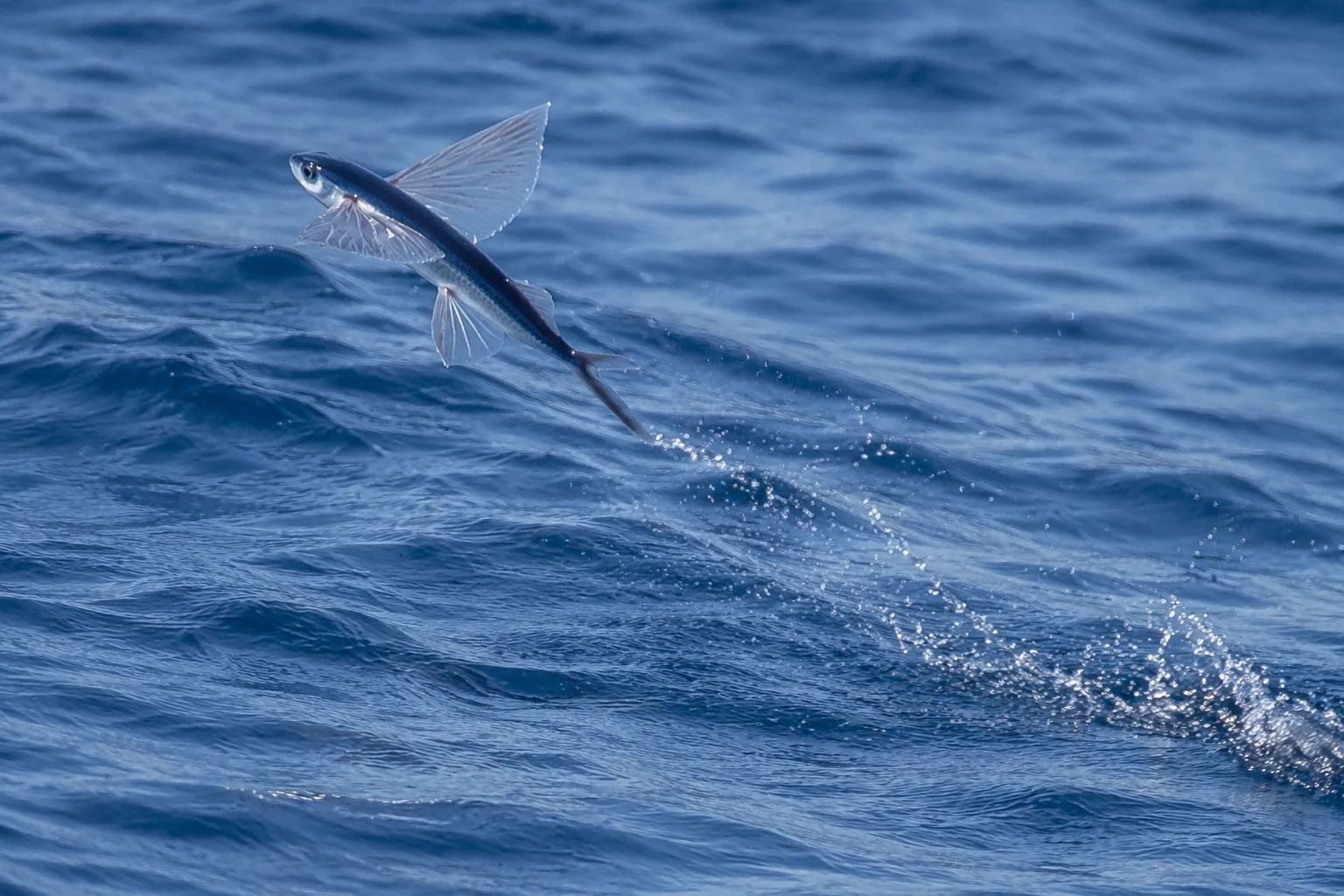
Flying fish are fish migrating in temperate to tropical seas, and go north warm currents near Japan from spring to summer. Especially, those caught in summer are called "Summer Tobi," which grow fat by eating rich planktons in Japanese waters, and their bodies tighten as their movement increases before spawning. Because flying fish exercise a lot, they have little excess fat, characterized by condensed high-protein and very clean amino acid taste. Therefore, flying fish at the end of summer reach the peak of refreshing white fish taste.
On the other hand, sea bass are typical "luxury white fish in season in summer." Because sea bass spawn in the deep sea in winter, their physical strength declines and their bodies thin from autumn to winter, but they move to shallow bays and estuaries from spring to summer to greedily eat food like sardines and crabs. Therefore, sea bass in late August store plenty of high-quality fat in their bodies, having a rich richness comparable to tuna's fatty belly despite being white fish. Sea bass in this season are prized as "supreme Summer Sea Bass" with beautiful marbling in their bodies.
Famous Production Areas and Fishing Ports: "Yakushima" for Flying Fish and "Funabashi Port" for Sea Bass#
Although both fish are landed all over Japan, there are representative fishing ports famous nationwide as brands respectively.
Yakushima, a world natural heritage island floating south of Kagoshima Prefecture, boasts the No.1 catch of flying fish in Japan. Because the main stream of the Kuroshio Current directly hits the sea area around Yakushima, extremely fresh and lively flying fish migrate. In Yakushima, traditional "rope pulling fishing (flying fish drive-in net fishing)" is conducted, where two boats pull a net to drive the school of flying fish into it at once. Flying fish caught here have few scratches, delivered to the market keeping outstanding freshness.
On the other hand, "Funabashi Port" in Chiba Prefecture, located at the innermost part of Tokyo Bay, boasts the No.1 catch of sea bass in Japan. Since Tokyo Bay is rich in nutrients and a large amount of small fish which are sea bass's favorite food live, it has become the "golden sea area" best for sea bass growth. Sea bass landed at Funabashi Port are branded as "Edomae Sea Bass," and by quickly performing Ikejime (bleeding) on board immediately after landing, they completely eliminate the mud smell characteristic of sea bass, realizing beautiful transparent white fish and elegant fat.
The Best Way to Eat: "Deep-fried Whole" for Flying Fish and "Arai" for Sea Bass#
We introduce local recommended cooking methods to eat fresh flying fish and sea bass deliciously at home or restaurants.
The best way to eat flying fish is the dynamic "deep-fried whole flying fish." Fry it whole at high temperature with its large chest fins (wings) spread. You can eat it crispy like rice crackers from the head to bones and its proud wings, and the light and strong taste inherent in flying fish spreads in the aroma. Also, those with outstanding freshness can be eaten as "sashimi" or "namerou" minced with ginger and miso, to enjoy unique crunchy texture and sweetness.
The classic way to eat sea bass in summer is, after all, "Arai (chilled sashimi)." Quickly dip thin slices of sea bass sashimi in warm water at about 50 degrees for a moment, and then immediately tighten them in ice water. By performing this work, excess fat and odor contained in the sea bass body are moderately removed, and the meat shrinks and changes into bouncy crunchy texture. Eating the cold tightened meat with vinegared miso or plum meat soy sauce, Arai is a supreme delicacy where sea bass's fat sweetness and coolness harmonize exquisitely, presenting the coolness of Japanese summer.
Latest Fishery Yield Trends in 2026 and Current Status of Fisheries Resources#
In recent years, ocean warming accompanying global warming has a major impact on Japan's fishery industry. We organized the catch and price trends of flying fish and sea bass in 2026 in the comparison table.
| Fish Species | Main Fishing Grounds and Landing Sites | 2026 Fishery Trends and Factors | Market Price Trends |
|---|---|---|---|
| Flying Fish (Summer Tobi) |
Around Yakushima in Kagoshima, around Oki in Shimane | Due to Kuroshio meandering and rapid temperature rise in southern Kyushu, the migration route around Yakushima shifted offshore and landing slightly decreased. On the other hand, the Sea of Japan side (Shimane, etc.) is stable at average level. | Yakushima products have high prices due to decreased distribution. Sea of Japan products transition at stable prices. |
| Sea Bass (Summer Sea Bass) |
Tokyo Bay in Chiba (Funabashi), Ise Bay, Seto Inland Sea | Although blue tide (hypoxic water mass) occurred in some parts of Tokyo Bay due to this summer's heatwave, the overall landing was secured at average level due to fishermen's quick net casting and shift to deep-sea operation. | Edomae brand "Ikejime Sea Bass" maintains strong high price. General products are at stable prices similar to normal years. |
Thus, while adapting to changes in the marine environment, the supply to the dining table is protected by fishermen's appropriate resource management and fishing ground selection. Being able to eat delicious white fish at the end of summer can be said to be the fruit of nature's blessings and fishermen's tireless efforts.
Local Delicacy Experience: Tasting at the Place of Origin#
We propose gourmet travel plans to taste these delicious fish in the best condition on site.
【Local Gourmet Guide to Enjoy Flying Fish and Sea Bass on Site】
1. Enjoying flying fish in Yakushima:
When you visit Yakushima, please go to eateries around Miyanoura Port and Anbo Port. At lunchtime, "Flying Fish Set Meal" is offered, where deep-fried whole, sashimi, smoked fish, and ago-dashi udon are provided at once. It is best for salt and protein replenishment after walking a lot and sweating.
2. Tasting Edomae sea bass in Funabashi:
To taste sea bass in Tokyo Bay, direct sales offices of Funabashi Fishing Port and surrounding Japanese restaurants are recommended. Especially in diners run by local fishermen, you can enjoy morning-caught Ikejime sea bass reasonably.
3. Prevention of summer fatigue and nutrition:
Flying fish is low-fat and high-protein, and sea bass is rich in Vitamin A, Vitamin D, and essential amino acids. In late August when the lingering summer heat is severe, we highly recommend incorporating these fish into your meals as a nutrition source gentle on tired stomachs and preventing summer fatigue.
4. Tips for choosing souvenirs:
Because flying fish "Ago-dashi" (soup stock) and dried fish are light and keep long, they boast absolute popularity as souvenirs of Yakushima and Shimane. Because sea bass spoils easily, enjoy "Arai" on site, and choosing processed sea bass pickled in miso as souvenirs is a wise choice.
Conclusion: Tasting the Sea's Blessings and Regretting the End of Summer#
Flying fish gliding on the sea surface, and sea bass jumping in the inner bay. The white fish in late August when their life force peaks is indeed the best feast from the sea. Although facing changes in sea temperature and harsh natural environments, the delicacy brought by the rich sea becomes the power to survive the lingering summer heat. Please try comparing the delicacies of flying fish and sea bass packed with the passion of craftsmen and fishermen on the dining table of this weekend or next week, or at your last summer travel destination. The deliciousness of refined white fish spreading with every bite will promise a wonderful end to summer.
【Sources】#
1. Yakushima Town Official Website "Introduction of Yakushima's Traditional Fishing and Specialty Flying Fish"2. Funabashi City Official Website "Funabashi Fishing Port Brand: Edomae Sea Bass Landing and Resource Management"
3. Fisheries Agency "Reiwa 8 Fisheries White Paper: Trends in Fishery Resources and Effects of Environmental Changes"