Sawara Grand Autumn Festival 2026: Floats & Sawara-bayashi
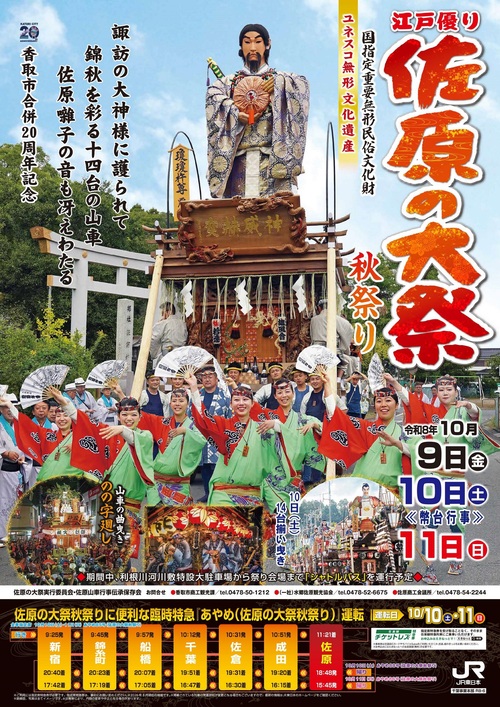
Sawara Grand Autumn Festival 2026 runs Oct 9–11 in Katori, Chiba. Experience 14 UNESCO festival floats, 4m giant historic statues, Sawara-bayashi music, and the dynamic 'Nono-ji Mawashi' pivot turn.
Flourishing through historic water transport along the Tone River, the merchant town of Sawara in Katori City, Chiba Prefecture was once hailed as "surpassing Edo itself" (Edo Masari). Set against the historic townscape of timber merchant houses and storehouses along the Ono River, the Sawara Grand Autumn Festival (Suwa Shrine Autumn Festival) is celebrated annually over the three days centered on the second Saturday of October.
Ranked among the "Three Great Float Festivals of the Kanto Region," this revered 300-year-old tradition is designated as an Important Intangible Folk Cultural Property of Japan under "Sawara Float Events" and was inscribed on the UNESCO Representative List of the Intangible Cultural Heritage of Humanity (Yama, Hoko, Yatai float festivals) in 2016. In 2026, the autumn festival will be held grandly across three days from Friday, October 9 through Sunday, October 11.
This comprehensive guide explores the festival's highlights: 14 magnificent festival floats carrying 4-meter-tall giant effigies (Oningyo) through the Shinjuku district, the evocative melodies of "Sawara-bayashi" (one of Japan's Three Great Festival Music Traditions), and the thrilling "Nono-ji Mawashi" pivot turns that captivate spectators.
【Sawara Grand Autumn Festival 2026 Event Overview】
・Dates: Friday, October 9 – Sunday, October 11, 2026 (3 Days)
・Hours: 10:00 AM – approx. 10:00 PM daily (Float Processions)
・Location: Shinjuku District, Sawara, Katori City, Chiba Prefecture (Suwa Shrine & West of Ono River)
・Floats: 14 giant floats (Solid zelkova wood construction, Kanto carvings, 4m giant statues)
・Heritage Status: UNESCO Intangible Cultural Heritage / Nationally Designated Important Intangible Folk Cultural Property
1. What is the Sawara Grand Festival? 300-Year Heritage of Little Edo#
The Sawara Grand Festival is a living cultural testament to the vibrant energy and refined aesthetics of Sawara's merchant society, which prospered as a vital hub of Tone River water transport. The festival takes place twice a year on opposite sides of the Ono River:
- Summer Festival (Honjuku District / Yasaka Shrine Gion Festival): Held annually on the 2nd Friday, Saturday, and Sunday of July (10 floats).
- Autumn Festival (Shinjuku District / Suwa Shrine Autumn Festival): Held annually for 3 days centering on the 2nd Saturday of October (14 floats).
The Autumn Festival serves as the grand celebration for Suwa Shrine, the guardian deity of Sawara's Shinjuku district. Historical records of float processions date back to the Kyoho era (1716–1736) of the mid-Edo period. Prosperous local merchants competed in artistic refinement to create ever more lavish floats, master woodcarvings, and towering effigies.
Designated as a National Important Intangible Folk Cultural Property in 2004 and inscribed on the UNESCO Intangible Cultural Heritage list in December 2016, the festival now garners international acclaim from visitors across the globe.
2. The 14 Magnificent Floats and Towering 4-Meter "Oningyo" Effigies#
The defining feature of Sawara's floats is their massive two-tiered solid zelkova wood (keyaki) construction, crowned by colossal 4-meter-tall effigies (Oningyo) representing legendary heroes and mythological deities. The lower deck (Geza) houses the festival orchestra, while the roof and side panels are adorned with intricate, three-dimensional "Kanto-bori" wood sculptures.
These majestic statues were crafted by master dollmakers of Tokyo and Edo during the late Edo, Meiji, and Taisho periods (such as Asayuki Yokoyama, Sanjiro Fukuda of Nezumiya, and Nuinosuke Takeda). Their elaborate golden-thread embroideries and detailed samurai armor represent the pinnacle of Japanese craftsmanship. To navigate narrow streets and overhead wires, the floats feature a sophisticated internal elevator system that lowers the towering statues when necessary.
| District (Shinjuku) | Giant Statue Subject | Float Features & Highlights |
|---|---|---|
| Shimo-kawagishi | Takehaya Susanoo-no-Mikoto | Heroic depiction of the dragon-slaying deity with dynamic woodcarvings |
| Naka-kawagishi | Emperor Jimmu | Majestic first Emperor with a golden kite perched atop his bow; Meiji masterwork |
| Kami-shincho | Suwa Daimyojin | Revered principal deity of the autumn festival; stately zelkova craftsmanship |
| Shimo-shincho | Urashima Taro | Folklore hero holding the magical jewel box with Dragon Palace decorations |
| Kita-yokojuku | Yamato Takeru no Mikoto | Brave legendary warrior wielding the Kusanagi sword; spirited float maneuvering |
| Kami-nakajuku | Chinzei Hachiro Tametomo | Mighty warrior archer Minamoto no Tametomo with formidable physical presence |
| Higashi-sekido | Kusunoki Masashige (Dainanko) | Renowned loyalist samurai in full historic armor and exquisite transom carvings |
| Nishi-sekido | Ninigi no Mikoto | Solemn depiction of the heavenly descent deity; graceful procession styling |
| Shimo-juku | Minamoto no Yoriyoshi | Commanding Genji military commander in authentic traditional armor |
| Shin-kamikawagishi | Ushi Tenjin | Rare sacred depiction of Sugawara no Michizane paired with the divine ox |
| Shimo-wake | Kusunoki Masatsura (Shonanko) | Valiant young warrior evoking the poignant parting at Sakurai |
| Minami-yokojuku | Emperor Nintoku | Benevolent ancient sovereign who watched over the people; stately carving |
| Shin-hashimoto | Ono no Tofu | Famous Heian calligrapher gazing at a willow frog; poetic cultural motif |
| Kami-juku | Minamoto no Yoshitsune | Legendary tragic military hero Yoshitsune in dynamic warrior attire |
3. "Sawara-bayashi" Music and the Thrilling "Nono-ji Mawashi" Maneuver#
What elevates the Sawara Grand Festival into an extraordinary sensory spectacle is the soulful resonance of "Sawara-bayashi" festival music and the athletic mastery of "Kyokubiki" (acrobatic float maneuvers).
Ranked alongside Kanda-bayashi (Tokyo) and Gion-bayashi (Kyoto) as one of Japan's Three Great Festival Music Traditions, Sawara-bayashi blends the elegant melodies of bamboo flutes (shinobue) with dynamic taiko drums, hand drums (tsuzumi), and brass surigane cymbals. The repertoire changes dynamically according to the float's movement:
- Danmono: Stately, solemn pieces (such as "Yaguruma" and "Sugomori") played during ceremonial processions.
- Yakumono: Fast-paced, intense rhythms performed during sudden accelerations, turns, and acrobatic maneuvers.
- Hamono: Cheerful folk tunes and ballads (like "Sawara Kouta") that enliven the town streets.
Though Sawara floats weigh between 3 to 4 tons, local youths lift the front axle and pivot the entire massive structure around the left front wheel, rotating it smoothly 2 to 3 times in the shape of the Japanese character "の" (no).
The deep groaning of wooden axles, the explosive climax of flute and drum melodies, the sharp wooden clappers of the festival leader, and the synchronized muscle power of lever handlers (Teko-giri) create an unforgettable peak of excitement.
Other dramatic maneuvers include "Soroban-biki" (pushing the float forward while grinding the wheels alternately like an abacus) and "Koban-mawashi" (negotiating tight 90-degree street corners in a single sweeping motion).
4. Preservation District Atmosphere and Magical Night Lanterns#
Sawara's historical town center was the first in the Kanto region to be designated as an Important Preservation District for Groups of Traditional Buildings. Along the weeping willows of the Ono River, merchant houses and earthen storehouses dating from the Edo, Meiji, and Taisho periods—including the historic residence of surveyor Ino Tadataka—transport visitors back in time.
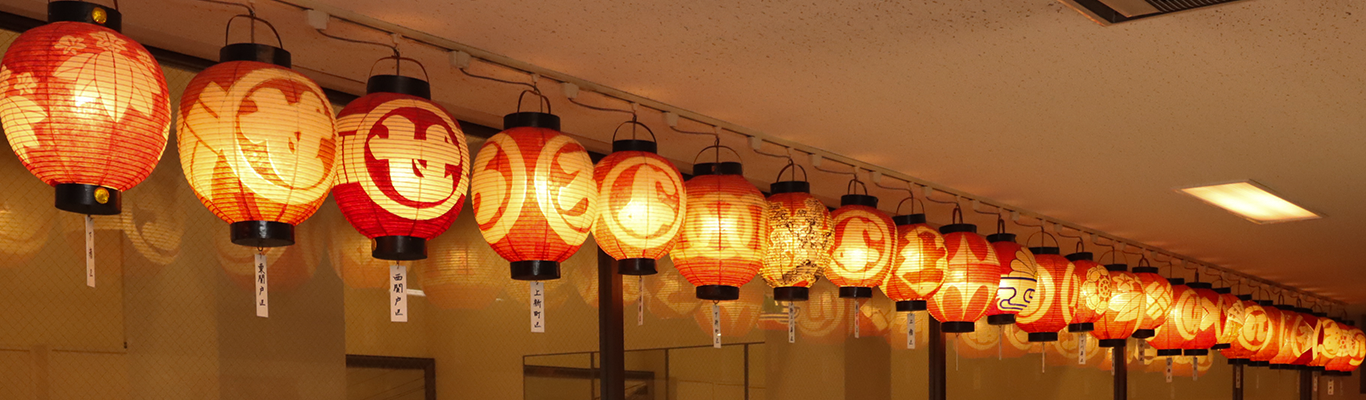
While daytime reveals the intricate woodcarvings and statues against the autumn sky, twilight transforms the festival. As countless paper lanterns (chochin) are lit across each float, the atmosphere turns magical and ethereal. The reflection of lanterns on the canal waters combined with echoing flute melodies creates an enchanting, otherworldly ambiance.
・By Train: JR Narita Line to "Sawara Station," then 10–15 minutes on foot to the Shinjuku district and Suwa Shrine.
・By Highway Bus: Direct highway express bus "Sawara-Choshi Line" from Tokyo Station (Yaesu Exit) to Sawara Station in approx. 85 minutes.
・Temporary Parking: Free special parking (capacity approx. 1,000 vehicles) is established along the Tone River riverbed, with shuttle boats and shuttle buses operating to the festival area.
・Sightseeing Tip: Stroll not only along the main Ono River canal but also through the lively neighborhood streets and Suwa Shrine grounds to witness close-up "Nono-ji Mawashi" turns and traditional etiquette when two giant floats cross paths.
5. Conclusion: Experience the Passion of Little Edo in Autumn 2026#
Carefully preserved for three centuries by the people of Sawara, the Sawara Grand Autumn Festival embodies the pinnacle of Japanese festival culture: 14 awe-inspiring floats, towering statues of historic icons, and soul-stirring musical artistry.
From October 9 to 11, 2026, experience the warmth, heritage, and exhilarating energy of Sawara as the historic merchant town comes alive with tradition.