Nagasaki Kunchi 2026: 400 Years of Heritage & Grand Dances
Nagasaki Kunchi Festival 2026 runs Oct 7–9 at Suwa Shrine. Experience 400 years of international festival heritage, Kokkodesho acrobatics, Ja-odori Dragon Dances, and the 4 historic venues.
As autumn arrives in Nagasaki, thunderous shouts of "Mottekoi!" and the exotic melodies of shagiri flute-and-drum ensembles fill the harbor city. Held annually over three days from October 7 to 9 as the grand autumn festival of Suwa Shrine (Chinzei Taisha Suwa Shrine), Nagasaki Kunchi is celebrated as one of Japan's "Three Great Kunchi" festivals and designated as an Important Intangible Folk Cultural Property of Japan.
Tracing its origins back to 1634 (Kanei 11), Nagasaki Kunchi embodies nearly 400 years of multicultural fusion, shaped by Nagasaki's historic role as Japan's exclusive gateway to Portugal, the Netherlands, and China. This complete guide provides an in-depth breakdown of the 2026 assigned Odoricho districts and their featured performances (dashimono), the festival's historical origins, viewing tips across the four primary performance venues, and how to enjoy the lively street performances known as "Niwasaki-mawari."
【Nagasaki Kunchi 2026 Event Overview】
・Dates: Wednesday, October 7 – Friday, October 9, 2026
・Main Performance Venues (Honbasho): Suwa Shrine, Central Park, Otabisho (Ohato Wharf), Yasaka Shrine
・Ritual Schedule:
- Oct 7 (Mae-bi / Opening Day): O-kudari (Sacred palanquin procession descending from Suwa Shrine to Otabisho)
- Oct 8 (Naka-bi / Middle Day): Festival rituals and city-wide Niwasaki-mawari performances
- Oct 9 (Ato-bi / Final Day): O-nobori (Sacred palanquin procession ascending back to Suwa Shrine)
・Cultural Designation: National Important Intangible Folk Cultural Property of Japan
400 Years of Cultural Fusion: From Anti-Christian Policy to Global Pageantry#
The origins of Nagasaki Kunchi date back to the early Edo period in 1634 (Kanei 11), when two courtesans (Takao and Otoha) dedicated a Noh-style dance called "Komai" before Suwa Shrine as part of efforts to promote Shinto devotion and enforce anti-Christian policies. That same pivotal year witnessed the construction of Nagasaki's iconic Meganebashi (Spectacles Bridge) and the commencement of the Dejima trading post, marking Nagasaki's rise as an international commercial hub.
During the isolationist Edo era, Nagasaki remained Japan's sole window for international trade with the Netherlands and Qing Dynasty China. Local merchants enthusiastically infused overseas culture, artistry, and exotic goods into the festival. Massive floats modeled after Portuguese carracks and Chinese junk ships, the acrobatic Chinese Dragon Dance (Ja-odori), and theatrical dances portraying European sailors gave birth to Nagasaki's distinctive "Wa-Ka-Ran" (Japanese, Chinese, and Dutch/Western) cultural identity.
Today, 58 neighborhood districts across Nagasaki are divided into seven distinct groups, each serving as the Odoricho (performing district) once every seven years. Community members undergo more than a full year of rigorous training, channeling seven years of accumulated pride and passion into their breathtaking public dedication.
2026 Odoricho Districts & Dedicated Performances#
The six neighborhood districts assigned to present dedication dances (Hono-odori) in 2026 bring an extraordinary variety of dynamic heavy floats, Chinese-inspired dances, and refined traditional arts to the stage:
| Odoricho District | Dedicated Performance | Key Highlights & Spectacle |
|---|---|---|
| Uwamachi | Kasaboko Umbrella Float / Uwamachi Kokkodesho | One of Kunchi's most thrilling acts. Robust bearers toss the multi-ton Taikoyama drum float high into the air and catch it single-handedly to thunderous applause. |
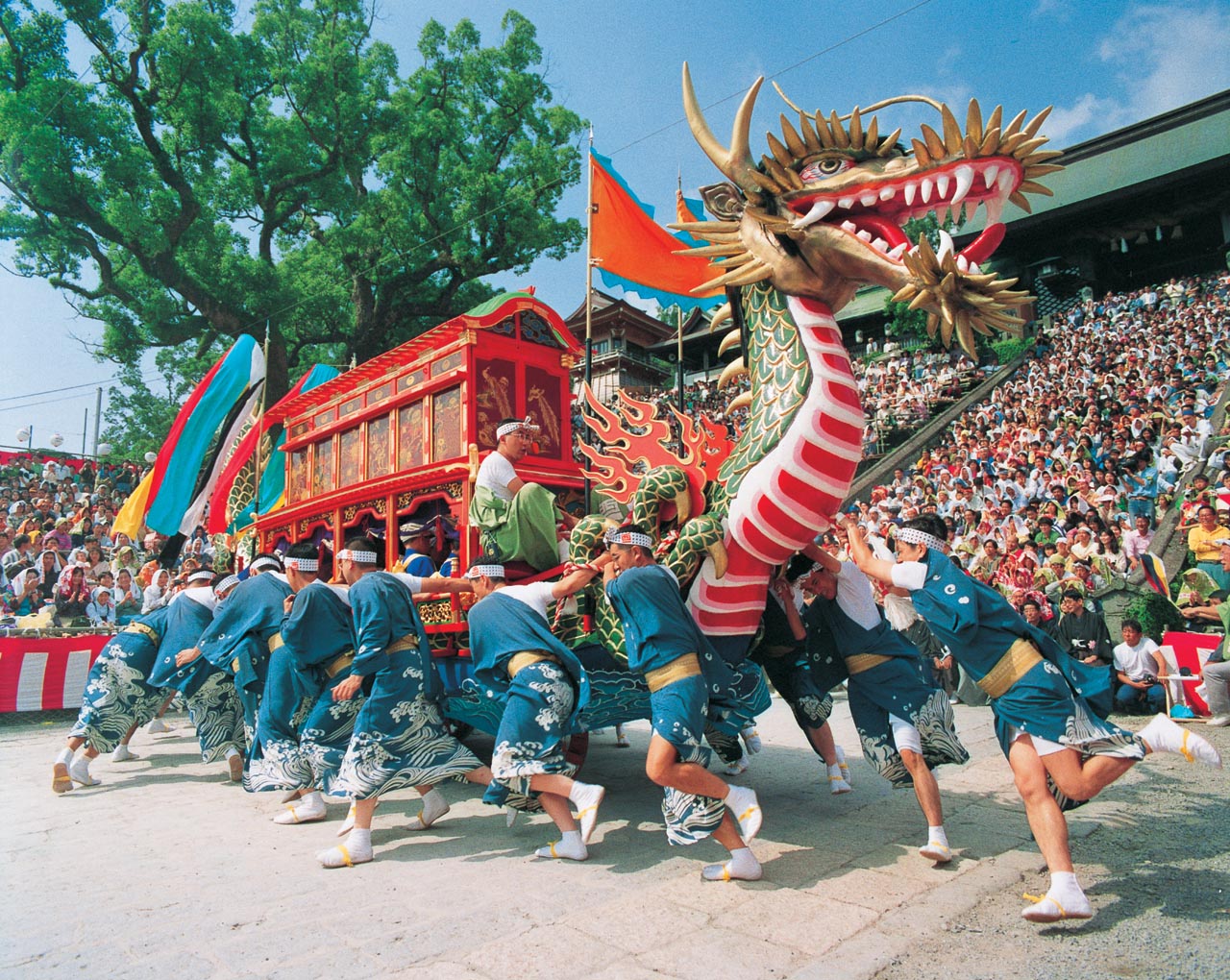
| Chikugomachi | Kasaboko Umbrella Float / Ja-odori (Dragon Dance) | The ultimate symbol of Nagasaki Kunchi. A serpentine dragon fiercely chases the sun orb across the arena amid booming gongs, clashing cymbals, and festive firecrackers. |
| Motofunamachi | Kasaboko Umbrella Float / Tosen Matsuri (Chinese Ship Festival) | A grand ship float styled after ancient Chinese trading vessels. Features dramatic 360-degree spinning maneuvers (Funa-mawashi) and traditional Chinese stage dances. |
| Kajiyamachi | Kasaboko Umbrella Float / Takarabune (Treasure Ship) & Seven Lucky Gods | An auspicious, joyful performance featuring the Seven Lucky Gods aboard a glittering golden treasure boat, bestowing blessings and prosperity upon spectators. |
| Imakagomachi | Kasaboko Umbrella Float / Hon-odori (Classical Dance) | An exquisite display of traditional Japanese Buyo dance. Graceful dancers dressed in elegant matching kimonos perform refined, synchronized choreographies. |
| Aburayamachi | Kasaboko Umbrella Float / Kawafune (River Boat Float) | Simulates navigation through rushing whitewater with rapid ship spins, culminating in the boat captain's dramatic cast-net fishing ritual that captures the crowd's cheers. |
The 4 Primary Venues: Choosing Your Ideal Viewing Atmosphere#
Official dedication dances are performed at four distinct licensed venues, known as "Honbasho," across Nagasaki City:
1. Suwa Shrine (Kami-Nishiyama-machi)#
The sacred spiritual epicenter of the festival. Spectators densely pack the steep stone steps of the "Nagasaka" slope, looking down onto the main shrine plaza below. The atmosphere blends solemn sacred tension with electrifying crowd cheers.
2. Central Park (Nigiwai-machi)#
A modern, expansive outdoor arena offering excellent overall visibility. The open layout provides unmatched angles to appreciate the full scale of massive ship rotations and dragon maneuvers.
3. Otabisho (Motofunamachi / Ohato Wharf)#
Located along the bustling port waterfront where the shrine's deity resides temporarily in a temporary sanctuary. Evening performances under illuminated festival lanterns offer a magical maritime charm.
4. Yasaka Shrine (Kajiyamachi)#
A historic downtown shrine renowned for the intimate proximity between spectators and performers. Viewers can hear the dancers' breathing, the rush of swinging costumes, and the heavy thud of spinning floats.
City-Wide "Niwasaki-mawari" & Festival Chants#
After completing their formal shrine duties, the Odoricho districts fan out across Nagasaki for "Niwasaki-mawari"—visiting local businesses, government offices, and private residences to present short excerpts of their dances and share good fortune with the entire community.
To fully experience Nagasaki Kunchi, mastering the traditional audience chants (encores) is essential:
- "Mottekoi!": The quintessential Kunchi encore, meaning "Bring it back! Show us more!" Roared unanimously by thousands of spectators as floats begin exiting the arena.
- "Shomoyare!": An elegant, specialized encore reserved specifically for Hon-odori classical Japanese dances, expressing "We request an encore performance!"
- "Futomawase!": An enthusiastic chant urging ship bearers to execute faster, wider high-speed rotations.
Conclusion: Feel the 400-Year Spirit of Nagasaki This Autumn#
Nagasaki Kunchi 2026 encapsulates the maritime pride, cultural openness, and unyielding energy of Nagasaki. From the aerial thrills of Kokkodesho to the mythic roar of the Dragon Dance, this festival offers an unforgettable encounter with Japan's living history. Visit Nagasaki this October and immerse yourself in one of the world's most vibrant autumn celebrations.