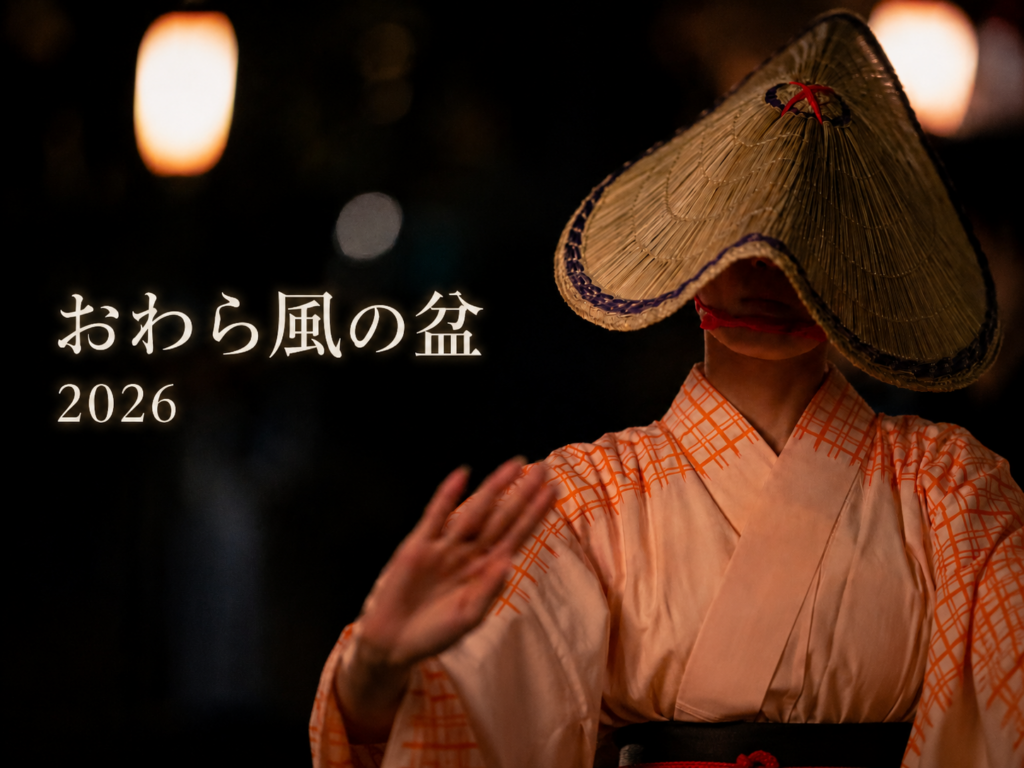
Starting Soon! Owara Kaze no Bon 2026: Melancholic Kokyu & Elegant Dance in Yatsuo
Owara Kaze no Bon runs Sep 1-3 in Yatsuo, Toyama! Discover paper lantern-lit streets, haunting kokyu melodies, silent straw-hat dances, and Machi-nagashi.
Held annually for three days from September 1 to 3 in Yatsuo, Toyama City, Owara Kaze no Bon is celebrated as one of Japan's most poetic and hauntingly beautiful traditional rituals. Thousands of soft paper lanterns (bonbori) illuminate the historic cobblestone slopes and latticed merchant houses. Dancers in deep woven straw hats (amigasa) glide through the streets in complete silence to the melancholic strains of the bowed kokyu and shamisen. Unlike boisterous summer festivals, its tranquil and deeply nostalgic atmosphere enchants all who visit. Here is our complete guide to the 2026 schedule, 300-year history, dance aesthetics, the 11 neighborhood districts, and spectator etiquette.
Schedule & Venues: Owara Kaze no Bon 2026#
The festival takes place on fixed dates every year from September 1 to 3:
| Date | Hours | Location | Key Events |
|---|---|---|---|
| Sep 1, 2026 (Tue) | 17:00 – 23:00 | Old Yatsuo Town (11 districts) | Opening day. Circle dances (Wa-odori), street processions (Machi-nagashi), and special stage performances. |
| Sep 2, 2026 (Wed) | 17:00 – 23:00 | Old Yatsuo Town (11 districts) | Middle day. At dusk, lanterns light up, wrapping the entire town in plaintive kokyu melodies and graceful dances. |
| Sep 3, 2026 (Thu) | 19:00 – 23:00 | Old Yatsuo Town (11 districts) | Final day. Processions continue late into the night for an emotional and quiet conclusion. |
300-Year History and the Origins of "Kaze no Bon"#
The festival originated in 1702 (Genroku 15) during the Edo period. When local townsmen recovered an important town charter (Machidate Osumitsuki) from the Kaga feudal authorities, they rejoiced by singing and dancing continuously for three days and three nights.
The name "Kaze no Bon" (Bon of the Wind) stems from farmers' prayers during the 210th day from the start of spring (Nihyaku-toka)—a critical period when destructive typhoons often threatened ripening rice fields. To appease the wind gods and ensure bountiful harvests, wind-calming rituals (Fuchinsai) merged with ancestral Bon memorials. In the early Showa period, acclaimed artists refined the choreography into today's sophisticated male and female dances.
The 3 Dance Styles and the Haunting Kokyu#
| Style / Music | Attire & Instruments | Aesthetic Characteristics |
|---|---|---|
| Female Dance (Onna-odori) | Matching yukata, black obi, woven straw hat (amigasa) | Imitates rice-planting maidens, evoking firefly catching and harvest movements with graceful, supple finger and foot work. |
| Male Dance (Otoko-odori) | Black happi coat, tight trousers, amigasa | Abstracts farm labor (sowing, mowing, harvesting) with crisp, powerful, and linear masculine movements. |
| Harvest Dance (Hōnen-odori) | Casual yukata / everyday attire | The traditional basic folk dance where visitors can step into the circle and dance alongside locals. |
| Jikata (Musicians) | Shamisen, taiko drum, Kokyu, vocals | The bowed kokyu produces a plaintive, sobbing tone that heightens the sorrowful melody of the Ecchu Owara-bushi song. |
Why Dancers Hide Their Faces with Straw Hats:
Both men and women wear deep straw hats that conceal their faces. By hiding individual facial expressions, the collective geometric lines of the dancers' limbs become the focus, creating an aura of timeless, ethereal beauty.
The 11 Neighborhoods & Procession Highlights#
- Suwa-machi Main Street: Selected as one of "Japan's Top 100 Roads," its stone-paved slope lined with bonbori lanterns and merchant houses is the iconic postcard view of the festival.
- Kagami-machi (Otaya Steps): The stone temple steps serve as natural bleachers where stage performances showcase the contrasting power of male dancers and elegance of female dancers up close.
- Midnight Machi-nagashi: After midnight when tourist crowds disperse, small groups of musicians and dancers quietly drift through the dark, empty streets—a magical, unforgettable experience.
Comparison with Japan's Notable Folk Dances#
| Festival | Location | Nature of Dance | Musical Characteristics |
|---|---|---|---|
| Owara Kaze no Bon | Yatsuo, Toyama | Ultimate Serenity ("Stillness"). Hidden faces, quiet processions. | Kokyu, shamisen, taiko drum, plaintive folk singing. |
| Nishimonai Bon Odori | Ugo, Akita | Ghostly & Mystical. Patchwork kimono and black face-veils. | Taiko drums, shamisen, flute. |
| Gujo Odori | Gujo, Gifu | All-Night Frenzy. Clacking wooden geta clogs in massive circles. | Vocals, shamisen, flute, drums. |
| Awa Odori | Tokushima | Dynamic Motion ("Energy"). Energetic leaps and syncopated brass beats. | Gongs, odaiko, shimedaiko, shamisen, shinobue. |
Spectator Guide & Etiquette#
- No Flash or Camera Lights: Lantern light is the soul of the festival. Flash and phone spotlights blind performers and ruin the atmosphere. Strictly prohibited.
- Maintain Silence: Please whisper quietly so everyone can appreciate the live kokyu, shamisen, and rustle of kimono sleeves.
- Access: Major traffic restrictions apply throughout Yatsuo. Take the JR Takayama Main Line to Ecchu-Yatsuo Station and use shuttle buses.
- Rain Protocol: Woven paper hats and fragile wooden instruments are ruined by water; street processions are suspended if it rains.
Conclusion#
Carried forward for over three centuries, Owara Kaze no Bon reawakens a deep sense of Japanese aesthetics and nostalgic longing. Experience an unforgettable, ethereal autumn night in the slopes of Yatsuo this September.