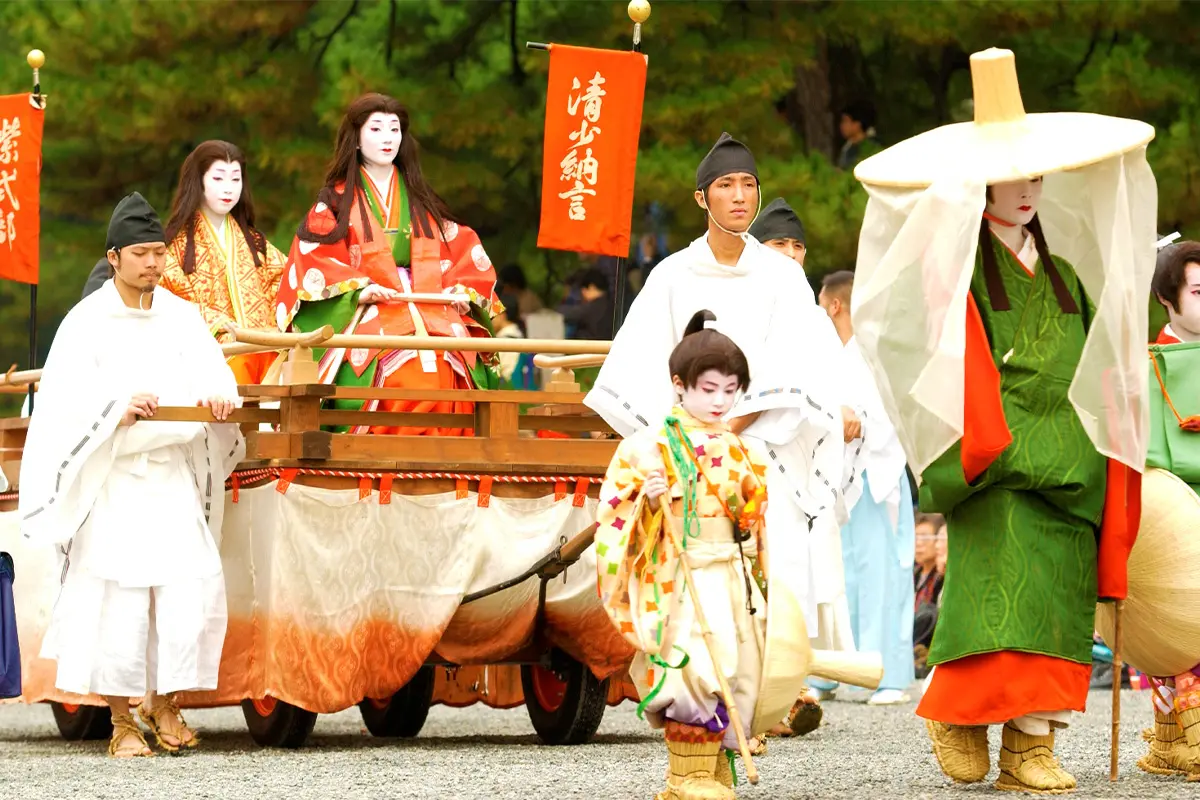
As autumn deepens across the ancient capital of Kyoto, a day of 1,200 years of living historical romance arrives. One of Kyoto's three premier festivals, the renowned Jidai Matsuri (Festival of the Ages), will be held on Thursday, October 22, 2026.
Standing alongside May's Aoi Matsuri and July's Gion Matsuri as one of the Three Major Festivals of Kyoto, Jidai Matsuri is a grand autumn celebration established in 1895 (Meiji 28) to commemorate the founding of Heian Shrine and the 1,100th anniversary of the relocation of the capital to Heian-kyo. Featuring approximately 2,000 participants, 70 horses and oxen, and spanning 2 kilometers in length, this magnificent "living historical scroll" travels through the grand avenues of Kyoto, faithfully reproducing 1,000 years of costumes, crafts, and culture from the Meiji Restoration back to the founding of Heian-kyo.
【Kyoto Jidai Matsuri 2026 Basic Information】
- Date: Thursday, October 22, 2026 (Postponed to Oct 23 in case of rain)
- Procession Times: 12:00 (Departs Kyoto Imperial Palace) – approx. 14:30 (Arrives at Heian Shrine)
- Parade Route: Kyoto Imperial Palace (Kenreimon Gate) ➔ Karasuma-dori ➔ Oike-dori ➔ Kawaramachi-dori ➔ Sanjo-dori ➔ Jingu-michi ➔ Heian Shrine (Total approx. 4.5 km)
- Scale: 20 rows, approx. 2,000 participants, 70 horses & oxen, 2 km procession length
- Access: For Kyoto Imperial Palace: Subway Karasuma Line "Imadegawa" or "Marutamachi" Station; For Heian Shrine: Subway Tozai Line "Higashiyama" Station
History & Origins of Jidai Matsuri: Heian Shrine and Kyoto's Renaissance#
The origins of Jidai Matsuri lie in the passionate determination of Kyoto's citizens to revitalize their city after the Meiji Restoration transferred capital functions to Tokyo, causing Kyoto to temporarily lose its vitality.
In 1895 (Meiji 28), Heian Shrine was erected to celebrate the 1,100th anniversary of Emperor Kanmu establishing Heian-kyo. To mark its inaugural dedication, the civic association "Heian Kosha" founded the festival. Starting modestly with 6 rows and 500 participants, it has flourished under the stewardship of 8 civic divisions representing all Kyoto residents, evolving into a cherished symbol of traditional culture and community solidarity.
At its spiritual core, the festival is a solemn Shinto rite: the spirits of Emperor Kanmu (50th Emperor, founder of Heian-kyo) and Emperor Komei (121st Emperor, the last in Heian-kyo) are enshrined upon two sacred imperial palanquins (Horen) and carried through the city so they may observe the peace and flourishing of the capital.
From Meiji to Heian: 20 Procession Rows Traveling Back in Time#
The defining hallmark of Jidai Matsuri is its reverse-chronological order: it begins with the Meiji Restoration and travels backward through a millennium of Japanese history. Over 12,000 authentic garments, ceremonial items, and furnishings have been painstakingly recreated by Kyoto master artisans utilizing traditional weaving, dyeing, and metalwork techniques, representing billions of yen in cultural heritage.
| Historical Era | Main Procession Rows | Featured Historical Figures & Highlights |
|---|---|---|
| Meiji Restoration | Ishin Kinno-tai (Imperial Loyalists), Ishin Patriots Row | Yamakuni Corps (fife and drum corps), Katsura Kogoro, Sakamoto Ryoma, Takasugi Shinsaku, Saigo Kichinosuke. |
| Edo Period | Tokugawa Castle Envoys Row, Edo Women Row | Magnificent daimyo spear-twirling, Princess Kazunomiya, Izumo no Okuni, Yoshino Tayu. |
| Azuchi-Momoyama Period | Toyotomi Court Attendance Row, Oda Nobunaga Row | Toyotomi Hideyoshi's luxurious ox-drawn court cart, armor-clad warriors like Oda Nobunaga and Shibata Katsuie. |
| Muromachi Period | Muromachi Shogunate Regents Row, Kyoto Customs Row | Ashikaga shogunal warriors and eccentric Furyu dancers in flamboyant folk costumes. |
| Yoshino Period (Nanboku-cho) | Kusunoki Masashige Row, Medieval Women Row | Stately samurai warrior procession of Kusunoki Masashige & Masatsura, Yodogimi, Shizuka Gozen, Ohara-me. |
| Kamakura Period | Kamakura Warriors Row, Yabusame (Archery) Row | Valiant mounted archers in Yabusame hunting attire, adorned with exquisite equestrian gear. |
| Heian Period | Enryaku Military Officers Row, Heian Women Row | General Sakanoue no Tamuramaro, Tomoe Gozen, Murasaki Shikibu, Sei Shonagon, Ono no Komachi, Tokiwa Gozen. |
| Shinko-retsu (Sacred Main Unit) | Advance Guards, Shinko Sacred Palanquin, Grand Dedication Row | Two sacred Horen palanquins carrying the imperial spirits, accompanied by classical Gagaku court music. |
3 Major Highlights of Jidai Matsuri#
Across the 4.5 km parade route, here are the three essential highlights you must not miss:
1. Stirring Fife & Drum Melodies: Ishin Kinno-tai (Yamakuni Corps)#
Leading the entire pageant is the Ishin Kinno-tai, modeled after the volunteer peasant corps from Yamakuni (now Keihoku, Ukyo-ku, Kyoto) who fought in the Boshin War. Marching behind the imperial錦 banner in traditional jingasa hats and hakama, their high-pitched bamboo flutes and rhythmic drums set an exhilarating, dignified tempo for the festival.
2. Elegance & Glamour: The Women of History Rows#
The most celebrated spectacle is the Women of the Ages Rows. Heroines from literature, folklore, and court history—including Princess Kazunomiya, Yodogimi, Shizuka Gozen, Murasaki Shikibu, Sei Shonagon, and Tomoe Gozen—parade in breathtaking Junihitoe (twelve-layered kimonos) and Kosode silks. Often portrayed by Geiko and Maiko from Kyoto's historic hanamachi districts, their grace and authentic period poise are mesmerizing.
3. Solemn Climax: Shinko-retsu Sacred Palanquins#
Concluding the grand procession is the Shinko-retsu, the spiritual heart of the festival. Led by Shinto priests and accompanied by ancient Gagaku court melodies, the two sacred Horen palanquins travel serenely, transforming Kyoto's thoroughfares into a reverent space of prayer for peace and prosperity.
【Spectator Etiquette & Guidelines】
- Many live horses and oxen participate in the parade. Flash photography, loud noises, and opening umbrellas suddenly are strictly prohibited as they may startle the animals.
- The parade route becomes extremely crowded. Please refrain from laying picnic sheets on pedestrian sidewalks for extended periods.
Comparison: Kyoto's Three Major Festivals#
Each of Kyoto's three iconic festivals offers a distinctive window into Japanese history and spirituality:
| Festival | Date | Main Shrine & Setting | Key Highlights & Character |
|---|---|---|---|
| Aoi Matsuri | May 15 | Shimogamo & Kamigamo Shrines | Heian aristocratic court pageant featuring the imperial Princess Saio-dai and refined Heian garments. |
| Gion Matsuri | July 1–31 | Yasaka Shrine (Shijo/Karasuma) | 1,100-year-old plague purification festival with 33 towering Yamaboko floats and Konchikichin music. |
| Jidai Matsuri | October 22 | Heian Shrine (Imperial Palace ➔ Shrine) | A mobile costume museum covering 1,000 years of Kyoto history with 2,000 costumed citizens. |
Recommended Viewing Locations & Reserved Seating Guide#
Choose the optimal viewing spot along the 4.5 km course according to your travel style:
- Kyoto Imperial Palace (Kenreimon Gate / Marutamachi): Watch the pristine procession depart against the backdrop of the palace gardens. Ample tree shade makes it comfortable for morning arrivals.
- Oike-dori (Paid Reserved Seating Area): Wide boulevard offering unobstructed sightlines. Reserved pipe-chair seating with live explanatory commentary allows stress-free viewing without crowd hassles.
- Heian Shrine (Otenmon Gate / Jingu-michi): Premier photo spot capturing the grand finale with the giant vermilion Torii gate and historic shrine architecture.
- Reserved Tickets: Available in advance via Kyoto City Tourism Association (Kyoto Sightseeing Navi). Highly recommended for international visitors and travelers seeking guaranteed seating.
Autumn Kyoto Travel Tips: Transport & Weather#
Late October is Kyoto's premier travel season. Keep these tips in mind for a pleasant experience:
- Transportation: City buses are heavily rerouted and roads closed. Use the subway (Karasuma Line / Tozai Line) and walking as your primary mode of transit.
- Weather & Clothing: Daytime highs reach around 20°C (68°F), but standing still or staying until dusk brings noticeable chill. Pack a light jacket, cardigan, or scarf.
- Seasonal Delicacies: Savor autumn Kyoto cuisine including matsutake rice, roasted chestnuts, Kyoto wagashi confections, and obanzai seasonal dishes.
【References】#
- Heian Shrine Official Website "Jidai Matsuri Guide & Procession Details"
- Kyoto Tourism Navi (Kyoto City Tourism Association) "Kyoto Three Major Festivals: Jidai Matsuri Special"
- Kyoto Prefectural Government Official Website "Traditional Events and Cultural Properties of Kyoto"
- Discover Japan "Kyoto Jidai Matsuri Cultural Heritage & Photo Archive"