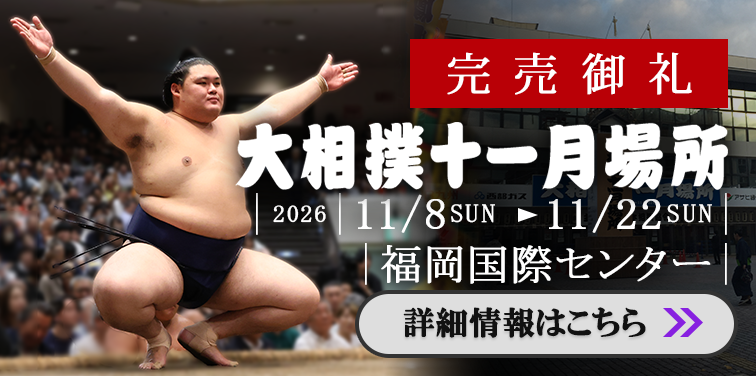
The heated final showdown concluding the 2026 Grand Sumo season, the November Grand Sumo Tournament (Kyushu Basho), takes place across 15 thrilling days from Sunday, November 8 (Day 1) to Sunday, November 22 (Senshuraku / Final Day) at the Fukuoka International Center (Hakata Ward, Fukuoka City).
Ever since the post-pandemic resurgence around 2024, Grand Sumo tickets have consistently sold out on their release days. In recent years, securing tickets for regional tournaments has become equally challenging. While Kuro-usagi dreams of watching a bout from a traditional masuseki box at Ryogoku Kokugikan at least once, gathering four friends who all want to watch sumo might actually be the harder challenge!
Among the six official honbasho tournaments held annually by the Japan Sumo Association, the November Basho is the only one held in the Kyushu region. Known by its storied moniker "The Tumultuous Kyushu Basho," the grit and spirit of rikishi approaching year's end collide upon the dohyo, sparking intense rivalries and dramatic upsets. From the fierce race for the Emperor's Cup to crowning the Most Wins of the Year (Nenkan Saitasho), and young prodigies aiming for Sanyaku and Ozeki promotions, excitement fills every match.
[Grand Sumo November Tournament (Kyushu Basho) 2026 Overview]
- Dates: Sunday, November 8, 2026 (Day 1) to Sunday, November 22, 2026 (Final Day) (15 Days)
- Banzuke Ranking Release: Monday, October 26, 2026 at 6:00 AM JST
- Venue: Fukuoka International Center (2-2 Chikkohonmachi, Hakata-ku, Fukuoka City)
- Doors Open: 8:30 AM (Days 1–12), 10:00 AM (Day 13–Final Day) *Subject to match pacing
- Access: Approx. 10–15 min by Nishitetsu Bus from JR Hakata Station or Nishitetsu/Subway Fukuoka (Tenjin) Station
History and Tradition of "The Tumultuous Kyushu Basho"#
Grand Sumo's current six-tournament annual schedule (January, March, May, July, September, November) was formally established in 1958 (Showa 33). Before that, sumo in Kyushu operated as regional exhibition tours (jungyo), before being upgraded to a semi-honbasho in 1957 and officially ratified as a full honbasho the following year.
The November tournament earned the nickname "Tumultuous Kyushu Basho" because rikishi battle through accumulated fatigue and injuries from a long season while fiercely competing for next year's rankings, frequently leading to top-division upsets and dramatic runs by lower-ranked maegashira. As a beloved late-autumn tradition in Hakata, the venue is adorned with colorful sumonobori banners, while the sweet aroma of traditional bintsuke pomade fills the arena, creating an unforgettable atmosphere.
4 Key Highlights of the November Kyushu Basho#
Here are four essential storylines to follow in this grand finale to the 2026 sumo year:
1. Race for the Emperor's Cup and Most Wins of the Year#
The November Basho concludes the prestigious Most Wins of the Year (Nenkan Saitasho) title, awarded to the rikishi with the highest combined victories across all 90 bouts in six tournaments. Pride and legacy collide among Yokozuna and Ozeki, with head-to-head clashes carrying immense significance for both the tournament championship and the annual crown.
2. Rise of Young Stars and Banzuke Shifts#
Modern sumo is witnessing a rapid generational transition fueled by elite collegiate wrestlers and teenage prodigies. Emerging contenders aiming to secure Sanyaku (Sekiwake, Komusubi) status or push for Ozeki promotion will test their mettle against seasoned veterans, making every bout a potential watershed moment.
3. Battles for Kachi-koshi: The 8-7 Drama#
Achieving a majority of 8 wins out of 15 bouts (kachi-koshi) is vital for every wrestler, determining their rank retention, advancement, and monthly salary status. Because November results directly shape the January tournament rankings, final-day bouts between rikishi standing at 7-7 deliver heart-stopping intensity.
4. The Final Bout, Yumitori-shiki, and Sacred Rituals#
Beyond athletic prowess, Grand Sumo preserves ancient Shinto rituals and spiritual aesthetics. Highlights include the Makuuchi and Yokozuna ring-entering ceremonies (dohyo-iri) and the daily Yumitori-shiki (Bow-twirling Ceremony) performed after the concluding bout (musubi no ichiban). From the eve's Dohyo-matsuri to the final day's God-sending ceremony (Kamio-kuri no gi), visitors can experience the full depth of Japanese tradition.
[Typical Daily Schedule of Bouts]
- 08:30~: Doors open; Jonokuchi, Jonidan, Sandanme, and Makushita bouts
- 14:15~: Juryo ring-entering ceremony & Juryo division bouts
- 15:40~: Makuuchi ring-entering ceremony & Yokozuna ring-entering ceremony
- 16:00~: Makuuchi division bouts commence
- 17:50~: Sanyaku special intro (Final Day only), Concluding Bout, and Bow-twirling Ceremony
Annual Honbasho Schedule and City Comparison#
The Japan Sumo Association hosts six major tournaments annually, each defined by distinct regional and seasonal flavors.
| Tournament Name | Schedule | Venue / City | Features & Highlights |
|---|---|---|---|
| January Basho (Hatsu Basho) | Mid-January | Ryogoku Kokugikan (Sumida, Tokyo) | New Year opener. Fresh banzuke rankings and spirited opening matches. |
| March Basho (Haru Basho) | Mid-March | Edion Arena Osaka (Osaka City) | "Wild Spring Basho". Vibrant tournament where many newly recruited rookies debut. |
| May Basho (Natsu Basho) | Mid-May | Ryogoku Kokugikan (Sumida, Tokyo) | Refreshing early-summer tournament. Mid-season ranking battles heat up. |
| July Basho (Nagoya Basho) | Mid-July | IG Arena / Aichi Prefectural Gymnasium (Nagoya City) | Battling intense midsummer heat. Stamina and physical conditioning are decisive. |
| September Basho (Aki Basho) | Mid-September | Ryogoku Kokugikan (Sumida, Tokyo) | Autumn at Kokugikan. The race for annual victory titles enters its critical phase. |
| November Basho (Kyushu Basho) | Mid-November | Fukuoka International Center (Fukuoka City) | Final tournament of the year. Decides annual top honors and next season's rankings. |
Seating Types and Spectator Guide at Fukuoka International Center#
A diverse range of seating options accommodates different viewing preferences, from ringside proximity to comfortable tiered seating.
| Seat Type | Features & Appeal | Recommended For |
|---|---|---|
| Tamari Seats (Ringside / Sand-covered) |
Front-row seats around the dohyo. Feel the wrestlers' breath, impact clashes, and flying sand. *Strict rules against eating, drinking, and photography. | Sumo connoisseurs seeking maximum immersive impact |
| Masu Box Seats (Masu S, A, B, C) |
Square tatami box sections on the 1st floor (4-person, 2-person, etc.). Enjoy traditional viewing with food and drinks. | Families, groups, business entertaining, couples |
| Chair Seats (Chair S, A, B, General) |
Tiered seating on the 2nd and 3rd floors. Offers clear panoramic views of the ring without strain on legs and back. | Beginners, solo visitors, casual spectators |
| Wheelchair Accessible Seats | Dedicated barrier-free spaces designed for comfortable viewing alongside an accompanying caregiver. | Wheelchair users and companions |
[Spectator Etiquette and Guidelines]
- Strictly follow Tamari seating rules prohibiting food, drinks, mobile phones, and photo/video recording, and stay alert to avoid injury if wrestlers fall.
- To prevent obstructing others' views, move to and from seats only between bouts or during wrestler preparations, never during active action.
- Throwing seat cushions (zabuton) toward the dohyo is strictly forbidden due to severe risk of injury and accidents.
Savor Autumn in Hakata: Sumo and Local Cuisine#
A premier highlight of the Kyushu Basho is its seamless pairing with Fukuoka-Hakata's world-renowned culinary culture.
- Sumo Stable Chanko Nabe: Special chanko stew supervised by actual sumo stables is served inside the venue at reasonable prices, offering authentic flavors.
- Hakata Gourmet Tour: After the bouts, explore food stalls (yatai) in Nakasu and Tenjin or restaurants around Hakata Station for famous dishes like Hakata Mizutaki (chicken hot pot), Motsu Nabe (beef offal stew), Tonkotsu Ramen, and bite-sized gyoza.
- Autumn Sightseeing in Fukuoka: Fukuoka International Center is situated near Bayside Place Hakata, with convenient access to historic destinations such as Dazaifu Tenmangu Shrine and Kushida Shrine.
[Sources & References]#
- Japan Sumo Association Official Website - Honbasho Schedules & Banzuke
- Fukuoka International Center Official Guide - Facility & Access
- Fukuoka City Official Travel Guide YokaNavi - Grand Sumo Kyushu Basho Special