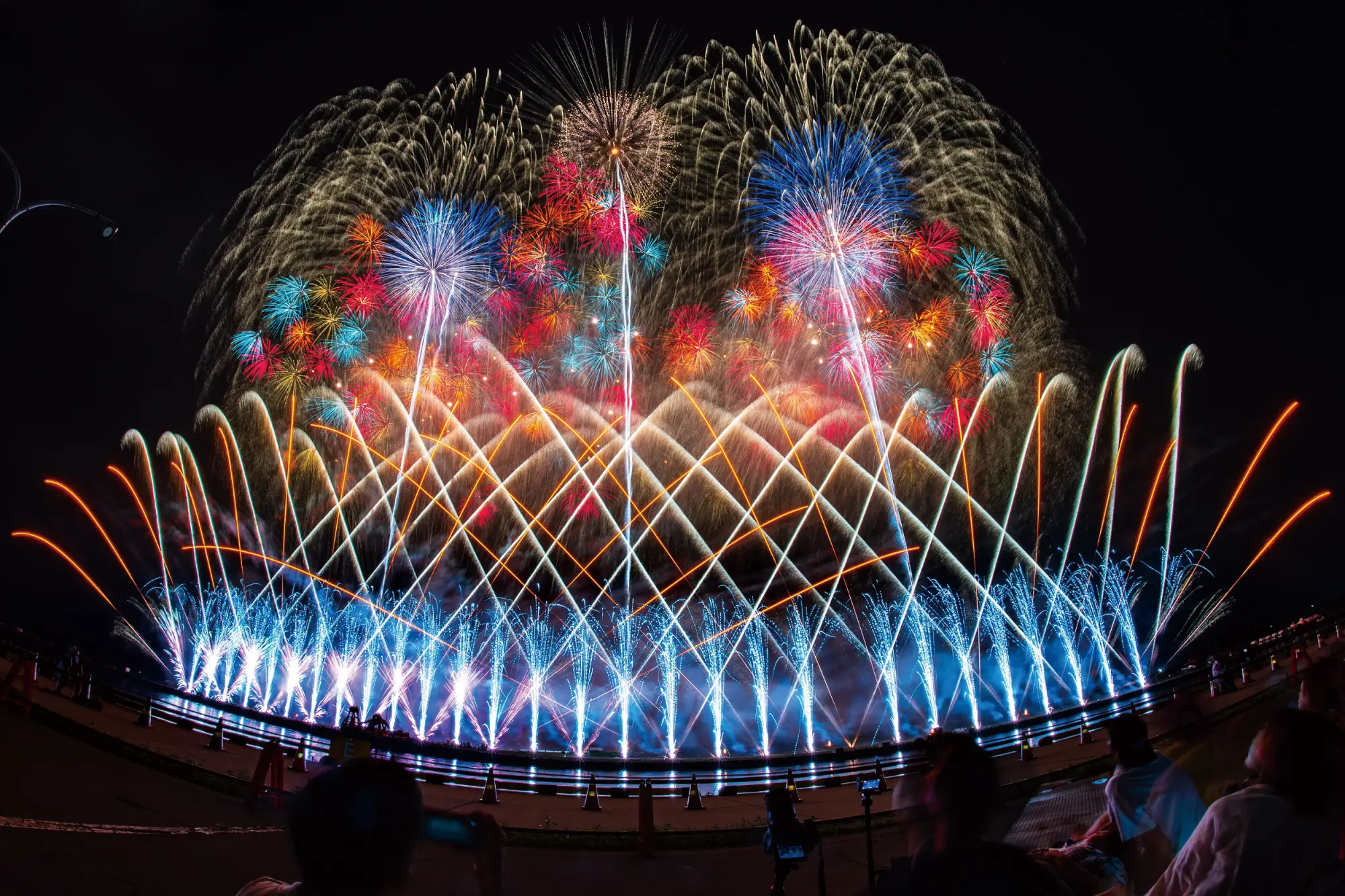
5 Major Weekend Fireworks Festivals in Japan (July 17–19)
Discover 5 major fireworks festivals in Japan on July 17-19, including Toyohashi Gion, Ise Jingu, Abekawa, Noshiro, and Aburatsu. Explore their histories, launch details, and unique viewing tips.
July marks the arrival of the full-fledged summer season. This weekend, centering on Saturday, July 18, major fireworks festivals will light up the summer night sky in various locations across Japan. From historic Shinto rituals to competitive exhibitions where top-class pyrotechnicians showcase their skills, and citizen-led displays dedicated to post-war recovery and memorial services, this weekend showcases the diversity and depth of Japan's fireworks culture.
In this article, we compare the schedules, launch counts, and highlights of this weekend's 5 major fireworks festivals (Noshiro, Abekawa, Toyohashi, Ise, and Aburatsu) in an easy-to-read comparison table. We also take a closer look at the unique historical backgrounds and display features of each festival. From Toyohashi's hand-held "Tezutsu" fireworks to the competitive displays of Ise Jingu, and the powerful sound effects utilizing port and riverbank topography, we explore the multifaceted charms of this weekend's events.
Major Fireworks Festivals This Weekend (July 17–19)#
Below is a summary of the major fireworks festivals scheduled across Japan this weekend. Ranging from thousands of shots to a massive 15,000-shot scale, each event offers distinct themes and unique regional features.
| Date | Festival Name (Location) | Launch Count | Key Features & Highlights | Viewing Environment & Access |
|---|---|---|---|---|
| July 18 (Sat) | 22nd Noshiro Port Fireworks (Noshiro, Akita) |
Approx. 15,000 shots | Set against the backdrop of the Shirakami Sanchi World Heritage site. Highlights include a super-wide starmine spanning over 1 km and the launching of massive 30-inch and 20-inch shells. | Noshiro Port special venue (Paid seating available). Approx. 4,000 free parking spots across the city. |
| July 18 (Sat) | 73rd Abekawa Fireworks Festival (Shizuoka, Shizuoka) |
Approx. 10,000–15,000 shots | Began as a prayer for post-war recovery and memorial services. Held at the spacious Abekawa riverbed with no obstructions, offering free viewing for all attendees. | Abekawa Riverbed (Free viewing). No parking or shuttle buses available. Public transit highly recommended. |
| July 17 (Fri)–18 (Sat) | Toyohashi Gion Festival (Toyohashi, Aichi) |
Approx. 12,000 shots (18th) | The festival of Yoshida Shrine, the birthplace of Tezutsu (hand-held) fireworks. Features a dedication of approx. 350 Tezutsu fireworks on the 17th, and a grand display over the Toyo River on the 18th. | 17th: Yoshida Shrine (Free, no seating). 18th: Toyo Riverbed (Paid seating available). 20-minute walk from JR Toyohashi Station. |
| July 18 (Sat) | 74th Ise Jingu Dedicated Fireworks (Ise, Mie) |
Approx. 8,400 shots | One of Japan's top competitive fireworks festivals. Pyrotechnicians dedicate their works to the sacred Ise Jingu. Features competitive divisions for single shells and creative starmines. | Miyagawa Riverbed (Mostly paid seating, limited free areas). 30-minute walk or shuttle bus from Ise-shi Station. |
| July 18 (Sat) | Aburatsu Port Festival 2026 (Nichinan, Miyazaki) |
Approx. 10,000 shots | One of the largest in Miyazaki. Surrounded by mountains, the port topography creates a natural surround sound, amplifying the explosions. Beautiful reflections on the water. | Inside Aburatsu Port (Paid seating available). 20-minute walk from JR Aburatsu Station. Temporary parking available. |
*The schedules and launch counts are based on current official announcements and are subject to change due to weather conditions. Always check the official website before heading out.
The Birthplace of Tezutsu: Toyohashi Gion Festival's "Ritual of Fire"#
Among this weekend's events, the "Toyohashi Gion Festival" in Aichi Prefecture stands out for its deep historical and cultural significance. Centered around Yoshida Shrine, this traditional festival spans three days from the third Friday of July, with roots tracing back to the Sengoku period (mid-16th century).
1. The Spirit of Tezutsu: Handcrafted and Hand-held
Toyohashi is recognized as the birthplace of Tezutsu fireworks. On the night of July 17 (Friday), approximately 350 Tezutsu fireworks are dedicated at Yoshida Shrine. Unlike typical public displays, the "shite" (the practitioners) must harvest the bamboo, wrap it in traditional paper, and mix the black powder themselves. They stuff their own prayers for safety, health, and good harvest into the bamboo tube, making it a sacred Shinto ritual rather than mere entertainment.
2. Pillars of Fire and the Ultimate Climax: The "Hane"
The release of Tezutsu involves holding a 1-meter thick bamboo tube tightly against the waist under a heavy shower of sparks. While the 10-meter golden pillar of fire rising into the sky is breathtaking, the climax occurs at the end. As the gunpowder burns out, a loud explosion known as the "Hane" blows out the bottom of the tube, releasing a sudden burst of flame at the holder's feet. Surviving this moment completes the dedication, drawing roaring applause from the crowd.
3. 12,000 Shots Over the Toyo River
On July 18 (Saturday), the festival moves to the Toyo River, where approx. 12,000 shots of grand launching fireworks are displayed. Highlights include water-surface fireworks, a 140-meter wide starmine, and competitive displays by national pyrotechnicians. The contrast between the traditional Tezutsu ritual and modern aerial fireworks is unique to Toyohashi.
[Advice for Visitors: Dressing for the Tezutsu Ritual]
Viewing the Tezutsu dedication at Yoshida Shrine on July 17 is free, but very crowded and safety zones are limited. Since sparks may fly depending on the wind, we strongly recommend wearing 100% cotton clothing and avoiding meltable synthetic materials like nylon.
A Sacred Competition: The Prestige of the Ise Jingu Dedicated Fireworks#
The "74th Ise Jingu Dedicated Fireworks Festival" in Mie Prefecture is highly prestigious, often counted alongside Omagari (Akita) and Tsuchiura (Ibaraki) as one of Japan's top competitive fireworks festivals.
1. Dedicating Pyrotechnic Art to the Sacred Shrine
This festival's main characteristic is its sacred purpose of "dedicating" fireworks to the Ise Jingu Shrine. Before launching, national pyrotechnicians visit the shrine to pray for safety and technical advancement. In official announcements, the launching of fireworks is referred to with the solemn term "Hoyou" (dedication release).
2. Two Competitive Divisions of High Artistry
The competition consists of the "Single Shell Division" (launching three 5-inch shells and one 10-inch shell in a designated order) and the "Starmine Division" (creative starmines synchronized with music). Because pyrotechnicians compete for the honor of the Jingu dedication, visitors can enjoy exceptionally high-quality, artistic fireworks.
Prayers for Recovery and Regional Light: Abekawa, Noshiro, and Aburatsu#
The other three festivals also possess unique regional histories and capitalize on local topographies.
1. Connecting Peace: "Abekawa Fireworks Festival" (Shizuoka)
This festival began in 1953 to pray for the war dead and the rapid recovery of Shizuoka from post-war devastation. Held at the spacious Abekawa riverbed, it launches 10,000 to 15,000 shots. The festival remains entirely free of charge, serving as a symbol of unity and peace for Shizuoka citizens.
2. Massive Scales at Noshiro Port (Akita)
Facing the Shirakami Sanchi World Heritage site, the Noshiro Port Fireworks feature a wide-scale display spanning over 1 km. Huge 30-inch and 20-inch shells explode high in the night sky, reverberating through the port in a breathtaking finale that covers the entire sky with a curtain of light.
3. Sound and Water Reflections at Aburatsu Port (Miyazaki)
Launching approximately 10,000 shots, the Aburatsu Port Festival is one of the largest in southern Kyushu. Surrounded by mountains, the port topography creates a natural surround sound, amplifying the explosions. During the day, visitors can enjoy the traditional "Benko Kyoso" log-boat race, connecting with regional history.
Conclusion: Inheriting Traditions and Safe Viewing#
These weekend festivals are not merely tourism assets; they are intangible cultural heritage representing centuries of pyrotechnic history, prayers for recovery, and regional industries. To preserve these beautiful traditions, visitors must follow local guidelines, keep manners, and carry back their trash. Let us enjoy the special summer nights safely while appreciating the passion and history behind the lights.
【Sources】#
1. Toyohashi Gion Festival Official Website
2. Ise City Official Website "Ise Jingu Dedicated Fireworks"
3. Abekawa Fireworks Official Website
4. Noshiro Fireworks Official Website
5. Nichinan Tourism Association "Aburatsu Port Festival"