Guide to Yasukuni Shrine's Mitama Festival 2026
Explore Tokyo's magical Mitama Festival at Yasukuni Shrine in 2026. Discover its post-war history, 30,000 golden lanterns, traditional dances, and nearby walking spots.
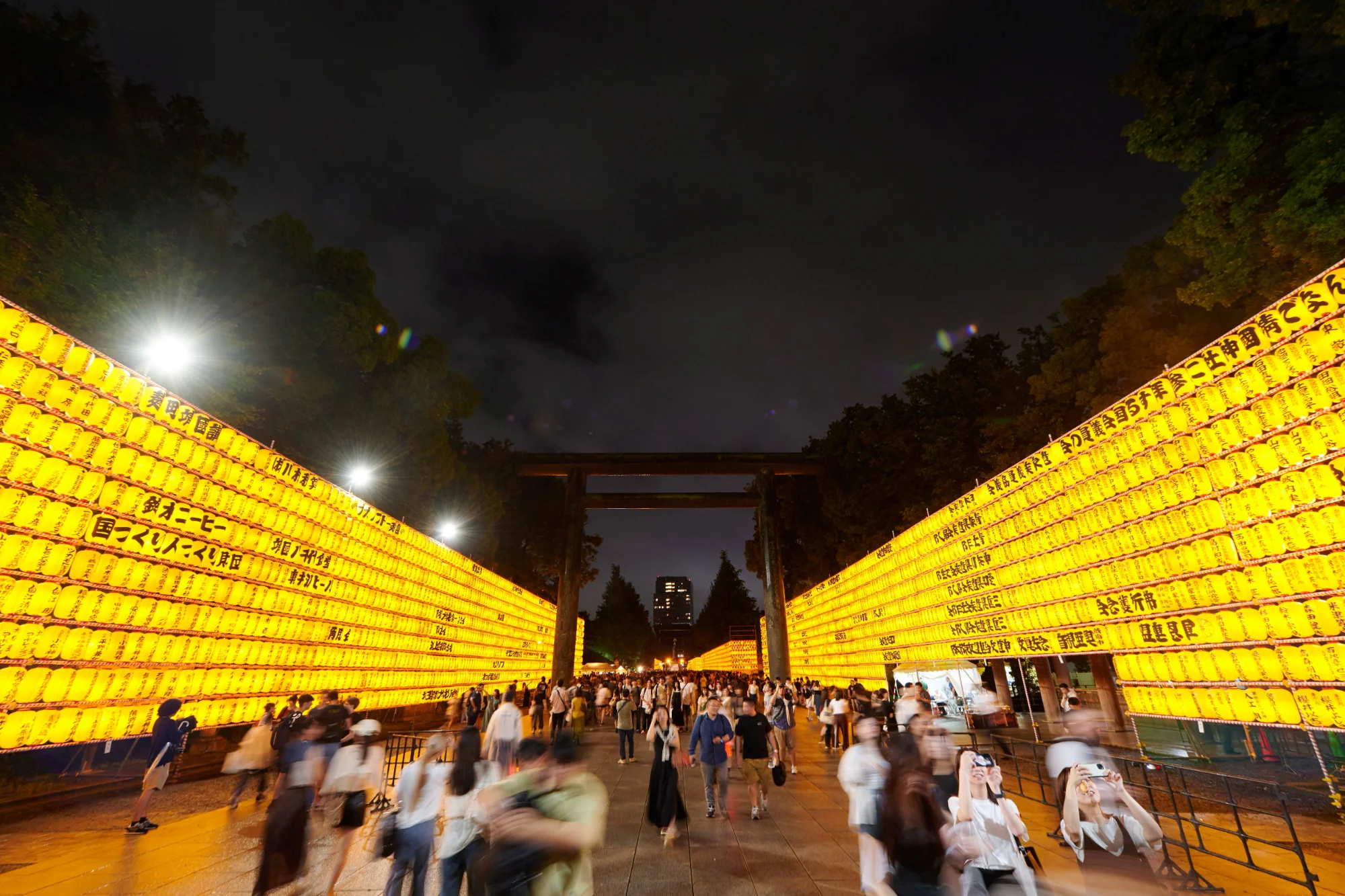
As a mid-summer event marking the arrival of the full-fledged summer season in Tokyo, the Mitama Festival at Yasukuni Shrine continues to be cherished by many. Held annually for four days from July 13 to 16, this festival is one of Japan's largest memorial events and, at the same time, one of the most magical summer nights in the capital. Approximately 30,000 yellow lanterns lining the spacious approach to Kudanshita create a tunnel of golden light, wrapping the shrine grounds in solemn prayers and the energetic echoes of Japanese traditional performing arts.
This year, 2026, marks the 79th milestone since the festival's founding in 1947 (Showa 22). Starting as a prayer for post-war reconstruction, the Mitama Festival has adapted to changing times and social conditions, yet it continues to captivate worshippers and tourists alike. In this article, we thoroughly explain the festival's deep historical background, details of the 2026 highlights, the differences in concept from other famous summer festivals, the thoughts of those involved, and recommended walking spots around the shrine before and after the festival.
1. Origin and Historical Background of the Mitama Festival: Light of Reconstruction and Prayer#
Tracing the history of the Mitama Festival is synonymous with understanding the spiritual reconstruction process of post-war Japan. In 1947 (Showa 22), amidst the turmoil, confusion, and material shortages of post-World War II Tokyo, this festival was born.
At that time, the hearts of bereaved families and citizens who had lost loved ones and friends in the war were deeply scarred, making it a difficult era to find hope for the future. In this context, the Mitama Festival was planned to coincide with the Obon season to console the souls of the war dead enshrined at Yasukuni Shrine, heal the grief of the bereaved families, and provide a ray of light and peace of mind to the people of the devastated capital.
At the first festival in 1947, when adequate electrical equipment was not yet available, handmade lanterns brought by the people were hung inside the shrine grounds, lighting up the darkness with a warm glow. That light was not merely illumination; it was a prayer itself to remember loved ones and a strong pledge to survive and reconstruct tomorrow. This warm "light of prayer" resonated deeply, and the number of lanterns (offerings) increased with each festival. Today, it has grown into one of Tokyo's premier festivals, boasting approximately 30,000 lanterns of various sizes. Having started as a symbol of post-war reconstruction, this festival continues to be passed down 79 years later as an event symbolizing the Obon spirit of honoring ancestors and praying for peace.
2. Golden Night Sky and Dynamic Dedication Performing Arts: Three Major Highlights#
The greatest charm of the Mitama Festival lies in the perfect fusion of "golden light" and "dynamic excitement" on the shrine grounds, which are usually a space of quiet prayer. Here are the three major highlights that overwhelm visitors.
① 30,000 Offering Lanterns Filling the Grounds
The most defining feature of the Mitama Festival is the yellow lanterns (offerings) filling the approach from the outer gate to the inner gate. Approximately 30,000 lanterns, consisting of large and small ones, are installed. Around 18:00, when all the lanterns are lit at once, the approach transforms into a dazzling tunnel of golden light. As the night deepens, the light of the lanterns harmonizes with the torii gate and the greenery of the grounds, creating a mystical beauty as if stepping into another world. In addition, near the main shrine, hand-drawn lanterns with calligraphy and drawings by famous painters, writers, actors, and athletes are displayed. Examining each work filled with individual artistry and prayer is highly rewarding.
② Powerful Performance of Aomori Nebuta
You can experience the raw power of the authentic Aomori Nebuta right in Tokyo as part of the festival's dedication events. Giant glowing floats parade through the approach along with the powerful sounds of traditional flutes and drums and the chanting of "Rassera!" The sight of the heroic Nebuta moving vigorously against the backdrop of the grand torii gate illuminated by lanterns is breathtaking, sending the excitement of worshippers to a climax.
③ Traditional Energy of Awa Odori and Mikoshi Carrying
During the festival, a variety of dedication performing arts unfold on the approach. The Awa Odori, dancing gorgeously to a light two-beat rhythm, the energetic mikoshi (portable shrine) carrying by local neighborhood associations, traditional folk dance parades, and Japanese drum performances are dedicated one after another. These beats and shouts are filled with powerful energy to console the souls of the dead and inspire the life force of the living.
3. Contrast between Silence and Motion: Comparison with Other Famous Summer Festivals#
Japan has numerous summer festivals and Obon events, but the Mitama Festival holds a unique presence unlike any of them. Comparing it with Kyoto's Yasaka Shrine Gion Festival, Tokyo's historic Asakusa Sanja Festival, or the purely entertaining Sumidagawa Fireworks Festival highlights its unique value.
The Gion Festival and Sanja Festival are held to ward off plagues and celebrate regional prosperity, primarily focusing on enhancing regional unity through parade floats and portable shrines. The Sumidagawa Fireworks Festival stands out as a massive entertainment event coloring the summer night sky.
In contrast, the Mitama Festival has a unique double nature: **Gratitude and memorial for the war dead (Silence)** and **gorgeous dedicated performing arts (Motion)**. No matter how crowded and lively the approach is, as you cross the second torii gate and approach the main hall, the air tightens and transitions into deep silence. People walk cheerfully under the golden light, yet they straighten up in front of the main hall to quietly bow twice, clap twice, and bow once to pay respects to the spirits. Because this spirit of prayer lies at the core, the Mitama Festival does not end as a mere amusement event, but leaves a deep impression and solemn resonance in the hearts of visitors.
4. Practical Guide to Enjoying the Mitama Festival#
Here is basic information and advice for enjoying the Mitama Festival comfortably and safely.
| Item | Detail & Schedule | Advice for a Comfortable Experience |
|---|---|---|
| Event Period | Every year from July 13 to July 16 (4 days) | The middle days, the 14th and 15th, are particularly crowded. If you want to worship quietly, the first day (13th) or the last day (16th) is recommended. |
| Lantern Lighting Hours | Around 18:00 to around 21:30 | Arrive at the grounds before dusk around 18:00 to witness the moving moment when all the lanterns are lit at once. |
| Major Dedicated Events | Aomori Nebuta, Awa Odori, Mikoshi, Folk Dances (schedule varies by day) | If you have a specific performance you want to see, check the dedication schedule on the Yasukuni Shrine official website beforehand. |
| Access | 5-minute walk from Kudanshita Station (Hanzomon, Tozai, Shinjuku lines) exit 1. 10-minute walk from JR Iidabashi or Ichigaya Station. | Kudanshita Station becomes extremely crowded in the evening. Walking from Iidabashi or Ichigaya is a useful way to avoid crowds. |
[Important Etiquette and Crowd Measures]
The Mitama Festival at Yasukuni Shrine is a sacred religious event. Please keep the following points in mind:
- Appropriate Behavior in the Grounds: Loud conversations near the main hall, using selfie sticks while walking, or setting up large tripods for long periods are inappropriate. Remove your hat and pray silently at the main hall.
- Heat measures: Mid-July in Tokyo is very humid and hot. Bring water to stay hydrated and use fans to prevent heat stroke.
5. Nearby Sightseeing Spots to Explore#
Before the lanterns light up in the evening or after enjoying the festival, exploring the historical and natural areas around Kudanshita and the Imperial Palace will make your visit even more rewarding.
① Chidorigafuchi Green Road
Famous for cherry blossoms in spring, this path offers a lush "green tunnel" in summer. The green leaves arching over the water and the quiet atmosphere of the moat provide a peaceful escape from the city rush. It is located just across the street from the shrine's south gate, perfect for a walk in the evening breeze.
② Kitanomaru Park and Nippon Budokan
Across the street from the shrine lies Kitanomaru Park, once part of Edo Castle. It features dense woods, wide lawns, and historical sights like the Nippon Budokan with its beautiful octagonal roof. Watching the sunset over the moat from the Tayasumon gate is spectacular.
③ Dinner in Kagurazaka
For dinner after the festival, walk toward Iidabashi Station to reach Kagurazaka, an area retaining the charm of old geisha districts. Cobblestone alleys feature traditional Japanese restaurants, French bistros, and chic cafes. It is a perfect place to relax and enjoy fine food and drinks after a festive evening.
6. Conclusion: Connecting 79 Years of Prayer, Light for the Future#
Starting from a simple handmade light in 1947, the Mitama Festival continues to illuminate Tokyo's summer in gold at its 79th milestone in 2026. Walking under the light of 30,000 lanterns and looking up at the Nebuta floats, we quietly reflect on the value of peace built upon the sacrifices of the past. As we enjoy the beautiful summer tradition, let us pass on this spirit of peace and remembrance to the future.
【Sources】#
1. Yasukuni Shrine Official Website "Mitama Festival"
2. Chiyoda City Tourism Association "Mitama Festival Feature"
3. Tokyo Convention & Visitors Bureau "GO TOKYO" Portal