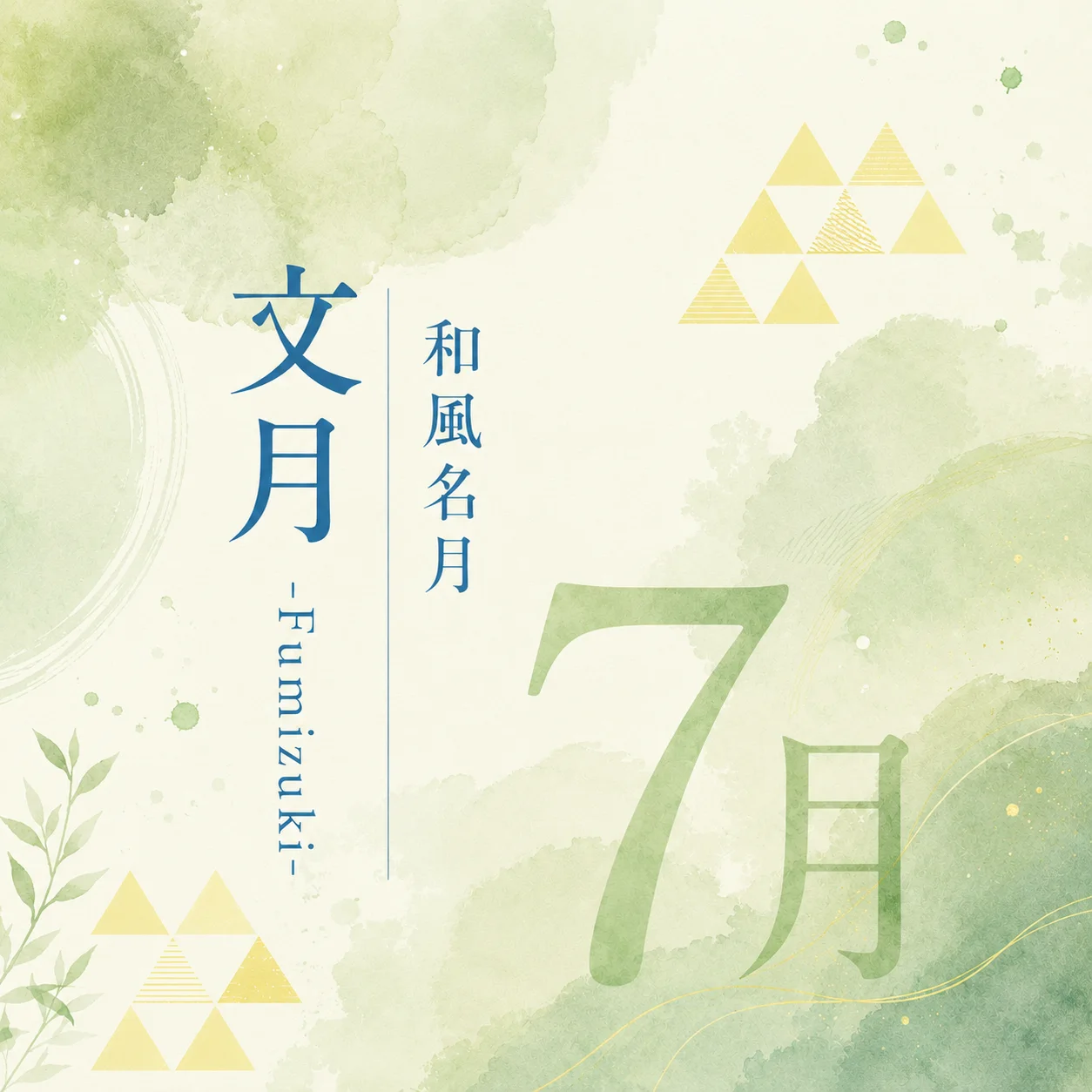
Not Just Fumizuki? The Many Aliases of July & Seasonal Customs
July begins today. Learn about the various traditional Japanese names for July (aliases like Fumizuki and Ryogetsu), seasonal customs like Ochugen and Shochumaimai, and summer meteorology.
Today marks the beginning of July. During this season when the arrival of summer is felt in earnest, Japan has historically given various traditional names (Wafumei or aliases) to each month, carefully observing the transition of seasons. While "Fumizuki" is widely known as the name for July, there are actually many other elegant aliases.
In this guide, we explain the diverse aliases of July and their origins in an easy-to-understand table. Avoiding the topic of Tanabata (the Star Festival) to focus on other aspects, we delve into rich Japanese summer customs such as Ochugen (mid-year gifts), Shochumaimai (summer greeting cards), Doyo no Ushi no Hi, and the meteorological shift of the rainy season ending.
Beyond Fumizuki: A Guide to July's Diverse Aliases#
In the traditional Japanese calendar, July was classified as the beginning of autumn ("Shoshu"), unlike today's calendar. Therefore, the aliases of July feature unique names that blend the harshness of summer heat with the subtle onset of autumn. The key aliases and their origins are summarized below.
| Alias (Reading) | Origin and Meaning |
|---|---|
| Fumizuki (Fuzuki) | The most common traditional name. Derived from "Fumihirakizuki" (the month of opening books), referencing the custom of airing out books under the evening wind during Tanabata, or "Hofumizuki" (the month of swelling rice ears). |
| Akihazuki | Meaning "the month when autumn first arrives," named because July marked the beginning of autumn under the traditional calendar. |
| Ryogetsu | Derived from the custom of enjoying the evening cool ("yuzumi") and waiting for a cool breeze amidst the intense summer heat, reflecting the onset of autumn winds. |
| Shogetsu | In contrast to "Ryogetsu," this name directly represents the month of intense heat, aligning closely with modern meteorological sensibilities as the hottest time of year. |
| Rangetsu | Named after "Ranso" (an alternative name for Fujibakama, translated as thoroughwort), one of the seven flowers of autumn, which begins to bloom during this season. |
| Ominaeshibuki | Named after "Ominaeshi" (golden lace), another of the seven flowers of autumn, which blossoms in fields and mountains during this month. |
| Shingetsu (Parent Month) | Reflects the season of maturity, when plants and crops bear fruit, signifying the abundance of life. |
| Shingetsu (Month of the Monkey) | A calendar term assigning the twelve zodiac signs to each month, designating July as the "Month of the Monkey" (Shen). |
*Note: Since July in the traditional calendar corresponds to August in the modern calendar, references to blooming periods and the "beginning of autumn" reflect historical seasonal contexts.
"Ochugen": Expressing Summer Gratitude and Etiquette#
Ochugen is a major summer custom in Japan. Gifts are sent to relatives, superiors, and business partners to express gratitude for the first half of the year and wish them good health.
The roots of Ochugen lie in Daoism's "Sangen" (three major days) from China, specifically "Chugen" (July 15), a day dedicated to honoring ancestors. When introduced to Japan, it merged with "Obon," the Buddhist custom of ancestral memorial services. The practice of relatives and neighbors exchanging food during Obon evolved into today's Ochugen gift-giving custom.
The timing for Ochugen varies by region. In eastern Japan, it is typically sent from early July to July 15, while in western Japan, it is sent from mid-July to August 15 (during the traditional Obon). If sent late, the gift label is changed to "Shochu-omimai" (summer greeting) or "Zansho-omimai" (late summer greeting) to maintain etiquette.
"Shochumaimai": Wishing Good Health Amidst the Heat#
Along with Ochugen, "Shochumaimai" (summer greeting cards) is a well-known custom. It is a seasonal greeting sent to inquire about the recipient's health during the hottest period of the year and share updates.
This custom originated from the practice of visiting relatives and acquaintances during Obon carrying small gifts. With the development of the postal system in the Meiji period, people began sending letters instead, which crystallized into the modern summer postcard format during the Taisho period.
There are strict rules regarding when to send these cards. They must arrive between "Shoso" (around July 7) and the day before "Risshu" (around August 7, marking the official start of autumn). If sent after Risshu, the greeting must be labeled "Zanshomaimai" (late summer greeting). Sending cards right after the rainy season ends makes the sentiment even more appropriate.
Preventing Summer Fatigue: "Doyo no Ushi no Hi" and "U" Foods#
Near the end of July, posters advertising "Doyo no Ushi no Hi" appear across Japan. "Doyo" refers to the 18-day transition period before the start of each season. The summer Doyo has historically been a time of concern for health due to the energy-draining heat.
While eating eel (unagi) on this day is famous, legendary Edo-period scholar Hiraga Gennai is said to have popularized this custom. An eel merchant consulting Gennai about poor summer sales was advised to post a sign saying "Today is Doyo no Ushi no Hi," which successfully boosted sales and established a national trend.
However, since ancient times, there was a belief that eating foods starting with the letter "u" on this day prevents illness. Besides unagi, people ate "udon," "uri" (cucumbers, watermelons), and "umeboshi" (pickled plums) to cool their bodies and stimulate appetite, successfully fighting off summer fatigue.
[July Meteorology: The End of the Rainy Season]
July marks a dramatic transition in weather. While the early part of the month is characterized by heavy rain from the stationary seasonal front, the Pacific High pressure system strengthens in mid-to-late July, pushing the front away and prompting the official "end of the rainy season" (Tsuyu-ake). Instantly, towering cumulonimbus clouds appear in the blue skies, evening showers occur, and cicadas begin their loud summer chorus.
Conclusion: Observing the Flow of Seasons#
July is a dynamic month transitioning from damp rainy days to intense summer energy. Traditional names like "Ryogetsu" reflect the delicate Japanese sensibility of seeking cool breezes amidst the heat. Incorporating these seasonal wisdoms into modern life can help us navigate the summer months healthily and mindfully.
[Sources]#
1. Japan Meteorological Agency Official Website
2. National Diet Library: "The Japanese Calendar"
3. Agency for Cultural Affairs Official Website