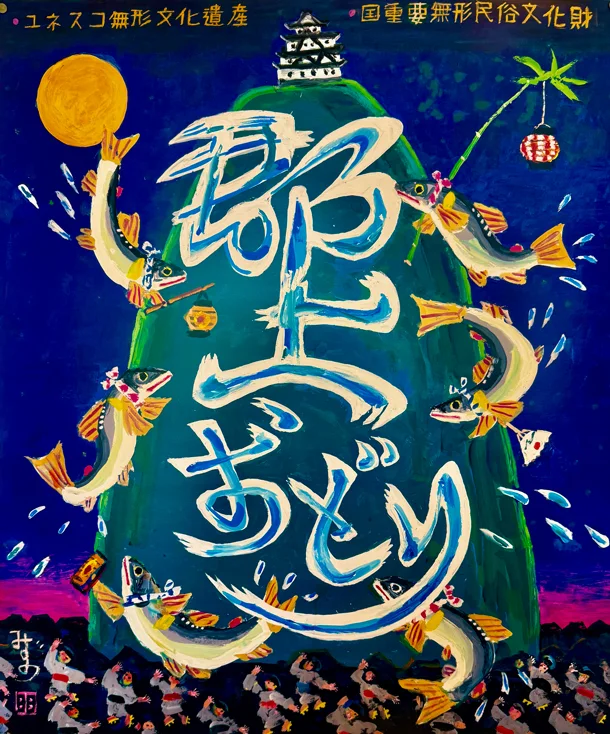
Gujo Odori 2026: Japan's Longest Dance Festival
Gujo Odori in Gifu is registered as a UNESCO Intangible Cultural Heritage. Running from July 11 to September, we cover its 400-year history, highlights, and access information.
What is Gujo Odori?: 400 Years of History and Background#
Gujo Odori has a long history dating back about 400 years to the Edo period. It is said to have started when Yoshitaka Endo, the lord of Gujo Hachiman Castle at the time, encouraged it to promote harmony among the feudal classes.
In the Edo period, there was a strict caste system (warriors, farmers, artisans, and merchants). However, Yoshitaka Endo issued a decree allowing everyone to dance regardless of class during the Obon period. Thanks to this policy, samurai, farmers, artisans, and merchants forgot their social status, formed a single circle, and danced all night long.
This spirit of "everyone joining the same circle to dance" has been passed down to this day. Gujo Odori is not a dance to watch, but a dance to join. The greatest charm is that even tourists can join the circle and start dancing by mimicking others. Today, it is designated as a National Important Intangible Folk Cultural Property and registered as a UNESCO Intangible Cultural Heritage, loved across generations and regions.
2026 Gujo Odori Schedule#
In 2026, Gujo Odori will run for 30 nights, starting with the "Odori Opening Festival" on Saturday, July 11, and ending with the "Odori Closing" on Saturday, September 5. The venue changes daily, turning the entire castle town into a stage.
Notably, the all-night "Tetsuya Odori" takes place for four days from August 13 to 16. During this period, dancing lasts from 8:00 PM until around 4:00 AM (or 5:00 AM) the next morning. The sight of food stalls and the sound of wooden clogs (geta) echoing in the night sky attracts many visitors as a summer tradition.
| Month | Main Schedule & Events (Partial) | Venue (Planned) |
|---|---|---|
| July | 11th (Sat): Odori Opening Festival 16th (Thu): Yasaka Shrine Tenno Festival 30th (Thu): Otohime Suijin Festival |
In front of Old Town Hall Memorial Hall, Kami-dono-machi, Kawahara-machi, etc. |
| August | 13th (Thu) to 16th (Sun): Tetsuya Odori (All-Night) 20th (Thu): Sogi Suijin Festival 29th (Sat): Commerce and Industry Festival |
Shinmachi to Hashimotomachi, Honmachi, etc. |
| September | 5th (Sat): Odori Closing | Shinmachi, Imamachi |
*Many other festivals and dances are scheduled besides the dates listed above. Please check the source links for details.
Highlights of Gujo Odori: 10 Types of Dances and Geta Sounds#
The reason Gujo Odori attracts so many people lies in its diversity and unique atmosphere.
10 Diverse Dance Songs#
There are ten dance songs in total. From the representative "Kawasaki" to the fast-paced and energetic "Harukoma," and the beautiful melody of "Sanbyaku," each has its own choreography and tempo, so you never get bored even if you dance all night. Beginners are recommended to start with "Kawasaki," the most famous and elegant, and "Harukoma," which features horse-riding movements.
Echoing Geta Sounds#
While wearing a yukata is standard, "geta" (wooden clogs) are even more important.
Gujo Odori involves many movements where dancers stamp their feet. The sound of thousands of clogs echoing together creates a unique groove that blends with the music. Local shops sell high-quality "odori geta" made from local cypress, and wearing them helps you immerse yourself in the festival.
Why is it Held for Such a Long Period?#
Unlike most Japanese summer festivals that end in a few days, Gujo Odori lasts for about 30 nights over nearly two months. The reason lies in the local faith and townspeople culture of Gujo Hachiman.
It is not held as a single continuous event. Instead, dances are organized in different neighborhoods according to the festivals of local shrines, temples, or commemorative events. The small festivals of each area link together like a relay, forming this long run. Consequently, the entire town remains in a festive mood all summer.
How to Access Gujo Hachiman#
Here are the main ways to access Gujo Hachiman. Due to extreme congestion during the "Tetsuya Odori" period in mid-Obon, using public transport and planning early is highly recommended.
By Public Transport#
- Train (Nagaragawa Railway): Transfer at Mino-Ota Station on the JR Takayama Line to the Nagaragawa Railway, and get off at Gujo-Hachiman Station. You can enjoy the beautiful river scenery on the way.
- Highway Bus: Buses run from Nagoya (Meitetsu Bus Center) or Gifu to "Gujo Hachiman Jokamachi Plaza" or "Gujo Hachiman Interchange." It takes about 1.5 hours from Nagoya.
By Car#
It takes about 5 minutes from the "Gujo Hachiman IC" of the Tokai-Hokuriku Expressway to the city center. However, during the Tetsuya Odori period, traffic regulations apply to most of the town, and parking lots fill up quickly. Be sure to check parking and shuttle bus information on the tourism association website in advance.
Summary: Join the Circle of Enthusiasm#
With 400 years of history, Gujo Odori is not just a traditional event, but a living culture built by locals and visitors together. Its openness allows anyone to join without hesitation. This summer, put on a yukata and geta, and jump into the rhythm. It will be an unforgettable Japanese summer memory.