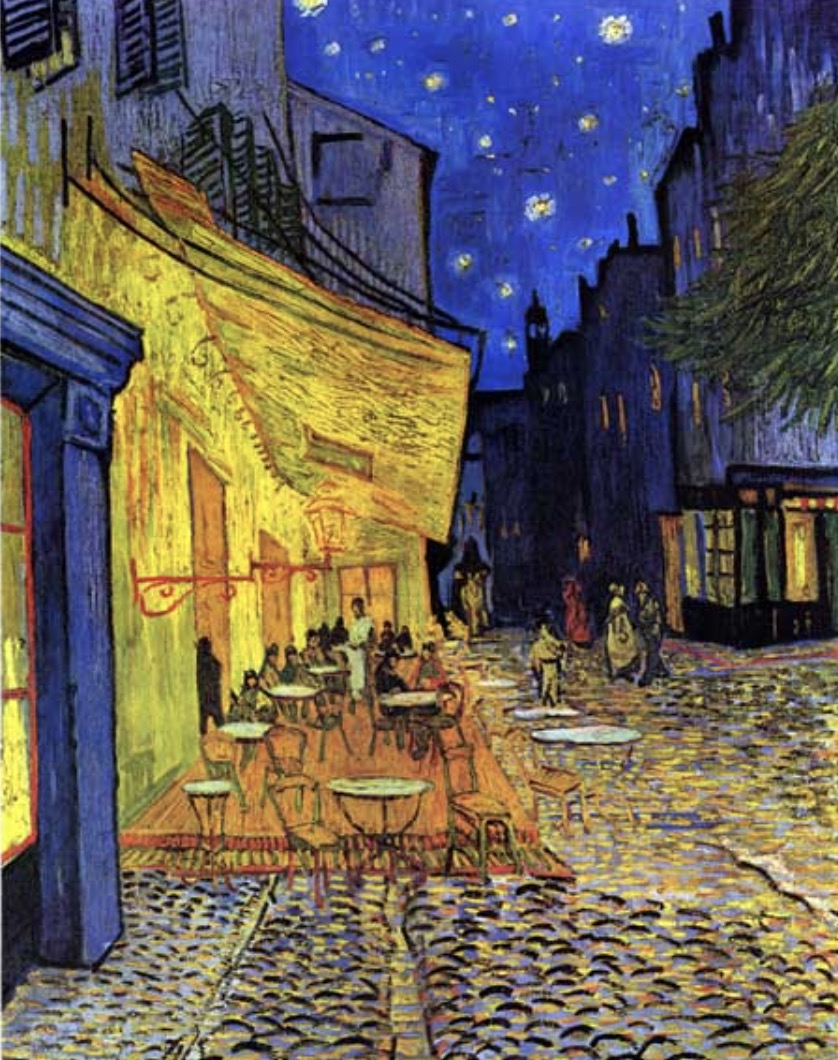
Great Van Gogh Exhibition in Tokyo! Cafe Terrace at Night Comes to Ueno
Great Van Gogh Exhibition in Tokyo! Cafe Terrace at Night returns after 20 years. Learn about his life, representative works, Japanese art influence, ticket booking, and access.
Miracle of Light and Color: The Return of "Cafe Terrace at Night" after 20 Years and Van Gogh's Artistic Journey#
From May 29 to August 12, 2026, the "Great Van Gogh Exhibition: Cafe Terrace at Night" is being held at The Ueno Royal Museum in Tokyo. "Cafe Terrace at Night (Place du Forum)," one of the most iconic masterpieces of Vincent van Gogh's career, has made a miraculous return to Japan for the first time in about 20 years from the Kröller-Müller Museum in the Netherlands, which boasts the world's second largest Van Gogh collection.
This exhibition highlights the first half of Van Gogh's artistic career, spanning from the dark and somber works of his early Dutch period, through his encounter with Impressionism in Paris, to the explosion of light and color during his period in Arles in southern France. This article provides a comprehensive and multifaceted guide to Van Gogh's dramatic life, his representative masterpieces, the profound influence of Japanese art (Ukiyo-e) on his work, and practical exhibition details including highlights, tickets, and access information.
【Key Focus of the Exhibition】Van Gogh's "Cafe Terrace at Night" is a monumental achievement in color theory, famous for "painting the night sky and shadows without using any black." It is a rare opportunity to appreciate up close the striking contrast of light between deep cobalt blues and glowing yellows.
The Life of Vincent van Gogh: A Painter Pursuing Light out of Darkness#
Vincent van Gogh was born on March 30, 1853, in Zundert in the southern Netherlands, to a strict Protestant pastor's family. Extremely sensitive, temperamental, and solitary from childhood, he struggled to fit in with his family and at school.
As a young man, he drifted through various occupations: an art dealer's clerk, a language teacher in England, a bookstore clerk, and a lay preacher in a coal-mining region. However, his interpersonal friction and excessive passion led to failure in every endeavor. After repeated setbacks, Van Gogh decided at the late age of 27 to become a painter, wishing to "comfort people's hearts through paint and brush."
The short career of Van Gogh can be divided into four major periods:
| Period | Key Location | Artistic Style | Color Palette |
|---|---|---|---|
| Dutch Period (1880–1885) | Etten, Nuenen | Realist style, portraying the hard labor and simple lives of peasants with deep respect. | Dark, heavy tones such as brown, black, and gray. |
| Paris Period (1886–1888) | Paris, France | Dramatic encounter with Impressionism, Neo-Impressionism (pointillism), and Japanese Ukiyo-e prints. | Rapidly brightening colors with increasingly bold and energetic brushstrokes. |
| Arles Period (1888–1889) | Arles, Southern France | Living in the "Yellow House." Outdoor painting filled with light, coinciding with peak creativity and mental crises. | Vibrant yellows, deep blues, and intense color contrasts (complementary colors). |
| Saint-Rémy & Auvers Period (1889–1890) | Saint-Rémy (Asylum), Auvers | Fighting mental instability, using swirling brushstrokes to express intense emotions and inner turmoil. | Dominance of blues, greens, and purples with highly expressive, dynamic strokes. |
Van Gogh's active painting career lasted only about ten years. Throughout this brief period, it was his younger brother Theo, who worked as an art dealer in Paris, who believed in Vincent's talent and provided unwavering financial and emotional support. It is no exaggeration to say that without Theo's devotion, not a single one of Van Gogh's masterpieces would exist today. However, plagued by worsening mental illness, Van Gogh tragically ended his own life on July 29, 1890, in Auvers-sur-Oise near Paris at the age of 37. Heartbroken, Theo passed away six months later, and the two brothers rest side-by-side today.
The Shock of Japonisme: Van Gogh's Fascination with Japanese Art (Ukiyo-e) that Changed His Destiny#
Japanese art, especially "Ukiyo-e" (woodblock prints), had a profound impact on Van Gogh's career and served as a decisive catalyst that transformed his artistic style. This Japanese influence (Japonisme) was the primary driving force behind his departure from the dark realism of his Dutch period toward the brilliant colors of his Paris and Arles periods.
Upon moving to Paris in 1886, Van Gogh was struck by the Japanese art boom sweeping the French art world. He became a passionate collector of Ukiyo-e, acquiring more than 600 Japanese prints in his lifetime. He painted Japanese prints into the backgrounds of his own portraits and even painted oil copies of famous woodblock prints, such as "Japonaiserie: Flowering Plum Tree" (after Utagawa Hiroshige's "Plum Park in Kameido") and "Bridge in the Rain" (after Hiroshige's "Sudden Shower over Shin-Ōhashi bridge and Atake").
Van Gogh absorbed several revolutionary techniques and stylistic elements from Ukiyo-e:
- Flat Colors and Bright Hues: Eliminating shadows and applying flat, uniform fields of bright paint, inspired by the multi-color printing technique of Japanese woodblock prints (Nishiki-e).
- Bold Outlines (Cloisonnism): Framing subjects with heavy, distinct dark lines, translating the carved woodblock lines into brushstrokes on canvas.
- Dynamic Compositions and Bird's-Eye Views: Placing the horizon extremely high or placing large foreground objects in front of a distant background, breaking free from traditional Western perspective.
Furthermore, Japan was not merely a source of technical inspiration; it was a spiritual "utopia" for Van Gogh. He imagined that Japanese artists lived in harmony with nature, helping and respecting one another like Buddhist monks. Driven by this dream of an artistic brotherhood, Van Gogh moved to Arles, declaring that "southern France is the Japan of France." He invited Paul Gauguin and others to Arles to establish the "Studio of the South." Although the community ended in tragedy with the infamous ear-cutting incident, masterpieces like "Cafe Terrace at Night" and "Sunflowers" shine with the bright light of the idealized Japan that Van Gogh carried in his heart.
【The "Japonaiserie" Series】In his Paris-period works like "Japonaiserie: Flowering Plum Tree" and "The Courtesan," Van Gogh filled the borders with unrelated Japanese motifs such as geishas, frogs, cranes, and bamboo. This illustrates how he enthusiastically exaggerated and reconstructed his own romanticized image of Japan.
Five Masterpieces that Tell the Story of Van Gogh's Genius#
Here are five representative masterpieces from his different periods, tracing his remarkable artistic evolution.
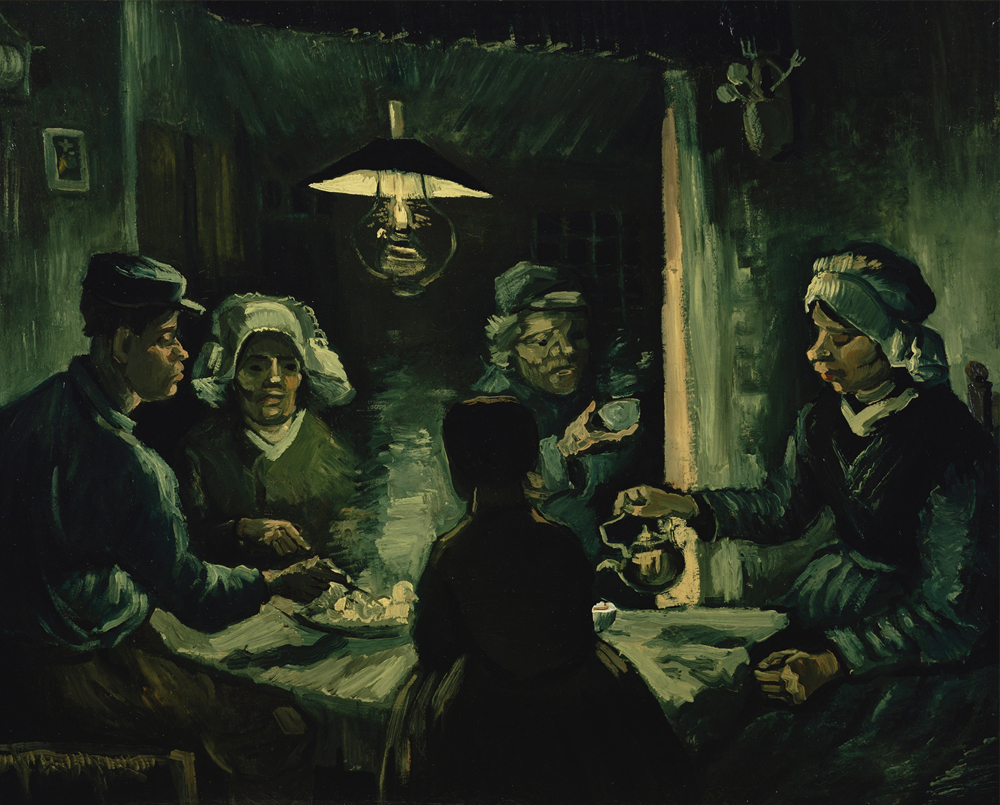
1. "The Potato Eaters" (1885)#
The culmination of his Dutch period and the first work Van Gogh was truly confident in. It depicts poor peasants gathered around a crude table under a dim lamp, eating potatoes they harvested themselves. Van Gogh chose dark, earthy tones to convey the dignity of manual labor. This raw painting reflects his early passion to depict the truth of human life rather than idealized beauty.
 #
#
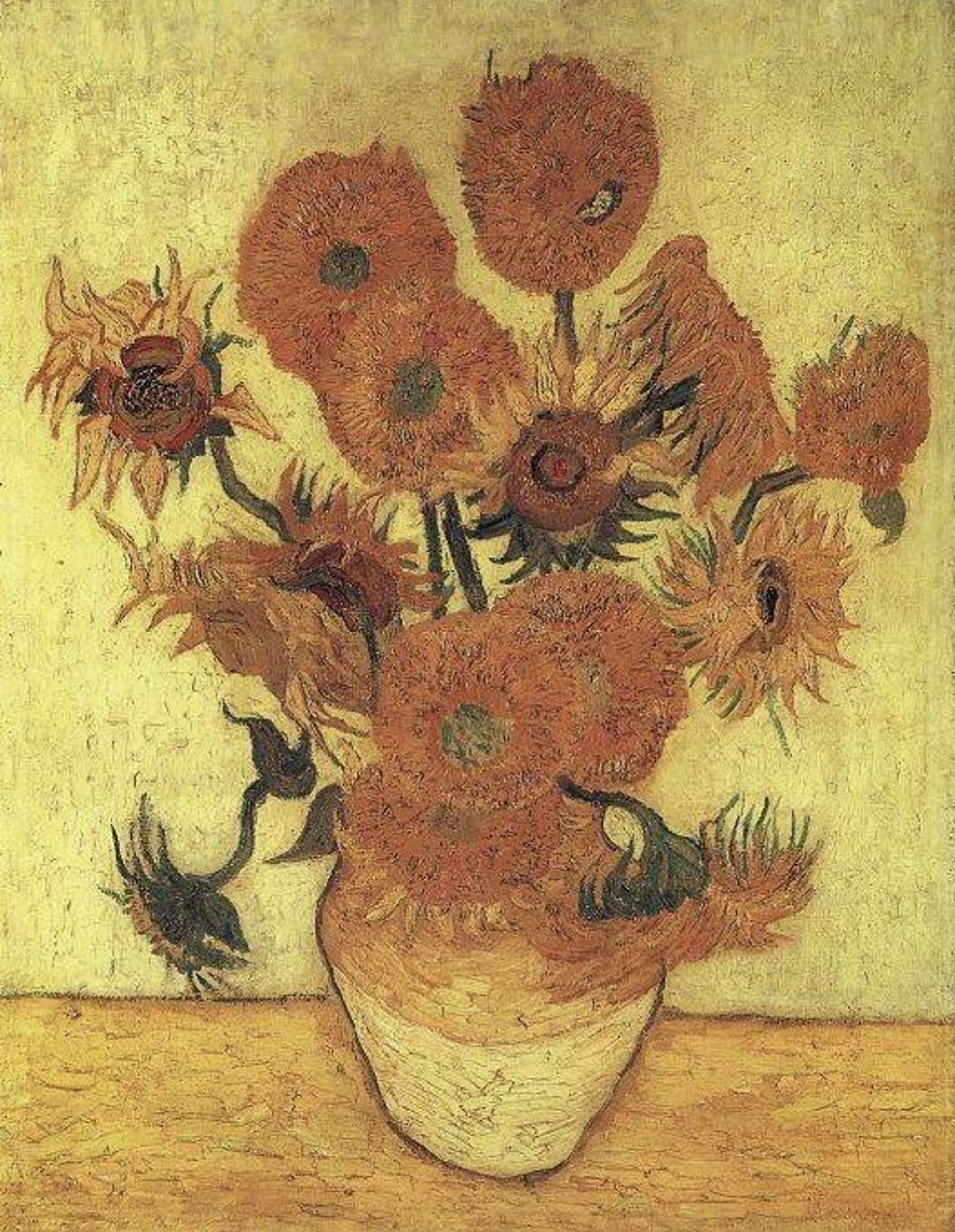
2. "Sunflowers" (1888)#
Van Gogh's most famous series was painted in Arles to decorate the room of Paul Gauguin, welcoming him to the "Yellow House." The sunflowers are painted almost entirely in gradients of vibrant chrome yellow, and the thick, swirling brushstrokes burst with life and energy. For Van Gogh, yellow was a sacred color symbolizing friendship, hope, and light.
 #
#
3. "Cafe Terrace at Night" (1888) ── The Focus of the Exhibition#
A masterpiece depicting the outdoor terrace of a cafe in Arles' Place du Forum. Its most revolutionary aspect is the complete absence of black paint to depict the night. Instead, the warm yellow gaslight and the deep cobalt blue of the starry sky contrast brilliantly, creating a romantic and mysterious nighttime scene. The thick application of paint captures both the warmth of the cafe and the crisp night air. This masterpiece is back in Japan for the first time in 20 years.
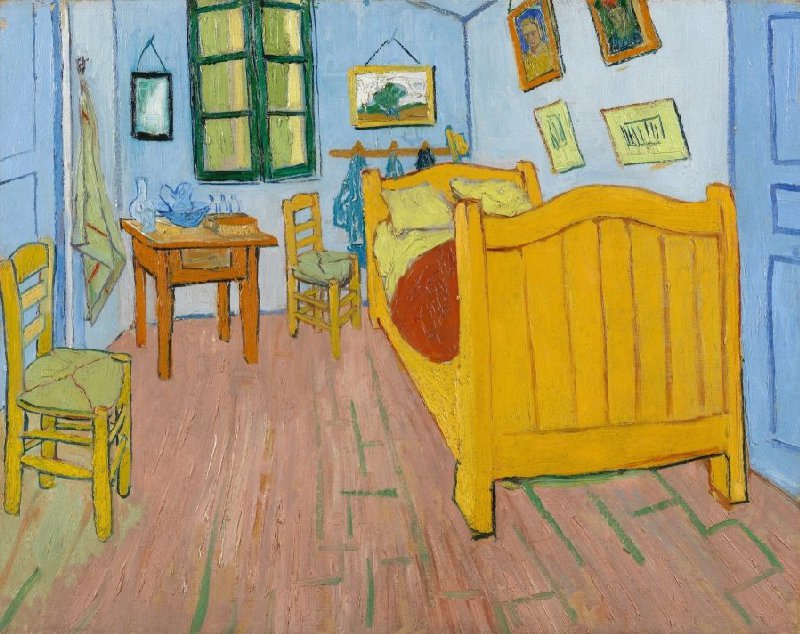
4. "The Bedroom" (1888)#
This painting depicts Van Gogh's own bedroom in the "Yellow House" in Arles. Featuring simple wooden furniture, chairs, and paintings on the walls, Van Gogh simplified the colors to suggest "absolute rest." By distorting the perspective and using bold color blocks like green window frames, a yellow bed, and blue walls, he sought to convey the domestic peace he craved and his hope for Gauguin's arrival.
5. "The Starry Night" (1889)#
After the collapse of his shared life with Gauguin and the subsequent ear-cutting incident, Van Gogh admitted himself to the asylum in Saint-Rémy. This work was painted from the memory of the night sky viewed from his room. The swirling clouds, glowing crescent moon, vibrant stars, and towering cypress tree are rendered in frantic, rhythmic brushstrokes, representing a collision between his unstable mental state and the cosmic energy of nature.
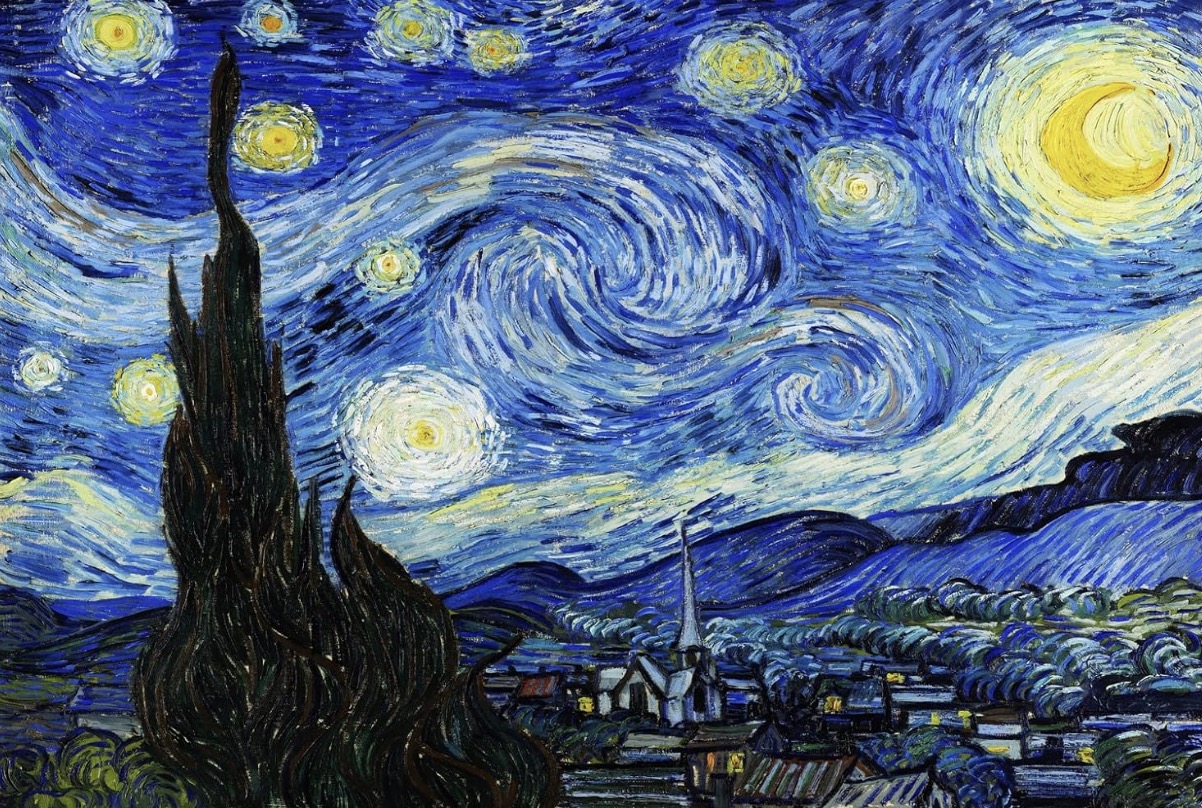
【Symbolism of the Cypress】The cypress trees that appear frequently in Van Gogh's late works are traditional European symbols of mourning, death, and eternity. The cypress, reaching straight to the heavens like a flame, is often interpreted as expressing his loneliness and longing for the afterlife.
Highlights of the "Great Van Gogh Exhibition: Cafe Terrace at Night"#
The exhibition currently showing at The Ueno Royal Museum focuses on the dramatic evolution of Van Gogh's style and his color transformation. Here are three key highlights to look out for:
■ Highlight 1: The Return of "Cafe Terrace at Night" after 20 Years#
The biggest highlight is, without a doubt, seeing "Cafe Terrace at Night" in person. Because it is a crown jewel of the Kröller-Müller Museum, loans are strictly limited, making this exhibition a historic event. Visitors can witness the thick paint layers, the glowing stars, and the vibrant interaction of blue and yellow that cannot be reproduced on digital screens.
■ Highlight 2: The Passion of Hélène Kröller-Müller's Collection#
The museum's founder, Hélène Kröller-Müller, was one of the first collectors to recognize Van Gogh's genius in the early 20th century, long before he gained worldwide fame. Using her husband's business fortune, she collected nearly 90 oil paintings and 180 drawings. Understanding her dedication and love as a patron adds historical depth to every piece in the gallery.
■ Highlight 3: Experiencing the "Awakening of Light" from Dulls to Brilliants#
The gallery path is arranged chronologically, allowing visitors to witness the dramatic transition from the dark, earthy tones of his Dutch years to the bright, luminous palette of his Arles period. This layout allows visitors to trace how Japanese Ukiyo-e and French Impressionism transformed his palette, leading to his artistic awakening.
Ticket Prices, Access, and Reservation Details for the "Great Van Gogh Exhibition"#
Details regarding ticket prices, opening hours, and venue access are summarized below.
| Ticket Category | Weekdays (Mon–Fri) | Weekends & Holidays |
|---|---|---|
| General Admission | 2,800 yen | 3,000 yen |
| College / Vocational / High School | 1,600 yen | 1,800 yen |
| Junior High / Elementary School | 1,000 yen | 1,200 yen |
【Important Notice Regarding Reservations】
Due to high expected attendance, timed-entry reservations are strongly recommended. Specifically, from July 1st, there will be no on-site ticket sales, and entry will be strictly restricted to timed-entry ticket holders. Please purchase your tickets online (via e-tix, etc.) prior to visiting. Entry may be refused without a pre-booked slot.
■ Hours and Access Information#
- Exhibition Dates: May 29, 2026 – August 12, 2026 (Open daily)
- Opening Hours:
- Sunday to Thursday: 9:00 AM – 5:30 PM
- Friday, Saturday, & Holidays: 9:00 AM – 7:00 PM
- *Last admission is 30 minutes before closing.
- Venue: The Ueno Royal Museum (1-2 Ueno Park, Taito-ku, Tokyo, 110-0007)
- Access:
- 3-minute walk from JR Ueno Station (Park Exit)
- 5-minute walk from Tokyo Metro Ueno Station (Hibiya/Ginza Lines)
- 5-minute walk from Keisei Ueno Station
- *Please use public transportation as there is no parking at the museum.
Conclusion: Experience the Passionate Soul of Vincent van Gogh in Ueno This Summer#
The "Great Van Gogh Exhibition: Cafe Terrace at Night" is a rare opportunity to immerse oneself in the beauty of Van Gogh's light and color. "Cafe Terrace at Night," returning to Japan after 20 years, possesses a physical presence, texture, and brilliance that no digital image can convey. Reflecting on his short, intense career, the people who supported him, and his deep admiration for Japan, a visit to Ueno is sure to touch your heart and soul.