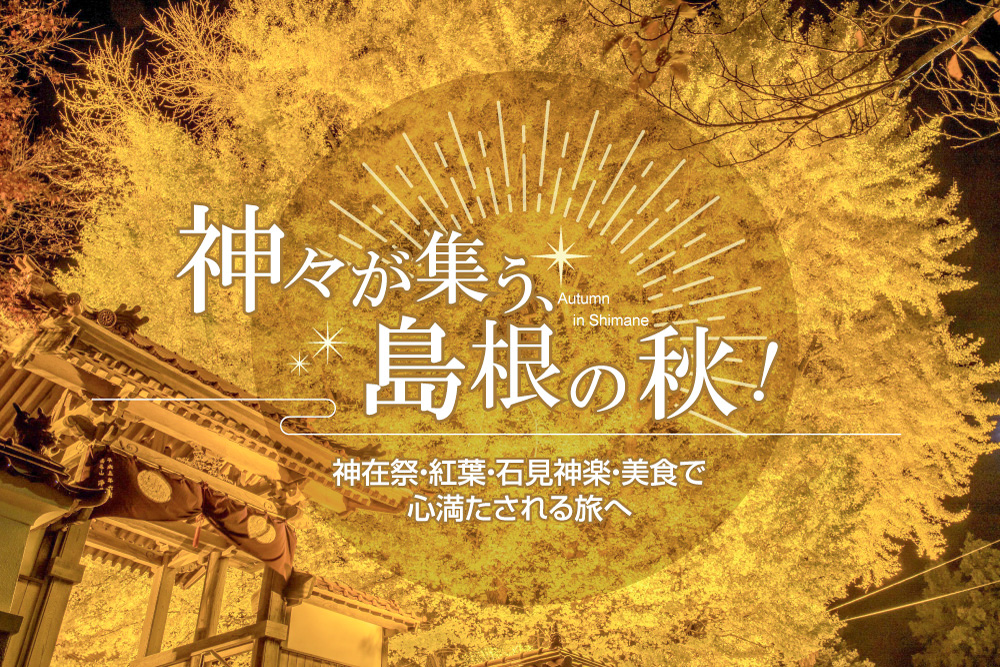
Festival Kamiarisai 2026 no Izumo Taisha: A Reunião dos Oito Milhões de Deuses
De 18 a 25 de nov. de 2026, o festival Kamiarisai no Izumo Taisha reúne os oito milhões de deuses do Japão. Conheça as origens míticas, o ritual das quatro palmas e dicas práticas de visitação.
Across most of Japan, the tenth lunar month is traditionally known as Kannazuki ("the month of no gods"), as local deities depart their hometowns. However, in Izumo on the Sea of Japan coast in Shimane Prefecture, this sacred period has long been celebrated as Kamiarizuki ("the month with gods"), welcoming the nation's eight million Shinto deities (Yaoyorozu no Kamigami). The most solemn centerpiece of this sacred month is the Kamiarisai (Festival of the Assembly of the Gods) 2026, held at Izumo Taisha (Kizukihigashi, Taisha-cho, Izumo City), the grand supreme shrine of destiny and matchmaking.
In 2026 (Reiwa 8), Kamiarisai commences on the evening of Wednesday, November 18 with the mysterious "Kamimukae-shinji (Divine Welcoming Ritual)" on the shores of Inasa Beach. Over an eight-day period, the assembled deities engage in Kamihakari (divine councils) to negotiate unseen human bonds, fortune, and next year's harvest, culminating on the evening of Wednesday, November 25 with the "Karasade-sai (Divine Departure Ritual)". Thousands of pilgrims from across Japan attend the "Enmusubi Taisai (Grand Matchmaking Festival)", enveloping the entire town of Izumo in profound prayer.
This comprehensive guide explores the complete 2026 schedule and sacred progression of Kamiarisai, its deep roots in the Kuniyuzuri (Relinquishing of the Land) myth of Okuninushi-no-Okami, the divine serpent messenger Ryujashin, the lodging halls of the gods at Jukusha, architectural and theological contrasts with Ise Jingu, Izumo Taisha's distinctive "Two Bows, Four Claps, One Bow" etiquette, and practical tips for navigating peak crowds.
[Izumo Taisha Kamiarisai 2026: Fast Facts]
• Dates: Wednesday evening, November 18 – Wednesday evening, November 25, 2026 (10th to 17th day of the 10th lunar month; 8 days total)
• Key Rituals: Nov 18: Kamimukae-shinji & Kamimukae-sai; Nov 19: Kamiarisai (Day 1); Nov 23 & 25: Enmusubi Taisai; Nov 25: Karasade-sai
• Venues: Izumo Taisha Shrine Grounds (195 Kizukihigashi, Taisha-cho, Izumo, Shimane) and Inasa Beach (Inasa-no-Hama)
• Principal Deity: Okuninushi-no-Okami (Master Deity of the Unseen Realm and Bonds)
• Worship Etiquette: Two Bows, Four Claps, One Bow (applied uniformly across all precinct shrines)
• Visiting Hours: 6:00 AM – 7:00 PM (Note: The area around Soga-no-yashiro behind the main hall closes early at 4:30 PM)
O Mito de Kuniyuzuri e o Mundo Invisível: Origens e Okuninushi#
The theological foundation for why Japan's deities assemble exclusively at Izumo Taisha is rooted in the Kuniyuzuri (Transfer of the Land) myth chronicled in the Kojiki and Nihon Shoki. Having completed the creation of the earthly realm, Okuninushi-no-Okami met with Takemikazuchi-no-Kami, messenger of the sun goddess Amaterasu-Omikami, upon the sands of Inasa Beach and agreed to relinquish sovereignty over the earthly realm (Ashihara-no-Nakatsukuni) to the heavenly deities.
In surrendering earthly governance, Okuninushi declared: "Let the descendants of the heavenly deities govern visible secular affairs and political administration (Arawagoto). In return, I shall retreat into the unseen spiritual realm to govern human destiny, the invisible spirit world, and sacred connections (Kakurigoto). As a pledge, build for me a magnificent palace reaching high into the heavens." This marked the founding of Izumo Taisha. Amenohohi-no-Mikoto, second son of Amaterasu, was tasked with officiating rites for Okuninushi; his direct patrilineal descendants, the Senge family of Izumo Kokuso, have inherited the priesthood uninterrupted for 84 generations to this day.
In Shinto, Kakurigoto encompasses far more than romantic matchmaking—it governs all relationships: encounters between individuals, career paths, harmony between human communities and nature, and the invisible fabric binding all life. The annual gathering in the tenth lunar month, where deities deliberate human prosperity and fortune for the coming year during Kamihakari, is a living continuation of this ancient covenant.
Calendário dos Rituais de 2026: Da Acolhida à Partida dos Deuses#
Over the course of eight days, solemn rituals unfold in strict chronological sequence as shown below:
| Date & Time (2026) | Ritual Name | Location | Ritual Details & Highlights |
|---|---|---|---|
| Nov 18 (Wed) 19:00~ | Kamimukae-shinji & Kamimukae-sai | Inasa Beach to Haiden (Worship Hall) | Sacred bonfires are lit on Inasa Beach to welcome arriving deities. Led by Ryujashin, the procession marches solemnly to the shrine hall. |
| Nov 19 (Thu) 9:00~ | Kamiarisai (Day 1) | Main Sanctuary (Honden) | With deities settled into the precinct, the chief priest recites solemn norito prayers, officially opening divine deliberations for national peace and prosperity. |
| Nov 23 (Mon, Hol) 10:00~ | Kamiarisai & Enmusubi Taisai | Main Sanctuary (Honden) | Special prayers for matchmaking and good fortune. Concurrently celebrates the national harvest thanksgiving (advance registration required). |
| Nov 25 (Wed) 10:00~ | Kamiarisai & Enmusubi Taisai | Main Sanctuary (Honden) | The second grand matchmaking ritual, marking the peak of pilgrim attendance (advance registration required). |
| Nov 25 (Wed) 16:00~ | Karasade-sai (Departure Ritual) | Haiden Entrance | A Shinto priest strikes the doors three times shouting "O-tachi, O-tachi" to signal the deities' departure from Izumo Taisha. |
During the Kamimukae-shinji on the night of November 18, bonfires crackle against the darkening waters of Inasa Beach. Priests receive the arriving deities into a sacred himorogi (evergreen bough) draped in white cloth. Guided by the sea messenger Ryujashin, the silent procession moves through lantern-lit streets toward Izumo Taisha, drawing onlookers into an otherworldly mythological realm.
O Mensageiro Ryujashin e as Hospedarias Jukusha: Arquitetura Sagrada#
During Kamiarisai, the shrine grounds take on unique spiritual duties centered on two sacred architectural complexes:
1. The Divine Guide and Protector: Ryujashin (Dragon-Serpent Deity)
Leading the procession at Inasa Beach is Ryujashin, historically personified by the pelagic sea snake (Pelamis platura) washing ashore along the Sea of Japan during autumn storms. Revered as a sea deity with dominion over water, Ryujashin provides protection against fire and water disasters, wards off misfortune, and ushers in wealth and propitious encounters.
2. Lodgings for Eight Million Deities: The East and West Jukusha
Flanking both sides of the Main Sanctuary are two elongated 19-bay halls called Jukusha. Serving as celestial guest residences, their doors remain firmly shut throughout the year. Only during the eight days of Kamiarisai are all nineteen doors opened, where priests offer sacred meals (shinsen) morning and evening. Pilgrims line up in reverent queues to pay homage to the assembled deities resting within.
3. The Divine Council at Kami-no-miya and Final Departure at Mankusen Shrine
While residing at Jukusha, the deities journey daily two kilometers west to Kami-no-miya to conduct deliberations on human destinies and agricultural fortune. Following the Karasade-sai on November 25, the gods depart Izumo Taisha for Mankusen Shrine in Hikawa, holding a final farewell banquet (Naorai) before scattering back to their respective provinces on the 26th day of the tenth lunar month.
Izumo Taisha em Contraste com Ise Jingu: O Significado das Quatro Palmas#
As the twin pillars of Japanese Shinto, Ise Jingu in Mie and Izumo Taisha in Shimane embody deeply complementary contrasts in theology, architecture, and ritual worship:
| Comparison Dimension | Izumo Taisha (Shimane Prefecture) | Ise Jingu (Naiku, Mie Prefecture) |
|---|---|---|
| Principal Deity | Okuninushi-no-Okami (Ruler of Earthly Gods & Unseen World) | Amaterasu-Omikami (Ruler of Heavenly Gods & Imperial Ancestor) |
| Spiritual Governance | Kakurigoto (Unseen realm, destiny, human connections, souls) | Arawagoto (Visible world, secular order, peace, harvest) |
| Sanctuary Architecture | Taisha-zukuri (National Treasure; 24 meters high) | Yuiitsu Shinmei-zukuri (Ancient unpainted hinoki style) |
| Worship Etiquette | Two Bows, Four Claps, One Bow (Uniform across all shrines) | Two Bows, Two Claps, One Bow (Standard Shinto practice) |
| Sacred Shimenawa Rope | Thick on the left, tapering right (reversed from standard shrines) | No shimenawa hung on sanctuary buildings (torii gates only) |
| Deity's Seating Orientation | Building faces South, but divine seat faces West (toward Inasa Beach) | Building and divine seat both face South |
First-time visitors are often intrigued by the "Two Bows, Four Claps, One Bow" etiquette. While two claps are standard elsewhere, Izumo Taisha claps eight times during its grandest annual festival on May 14 (Chokkusai), where eight symbolizes the infinite, boundless veneration of the divine. During routine worship, worshippers clap four times—representing half of eight—to express profound respect.
Furthermore, because Okuninushi's divine seat inside the main hall faces West toward Inasa Beach, worshippers who pay their respects at the front (south) Hattafumon gate often visit the smaller worship spot on the western perimeter of the sanctuary. Here, one can pray facing the deity directly head-on.
[Official Precinct Pilgrimage Route for Kamiarisai]
① Seidamari Torii Gate: Bow once upon entering the main approach.
② Harae-no-yashiro: Small shrine on the right to cleanse spiritual impurities (observe Two Bows, Four Claps, One Bow).
③ Temizuya: Wash hands and rinse mouth to purify mind and body.
④ Haiden & Main Sanctuary (Hattafumon): Offer gratitude and prayers to Okuninushi from the front gate.
⑤ East & West Jukusha: Pay respects to the eight million visiting deities residing within.
⑥ Soga-no-yashiro: Sacred sanctuary directly behind the main hall enshrining Susanoo-no-Mikoto.
⑦ Western Worship Spot: Pray directly facing Okuninushi from the western side.
Previsão de Movimento e Dicas Práticas para o Kamiarisai 2026#
During Kamiarisai, hundreds of thousands of visitors travel to Izumo, generating severe congestion along Route 431 and public transit lines. Peak attendance coincides with the Kamimukae-shinji on November 18, the national holiday on November 23 (Labor Thanksgiving Day), and the final departure day on November 25.
[Izumo Taisha Kamiarisai 2026 Strategy Checklist]
■ Timing Your Visit:
• Early Morning Worship: Precinct gates open at 6:00 AM. Visiting between 6:00 and 8:00 AM allows peaceful contemplation before tourist tour buses arrive.
• Kamimukae-shinji (Nov 18): Inasa Beach becomes packed by 5:30 PM. Arrive well in advance and dress in heavy winter attire.
• Enmusubi Taisai (Nov 23 & 25): Prior registration with Izumo Taisha is strictly required to participate in inner prayer rituals.
■ Transportation & Parking:
• Avoid Driving Directly to the Gates: Shrine parking lots reach full capacity early in the morning, creating multi-kilometer traffic jams.
• Use Park & Ride: Park near JR Izumo-shi Station or the Shimane Museum of Ancient Izumo.
• Public Transit: Ichibata Electric Railway terminates at "Izumo Taisha-mae Station" (5-minute walk to the main torii); Ichibata Bus operates frequent services from JR Izumo-shi Station.
■ Attire & Climate:
• Late November coastal winds from the Sea of Japan bring freezing wind chills. Heavy down coats, thermal innerwear, gloves, scarves, and sturdy walking shoes are indispensable.
Conclusão: Reconectando os Laços Invisíveis do Destino#
Receiving prayers across millennia, Izumo Taisha's Kamiarisai is far more than a sightseeing spectacle—it is the quintessential heart of Japanese spiritual heritage, aligning unseen bonds and inspiring renewed hope. From November 18 to 25, 2026, the eight million deities assembled in Izumo will tenderly watch over the ties of family, friendship, career, and community that enrich our daily lives.
This late autumn, embark on a sacred journey to Izumo. Listen to the ocean waves rolling onto Inasa Beach and the resonance of ancient prayers, immersing yourself in an enduring mythological world.
[Fontes Oficiais]