Mino Washi Akari Art Exhibition 2026: Historic Lantern Festival Guide
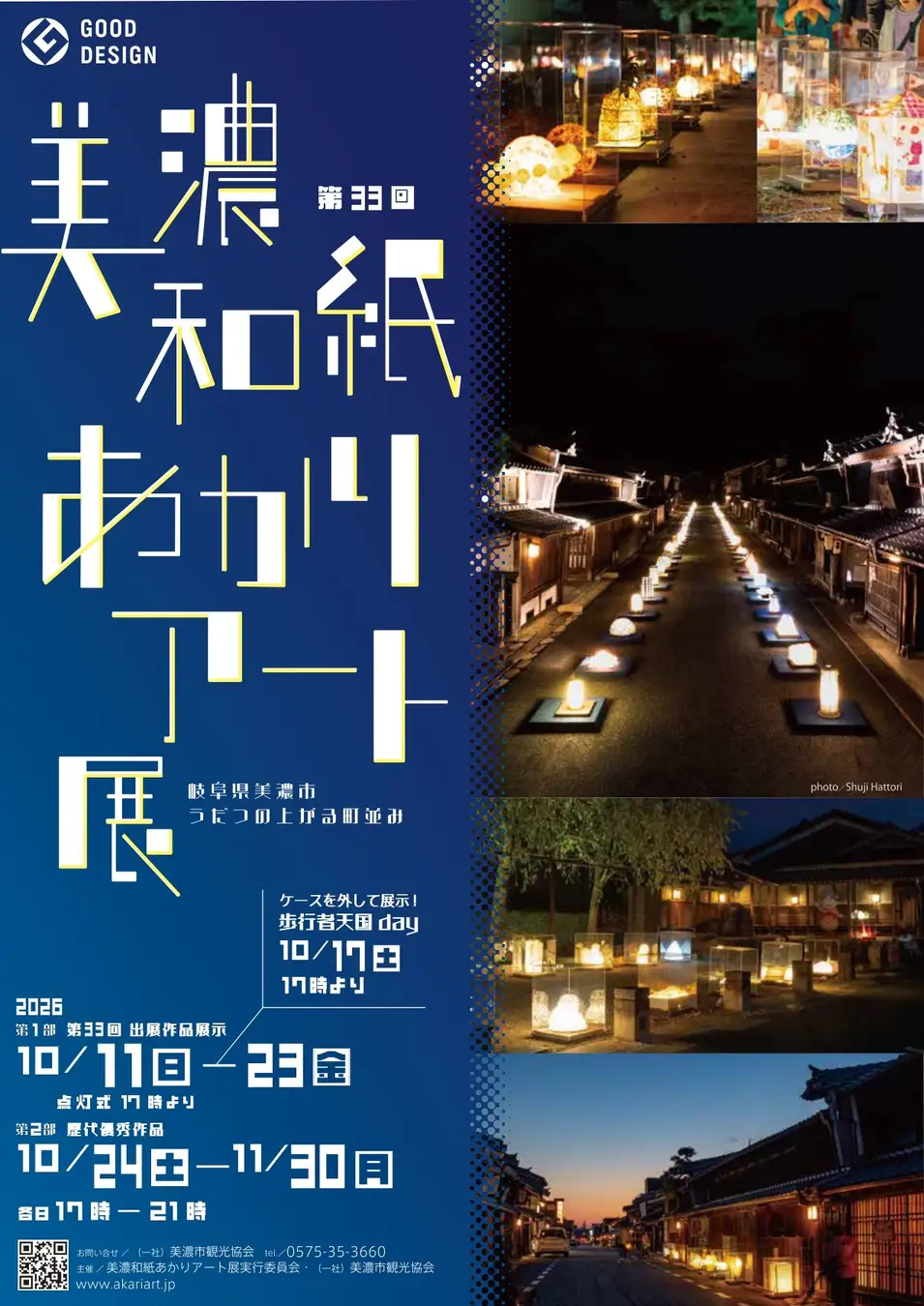
The 33rd Mino Washi Akari Art Exhibition opens in Mino, Gifu. Following a triumphant Part 1, Part 2 begins Oct 24 along historic Udatsu streets. Explore this 1300-year papercraft light festival.
As autumn breezes sweep through historic tiled roofs and twilight descends, the "Udatsu-lined Old Streets" of Mino City, Gifu Prefecture, transform into a sea of gentle, warm light. In Mino, which inherits a hand-papermaking heritage spanning over 1,300 years, the Mino Washi Akari Art Exhibition has been cherished for more than a quarter-century as a beloved autumn tradition. Celebrating its milestone 33rd edition in autumn 2026, the exhibition envelops the entire town in creative light sculptures crafted by celebrated artists and local citizens, immersing visitors in a poetic, ethereal world of luminous wonder.
Part 1, which featured nearly 300 contest entries! filling the historic streets, concluded in resounding triumph following the special open-air Pedestrian Zone Day and official jury awards. The exhibition now transitions into Part 2 (October 24 – November 30), where grand prix winners and historic masterpieces illuminate the tranquil autumn evenings. From the storied heritage of Hon-minoshi paper, inscribed on the UNESCO Intangible Cultural Heritage list, to the architectural splendor of the "udatsu" firewalls contested by Edo-period merchants, comprehensive comparisons with other iconic Japanese traditional light festivals, and practical walking itineraries, we explore every dimension of this premier light-art celebration.
[33rd Mino Washi Akari Art Exhibition (2026) Overview]
- Event Name: 33rd Mino Washi Akari Art Exhibition (2026)
- Dates: Sunday, October 11 – Monday, November 30, 2026
Schedule Structure:
- Part 1 (Exhibition of All Entries & Judging): Sunday, October 11 – Friday, October 23, 2026 (Lighting Ceremony: Oct 11; Pedestrian Zone Special Street Exhibition: Oct 17 – Concluded with Great Success)
- Part 2 (Exhibition of Grand Prix, Top Awardees & Historic Masterpieces): Saturday, October 24 – Monday, November 30, 2026
- Lighting Hours: 5:00 PM – 9:00 PM (17:00–21:00, Daily throughout Parts 1 & 2)
- Venue: Udatsu-lined Old Streets area in Mino City, Gifu Prefecture, and local cultural facilities
- Admission: Free (Open to all visitors to stroll and view freely)
- Organizers & Sponsors: Mino Washi Akari Art Exhibition Executive Committee, Mino City, Mino City Tourism Association, Mino Chamber of Commerce and Industry
- Major Accolades: The Tiffany Foundation Award for Traditional Culture, Good Design Award, and numerous national distinctions
Ethereal Lantern Glow in Autumn Nights! The Vitality of the 33rd Exhibition#
The Mino Washi Akari Art Exhibition, the defining autumn celebration of Mino City, Gifu Prefecture, is one of Japan's preeminent immersive art festivals. It showcases "akari" (light) sculptures crafted from traditional Mino washi paper, placed along the historic sidewalks of the "Udatsu-lined Old Streets"—a nationally designated Preservation District for Groups of Traditional Buildings—and illuminated every evening.
When the dusk chime chimes and the clock strikes 5:00 PM, hundreds of works installed at street corners and shop fronts illuminate simultaneously. Distinct from the harsh glare of modern LED illuminations, the light filtering through the natural mulberry fibers of washi paper radiates an incomparably soft, nostalgic warmth. Delicate amber gradients gently illuminate white plaster walls, wooden latticework, and stone pathways, transforming everyday historic town life into an enchanting illustrated picture scroll.
The defining magic of this festival lies in not confining artworks inside museum galleries; instead, the authentic merchant quarters that flourished from the Edo through Meiji eras serve directly as an open-air art museum. Visitors stroll along under the cool autumn breeze, pausing before each lantern sculpture to admire intricate watermarks, paper textures, and interplay of light and shadow. The sculptural forms emerging from the dark command an overwhelming physical presence that photographs and digital screens cannot fully capture.
Part 1 Concludes in Triumph: Passing the Luminous Baton to Part 2#
The 2026 33rd edition has deepened both its curatorial presentation and community engagement, earning passionate applause from travelers across Japan and abroad. Part 1, in which newly created submissions from nationwide artists competed, unfolded with remarkable excitement and creative drama.
On opening day, Sunday, October 11, an opening lighting ceremony was staged at Ipponmatsu Plaza. Resonant fanfares by the Minowa Wind Orchestra and traditional Minonagashi Niwaka theatrical performances opened the festivities in grand fashion. Nearly 300 brand-new entries spanning the General Division and the Youth Division lined the historic avenues, sparking dazzling creative dialogues among professional sculptors, fine art university students, local craftspeople, and school children.
The supreme highlight of Part 1 took place on Saturday, October 17 during the "Pedestrian Zone Day." Protective acrylic cases normally covering the delicate paper lanterns against rain and wind were specially removed for the evening. The raw, organic texture of the Mino washi and its delicate light melted directly into the night air. As the sole occasion of the season to witness pure lantern light without reflective glass, photography enthusiasts and travelers flocked in droves, filling the historic streets with audible gasps of wonder.
[Passing the Luminous Story: From Part 1 to Part 2]
Part 1, which served as the vibrant contest arena for new submissions and jury evaluation, concluded with tremendous acclaim. The prestigious "Mino Washi Akari Art Grand Prix" winners and top awardees now pass their radiance to "Part 2," commencing on Saturday, October 24. Part 2 gathers this year's winning masterpieces alongside selected historic masterworks from past decades, offering visitors a more serene, contemplative, and refined evening stroll through Monday, November 30. As festival crowds subside into late-autumn tranquility, Part 2 provides the quintessential experience cherished by seasoned connoisseurs of light and craft.
1,300 Years of Heritage: Mino Washi Craft and the Architectural Marvel of "Udatsu"#
The extraordinary beauty of the Mino Washi Akari Art Exhibition is rooted deeply in the ancient heritage and pristine natural environment nurtured in Mino over centuries.
Papermaking in Mino dates back to the Asuka and Nara periods. The Mino Province Household Register of 702 AD, preserved in the Shosoin Imperial Treasury in Nara, stands as Japan's oldest surviving paper document. Even after more than 1,300 years, its fibers remain supple and its inked characters crisp and legible. The pure soft waters of the pristine Nagara and Itadori rivers, meticulous selection of mulberry (kozo) bark, and supreme artisan techniques yield paper that is exceptionally thin, uniform, and durable. During the Edo period, Mino paper was appointed as the official shogunate paper, earning fame as "Mino-ban" shoji screens. Today, the pinnacle of hand-papermaking, "Hon-minoshi," is honored as both a National Important Intangible Cultural Property and a UNESCO Intangible Cultural Heritage.
Serving as the atmospheric stage for this light, the "Udatsu-lined Old Streets" preserve the commercial glory of the Edo merchant era. An "udatsu" is an elevated firewall constructed between adjoining rooftops to prevent fire from spreading. Because erecting an elaborate udatsu required substantial wealth, it gave rise to the famous Japanese idiom "udatsu ga agaranai" (unable to raise an udatsu), meaning unable to get ahead or achieve financial success.
As a vital river port along the Nagara River, Mino (formerly Kozuchi) accumulated vast mercantile fortunes through washi distribution. Prominent merchants vied in commerce, decorating their mansions with grand udatsu firewalls as status symbols. Today, an unbroken 400-meter stretch of Edo, Meiji, and Taisho era merchant houses remains beautifully preserved, earning designation as a National Important Preservation District for Groups of Traditional Buildings in 1999. The industrial mastery of Mino washi and the architectural mastery of udatsu converge here into a magnificent modern artistic celebration.
Traditional Craft x Light Festivals: Mino vs Yatsuo vs Kyoto vs Echigo-Tsumari#
While various historic festivals in Japan illuminate nighttime townscapes, how does the Mino Washi Akari Art Exhibition distinguish itself? We analyze its unique artistic philosophy alongside prominent Japanese cultural festivals.
| Comparison | Mino Washi Akari Art (Gifu) | Owara Kaze-no-Bon (Yatsuo, Toyama) | Kyoto Higashiyama Hanatouro (Kyoto) |
|---|---|---|---|
| Core Expression | Mino Washi x Sculptural Light Art Fiber translucency and 3D artistic innovation | Folk Ballads, Kokyu & Town Dancing Silent choreography and poignant string melodies | Pathway Lanterns & Temple Light-ups Staging historical vistas and borrowed scenery |
| Setting & Environment | Historic Udatsu-lined merchant quarter Storefronts serve as open-air gallery | Hillside town of Yatsuo & stone lanes Dancers move silently along cobbled slopes | Foothills of Higashiyama & ancient temples Expansive circuit from Kiyomizu to Shoren-in |
| Participant Body | Open Public Competition Professionals, students, and citizens unite | Local preservation guilds and youth Strict hereditary lineage and local exclusivity | Municipal tourism boards & planners Commercial lighting design firms |
| Quality of Light | Warm Translucent Glow of Handmade Paper Organic fibers diffuse shadows softly | Paper lanterns and bonbori flicker Gleaming braided hats and dancer hands in dark | Modern LED fixtures and architectural floodlights Calculated shadows accentuating monuments |
| Viewing Style | Close-up inspection and critique Appreciating craft technique and artist intent | Silent reverence amidst hushed crowds Total immersion in music and movement | Nocturnal stroll and sightseeing Autumn foliage, cherry blossoms, and temples |
Unlike Kyoto's Hanatouro, which served as an external municipal staging of temple landmarks, and Yatsuo's Owara Kaze-no-Bon, which rigorously preserves hereditary folklore, Mino's distinct brilliance lies in "the organic vitality of material" and "open democratic creativity." Anyone from around the world can craft using Mino washi, allowing world-renowned artists and local elementary school children to share the exact same historic street stage.
Civic Collaboration & Global Acclaim: Top Designers and Grassroots Spirit#
The unbroken continuity of the Mino Washi Akari Art Exhibition for more than three decades stems from its deeply rooted civic spirit, rejecting bureaucratic formality in favor of resident-led community empowerment.
In the early 1990s, suburban mall sprawl and rural depopulation threatened Mino's historic core. Determined to bring life back to the old streets and cast contemporary light onto traditional washi, local merchant youths, paper artisans, and the Junior Chamber of Commerce launched the first exhibition on a shoestring budget in 1994.
Starting with just a few dozen submissions, the grassroots festival gained national admiration for its dedicated operation: neighborhood households voluntarily dim indoor lights to prevent light spill, and hundreds of residents manage security, installation, and visitor guidance. This pioneering revitalization model won the prestigious "Community Development Grand Prize," the 2004 "Tiffany Foundation Award for Traditional Culture," and the nationally celebrated "Good Design Award."
Furthermore, the festival's artistic prestige is upheld by an esteemed jury panel. Renowned lighting designer Motoko Ishii serves as Special Advisor, while Hideaki Furukawa (former Director of the Museum of Fine Arts, Gifu) chairs the jury alongside celebrated washi artist Eriko Horiki, Musashino Art University Professor Noriko Takahashi, and prominent architects and critics. Their insightful critiques elevate the artistic standard year after year, treating each submission as a profound dialogue between paper and light.
Experiencing Nocturnal Mino: Recommended Walking Itinerary & Visitor Tips#
To fully savor the 33rd Mino Washi Akari Art Exhibition, here is an optimized walking itinerary and practical advice for nocturnal art appreciation.
[Recommended Walking Model Course for Akari Art]
- 3:30 PM: Arrive in Mino & Tour Former Imai Family Residence
Before sunset, explore Mino's oldest surviving udatsu and storehouses at this Edo-period washi merchant home, listening to the delicate tones of the suikinkutsu water harp in the courtyard. - 4:30 PM: Visit Mino Washi Akari Art Hall
On the second floor of this registered cultural property, an all-black gallery permanently displays past grand prix winners, providing rich historical context before viewing the street exhibition. - 5:00 PM: Udatsu-lined Streets Light Up
As twilight deepens, sculptures ignite in unison. Stroll from Ichiban-cho to Niban-cho avenues to admire the warm glow contrasting with historic merchant facades. - 6:30 PM: Taste Local Mino Delicacies
Warm up inside renovated machiya cafes savoring local washi-themed confections, sweet ayu river fish dishes, and regional sake. - 7:30 PM: Revisit Favorite Sculptures Under Pitch-Black Skies
As night fully falls, re-examine preferred pieces. The angles of light and elongated shadows reveal entirely new emotional expressions compared to twilight.
Essential Tips & Travel Access#
Autumn in Mino brings brisk nighttime drops in temperature. Bring wind-resistant coats, scarves, and warm layers for outdoor street walking. Because historic stone pavements feature gentle slopes and gutters, comfortable walking shoes or flat sneakers are strongly recommended.
Tripod photography may be restricted in crowded corridors for public safety. Touching artworks is strictly forbidden; visitors are requested to respect quiet viewing manners so everyone can enjoy the tranquil atmosphere.
By public transport, board the Gifu Bus "Express Mino/Seki Line" from JR Gifu Station or Meitetsu Gifu Station and disembark at "Udatsu no Machinami-dori" bus stop. Alternatively, take the scenic Nagaragawa Railway to "Mino-shi Station" (approx. 10-minute walk). By car, it is 5 minutes from the Tokai-Hokuriku Expressway "Mino IC." Because parking fills quickly on weekend evenings, arriving well before sunset is advised.
A Luminous Future: What Handcrafted Warmth Bestows Upon Modern Life#
Surrounded constantly by artificial blue light from smartphones and digital displays in a fast-paced society, the amber glow of the Mino Washi Akari Art Exhibition restores quietude and emotional peace to modern souls.
Stripping mulberry bark, cleansing raw fibers in icy winter river water, removing specks by hand, and rocking the wooden screen back and forth—Mino washi embodies immense human patience and seasonal nature. Only when illuminated does the inner vitality of these interlocking fibers reveal itself. Light passing through washi casts no aggressive shadows; it embraces the surrounding space with unconditional gentle grace.
Transitioning from the energetic contest of Part 1 to the refined contemplation of Part 2, the 33rd Mino Washi Akari Art Exhibition demonstrates that traditional craft is not a museum relic. It is a living, glowing bridge connecting ancient artisanal memory with human creativity for tomorrow. This autumn, visit the historic streets of Mino and listen closely to the serene stories whispered by the light.
[Sources]
- Mino Washi Akari Art Exhibition Official Website
- Mino City Tourism Association: Udatsu Townscape & Travel Guide
- Gifu Official Tourism Guide: Mino Washi Akari Art Exhibition