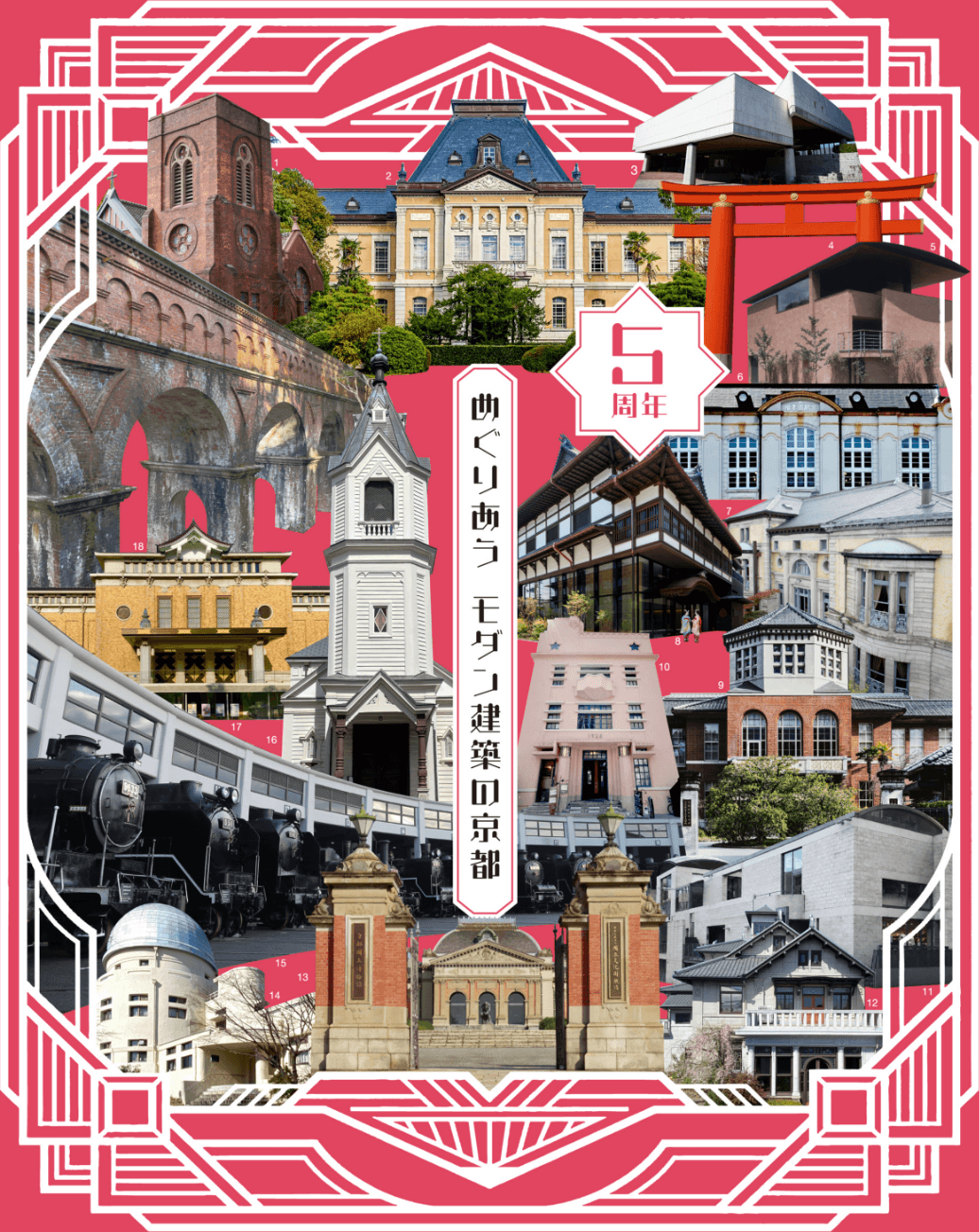
Kyoto Modern Architecture Festival 2026: 150 Masterpieces
Kyoto Modern Architecture Festival 2026 runs Oct 31–Nov 8. Celebrating 5 years, explore 150 landmarks across 13 zones, with 61 open via passport. Enjoy Tadao Ando's talk and special tours.
Kyoto continues to enchant the world as an ancient capital of a thousand years. While serene temples, shrines, and traditional wooden machiya townhouses are often celebrated as its hallmarks, the city also harbors another extraordinarily rich layer of architectural heritage. Born in the wake of the Meiji capital relocation to Tokyo, when the city overcame unprecedented crisis through bold revitalization, Kyoto created one of Japan's finest collections of modern and contemporary architecture.
As crisp autumn settles across the ancient capital, the Kyoto Modern Architecture Festival 2026 will take place across the entire city from Saturday, October 31 to Sunday, November 8, 2026. Celebrating its milestone 5th anniversary, this year's festival has grown into one of Japan's largest open-architecture events, featuring a record 150 landmark buildings across all 13 urban districts.
Under the signature 'Passport Openings', 61 remarkable architectural treasures—many usually closed to the public, including schools, research institutes, churches, historic corporate headquarters, and private residences—open their doors. Highlighted by a 5th-anniversary special talk by master architect Tadao Ando, the unveiling of a new architecture hub at Ando's early masterpiece 'TIME'S', and roughly 120 specialized guided tours, this comprehensive guide explores the festival's full vision, historical context, key highlights, cross-city comparisons, and practical visitor tips.
【Kyoto Modern Architecture Festival 2026: Event Overview & Schedule】
- Event Name: Kyoto Modern Architecture Festival 2026 (5th Anniversary Edition)
- Festival Dates: Saturday, October 31 – Sunday, November 8, 2026 (9 Days)
Schedule by Program:
- Passport Openings (Part 1): Saturday, Oct 31 & Sunday, Nov 1, 2026
- Passport Openings (Part 2): Saturday, Nov 7 & Sunday, Nov 8, 2026
- Guided Tours & Special Programs: Daily throughout the 9-day period (approx. 120 tours; advance reservation required)
- Scale of Participation: Approx. 150 buildings across 13 urban zones (including 61 passport-accessible sites)
- Open Zones (13 Districts): Kitayama/Matsugasaki, Kitaoji, Kinugasa/Kitano, Nishijin, Gosho North, Gosho West, Gosho East, Yoshida/Kitashirakawa, Nakagyo, Okazaki, Higashiyama, Kawaramachi/Gojo, Kyoto Station/Shichijo (and Others)
- Organizers: Kyoto Modern Architecture Festival Executive Committee (Kyoto City, Kyoto City Tourism Association, Kyoto Youth Hostel Association, Maimai Kyoto, etc.)
- Committee Chair: Kazuto Kasahara (Assistant Professor, Kyoto Institute of Technology / Architectural Historian)
Passport Pricing:
- Full Pass: ¥5,000 (Advance: ¥4,800) – Grants entry to all 4 passport opening days across Parts 1 and 2
- Part 1 / Part 2 Pass: ¥3,000 each (Advance: ¥2,800)
- U29 Pass (Full): ¥2,000 (Advance: ¥1,800) – For visitors aged 29 and under
- Transportation: Access venues via Kyoto Municipal Subway, City Bus, Keihan Railway, Hankyu Railway, and bicycle sharing
Historical Background: Revitalizing the Ancient Capital through 'Living Heritage'#
The story of Kyoto's modern architecture cannot be understood without the pivotal shock of the Meiji Restoration and the transfer of Japan's capital to Tokyo in 1869. With the Emperor and government moving east, Kyoto's population plummeted and traditional industries faced ruin. Confronted with municipal collapse, Kyoto's leaders and citizens chose not despair, but audacious modernization.
Kyoto launched pioneering initiatives that captured national attention: the citizen-funded 'Bangumi Elementary Schools' (Japan's first public school system), the monumental Lake Biwa Canal supplying navigation and Japan's first commercial hydroelectric power, the nation's first municipal streetcars, and the National Industrial Exhibitions. Embracing Western technology with Kyoto pride, the city forged a resilient path toward rebirth.
Symbols of this civic renaissance arose in red brick, granite, and fashionable Art Deco and Secessionist styles. Architects did not merely copy Western blueprints; they merged European aesthetics with Kyoto's extraordinary artisanal traditions—woodworking, plastering, ceramic tiling, and stained glass—producing modern edifices imbued with timeless warmth and grace.
Miraculously, Kyoto was spared from catastrophic air raids during World War II, and its historic urban fabric survived the destructive redevelopment of Japan's bubble economy. Today, these buildings remain active, functional spaces—as working universities, clinics, corporate offices, churches, galleries, cafes, and homes. This profound density of 'living heritage' makes Kyoto's modern architecture utterly unique in the world.
Architectural Giants: From Goichi Takeda to Modernism and Tadao Ando#
The undisputed pioneer of Kansai's modern architectural flowering was Goichi Takeda (1872–1938), revered as the 'Father of Kansai Modern Architecture'. After studying in Europe and introducing Art Nouveau and Vienna Secessionist aesthetics to Japan, Takeda founded the Department of Architecture at Kyoto Imperial University, mentoring generations of brilliant designers.
Takeda's surviving works—including the Kyoto Prefectural Library, the Shimadzu Corporation former headquarters, and Kyoto City Hall Main Building—exhibit an airy, sophisticated decorative grace that broke free from rigid historicism. His ethos helped shape the refined modern skyline of modern Kyoto.
Beyond Takeda, a constellation of legendary masters left indelible footprints across Kyoto:
- William Merrell Vories: Missionary-architect based in Omihachiman. Crafted inviting Spanish and Tudor revival masterworks including Tokaro Restaurant, the former Kyoto Christian Church (Kyoto Education and Culture Center), and Daimaru Villa.
- Chuta Ito: Visionary behind Tsukiji Hongwanji. Created idiosyncratic landmarks adorned with Asian mythological beasts and chimeras, such as Gion-kaku and Ryukoku University Omiya Campus.
- Seigo Motono: Vanguard of Japanese architectural expressionism and early modernism. Pioneered exposed concrete and geometric purity at Kyoto Higher Technological School (now KIT) and the Kurihara Residence.
- Togo Murano: Master of organic elegance bridging pre- and post-war Japan. Synthesized traditional sukiya carpentry with modernism at The Westin Miyako Hotel Kyoto's Kasuien Annex and the former Catholic Kawaramachi Cathedral.
- Kunio Maekawa: Star disciple of Le Corbusier. Designed the Kyoto Kaikan (now ROHM Theatre Kyoto), harmonizing bold modernist pilotis and deep eaves with Higashiyama's mountain ridge.
- Sachio Otani: Disciple of Kenzo Tange. Created Kyoto International Conference Center (ICC Kyoto), translating Shinto architectural archetypes into trapezoidal structural concrete.
Standing in dynamic dialogue with these historical treasures is 'TIME'S', an early commercial masterpiece by Tadao Ando. Completed along the Takase River, with concrete terraces stepping directly into flowing water, this timeless urban sanctuary remains a global benchmark for modern Japanese retail architecture.
5th Anniversary Highlights: First-Time Openings & Special Programs#
Under the 2026 theme of 'Deepening the Density of the Architectural Experience', the 5th anniversary edition presents unprecedented curatorial depth.
Tadao Ando Special Commemorative Talk
On opening day (Saturday, Oct 31), master architect Tadao Ando will deliver a special keynote at the auditorium of Kyoto Art Center (formerly Meirin Elementary School). Reflecting on over five decades at the global vanguard of architecture, Ando will share profound reflections on Kyoto's urban spirit, preservation, and future design.
'TIME'S' and the Kyoto Architecture Center
Ando's riverfront icon 'TIME'S' serves as the launchpad for the newly inaugurated 'Kyoto Architecture Center'. Serving as festival headquarters and an ongoing venue for architectural discourse and exhibitions, it injects fresh creative energy into Kyoto's downtown.
Remarkable First-Time Openings & Special Access
A record 18+ new buildings make their festival debut this year, granting rare access to sacred sanctuaries, academic libraries, and secluded estates:
- Kyoto Education and Culture Center: Former Kyoto Christian Church designed by W.M. Vories. The serene chapel hall and handcrafted timber carpentry are unveiled for the first time.
- Kyoto Marutamachi Church: A historic sanctuary in Gosho South featuring luminous stained glass and meditative quietude.
- Daimaru Villa (Chudoken): The Shimomura family's stately English Tudor reception estate designed by Vories, featured in an exclusive special viewing course.
- Kyoto International Conference Center Special Tours: In-depth guided access to Sachio Otani's monumental diplomatic halls and garden pavilions.
- 5th Anniversary 'Higashiyama Grand Tea Gathering': A collaborative celebration uniting heritage modern architecture with traditional Kyoto tea ceremonies.
13-Zone Urban Navigator: A Citywide Architectural Tapestry#
Kyoto Modern Architecture Festival 2026 spans 13 diverse neighborhoods, allowing visitors to appreciate how architecture mirrors urban history.
| Zone Name | District Character & Heritage | Representative Landmarks | Styles & Architectural Highlights |
|---|---|---|---|
| Okazaki | Kyoto's modern cultural hub born from the 1895 Industrial Exhibition | Kyoto City KYOCERA Museum of Art, ROHM Theatre Kyoto, Prefectural Library | Crown Imperial, Neo-Renaissance, and Maekawa's late modernism |
| Nakagyo | Historic banking, publishing, and commercial artery along Sanjo Street | Museum of Kyoto Annex (former Bank of Japan), 1928 Building, SACRA Building | Kingotatsuno red brick, Art Deco facades, and decorative masonry |
| Gosho West & East | Leafy aristocratic enclaves, administrative headquarters, and academic estates | Kyoto Prefectural Government Former Main Building, Amherst House, Nashinoki Shrine | Japan's oldest active prefectural seat; American collegiate Georgian |
| Gosho North | The spiritual and educational cradle of Doshisha University | Doshisha Chapel, Clarke Memorial Hall, Harris Science Hall | Nationally Designated Important Cultural Property Victorian Gothic brickwork |
| Higashiyama | Scenic hillside estates, diplomatic villas, and spiritual retreats | Chorakukan (Murai Estate), The Westin Miyako Kasuien, Gion-kaku | Beaux-Arts Gilded Age grandeur, Murano sukiya, Chuta Ito pagoda |
| Kawaramachi/Gojo | Canal-side hospitality, entertainment, and industrial commerce | Tokaro Restaurant, Marufukuro (former Nintendo HQ), TIME'S | Spanish Mission, Art Deco headquarters, Tadao Ando riverfront concrete |
| Yoshida/Kitashirakawa | Academic enclave anchored by Kyoto University | Kyoto University Clock Tower, Komai House, Institute for Research in Humanities | Takeda's Secessionist academic halls, Vories American prairie bungalow |
| Kitayama/Matsugasaki | Postwar urban planning corridor known for avant-garde modernism | Kyoto International Conference Center, Garden of Fine Arts, KIT Campus | Otani's geometric brutalism, Tadao Ando open-air architectural gallery |
| Nishijin/Kitano/Kinugasa | Historic silk weaving guilds, bathhouse culture, and modern villas | Nishijin Textile Center West Hall, Kurihara House, Funaoka Onsen | Motono's early reinforced concrete, Majolica tiled bathhouses |
| Kyoto Station/Shichijo | Railway transport gateway and modernized Buddhist campuses | Ryukoku University Omiya Campus, Dendo-in, former Central Telephone Office | Chuta Ito Asian fantastical stonecraft, early Meiji Giyofu wooden Western |
Each district reveals that Kyoto is, in truth, an open-air museum. Navigating its canals, avenues, and alleys on foot, by subway, or by bicycle unlocks multifaceted layers of history hidden from casual sightseeing.
Urban Festival Comparison: Kyoto, Osaka, and Tokyo#
Open-house architecture festivals are flourishing across Japan. Here is how Kyoto compares to Osaka's Ikefes and Tokyo Architecture Festival:
| Festival | Host City | Primary Architecture & Urban Fabric | Event Tone & Unique Appeal | Participation Model |
|---|---|---|---|---|
| Kyoto Modern Architecture Festival | Kyoto City | Schools, churches, residences, museums nestled into an ancient historic grid | Intimate human scale, exquisite craft integration, deep temporal layering | Passport system (61 sites free with pass) + specialized guided tours |
| Living Architecture Museum Fest (Ikefes) | Osaka City | Interwar financial towers, commercial headquarters, modern corporate offices | Commercial dynamism, corporate civic pride, warm merchant hospitality | Free admission to designated buildings; central business district walks |
| Tokyo Architecture Festival | Metropolitan Tokyo | Otemachi mega-skyscrapers, Nihonbashi banks, aristocratic Western estates | Metropolitan complexity, cutting-edge urban redevelopment dialogues | Curated building programs, specialized symposiums, and guided walks |
While Osaka champions commercial office towers and Tokyo showcases monumental metropolis scale, Kyoto's defining strength is its walkable human scale and living domestic fabric. Architecture here exists in organic harmony with mountain horizons, gentle canals, and centuries of neighborhood life.
Visitor Guide: Passport Strategy & Essential Etiquette#
To make the most of Kyoto Modern Architecture Festival 2026, keep these practical strategies and etiquette rules in mind:
Choosing Your Passport
For those seeking an immersive multi-day experience, the 'Full Pass' (¥5,000 / advance ¥4,800) covers all 4 passport weekend days (Oct 31–Nov 1 & Nov 7–8). Single-weekend visitors can choose the Part 1 or Part 2 Pass (¥3,000 / advance ¥2,800). Young explorers aged 29 and under should take advantage of the discounted U29 Pass (¥2,000 / advance ¥1,800).
Digital Map 'PointMap+'
The official web map 'PointMap+' provides real-time opening hours, building locations, crowd status, and curated walking routes on your smartphone.
【Crucial Etiquette & Visitor Guidelines】
- Verify Individual Building Schedules: Not all 61 passport sites are open on all 4 days. Many open only during Part 1, Part 2, mornings, or afternoons. Always verify times on the official website before departure.
- Respect Active Working Facilities: Many sites are functioning schools, hospitals, churches, and private residences. Keep voices low, do not obstruct daily operations, and strictly avoid prohibited private areas.
- Strict Photography Rules: Photography rules vary per building (prohibited indoors, exterior only, or no social media posting). Always follow staff instructions. Tripods, monopods, and selfie sticks are strictly banned everywhere.
- Socks Required & Bring a Shoe Bag: Many historic interiors require removing outdoor footwear. Bare feet are strictly prohibited for hygiene and timber preservation; always wear socks. Bringing a plastic bag for your shoes is highly recommended.
- Disperse Your Schedule & Use Public Transit: Popular venues experience morning peak lines. Plan routes in off-peak afternoons and rely on subways, city buses, and rental bikes to avoid city traffic.
Conclusion: Stepping Across the Threshold of Living Memory#
Architecture is never merely stone, timber, or concrete. It embodies the dreams of visionary creators, the pride of master craftspeople, and the quiet memories of generations who cherished and inhabited these spaces.
The magic of the Kyoto Modern Architecture Festival lies in that singular moment when normally silent doors swing open, igniting a warm conversation between visitors, living buildings, and the city. Glistening wooden banisters polished by decades of hands, grand vaulted ceilings, and soft light streaming through stained glass enrich how we perceive our cities.
This autumn 2026, wander through Kyoto's colorful streets and open the doors of its architectural treasures with your own hands. An unforgettable journey through the living soul of modern Kyoto awaits.
【Sources】#
- Kyoto Modern Architecture Festival Executive Committee 'Official Website'
- Kyoto City Cultural and Citizens Affairs Bureau 'Kyoto Modern Architecture Festival 2026 Detailed Program & Passport Sales Press Release'
- Kyoto City Tourism Association 'Kyoto Tourism Navi: Kyoto Modern Architecture Festival 2026'