Bunkyo Chrysanthemum Festival 2026: Historic Kiku Dolls & Autumn Splendor
Held in Nov 2026 at Yushima Tenmangu in Bunkyo, Tokyo, the 48th Bunkyo Chrysanthemum Festival showcases 2,000 blooms, life-sized kiku dolls, and historic garden craft. Here is the complete guide.
As autumn deepens and vibrant foliage blankets Tokyo, the sacred scholarly grounds of Yushima Tenmangu Shrine (commonly known as Yushima Tenjin) in Bunkyo Ward will host the celebrated Bunkyo Chrysanthemum Festival (Bunkyo Kiku Matsuri) from late October through mid-November 2026 (main festival dates: November 1–22, 2026). Serving as the grand finale of the prestigious 'Five Great Flower Festivals of Bunkyo' alongside the spring Plum Festival and early summer Azalea Festival, this venerated gathering has enchanted worshipers and horticulture connoisseurs since its founding in 1979 (Showa 54), marking its 48th milestone edition in 2026.
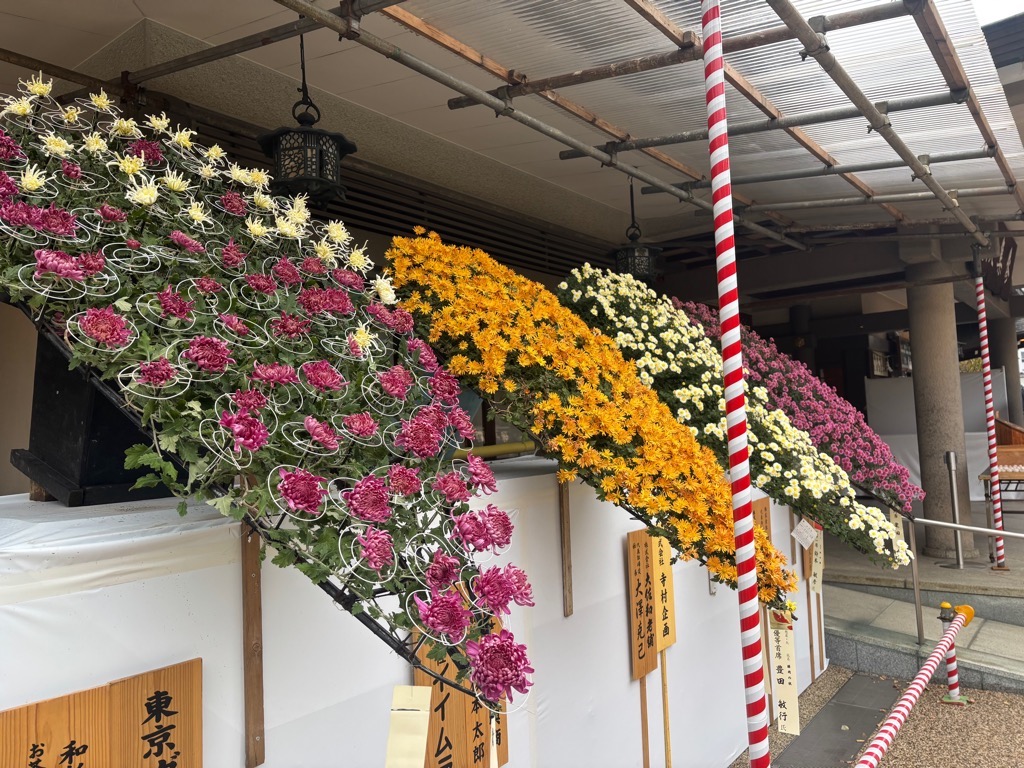
Across the historic shrine precincts, approximately 2,000 magnificent chrysanthemums cultivated by master horticulturists from across Japan are proudly displayed. The crowning jewel of the festival is the life-sized 'Kiku-ningyo' (chrysanthemum dolls)—a rare artisan craft seldom seen in Tokyo today. Clothed in living blossoms depicting heroic historical figures and scenes from NHK Taiga historical dramas, these figures transport visitors into the timeless realm of classical Japanese aesthetics. The exhibition also features 'Senrin-zaki' (thousand-bloom domes grown from a single stem), sweeping 'Dai-kengai' (cliff-cascading vines), and rare 'Classical Chrysanthemums' preserved secretly since the Edo period.
【Highlights】 48th Bunkyo Chrysanthemum Festival Quick Facts
・Event Title: 48th Bunkyo Chrysanthemum Festival (Bunkyo Five Great Flower Festivals)
・Dates: Late October – Mid-November 2026 (Annual main period: November 1–22/23)
・Hours: 6:00 AM – Sunset (Free entry; exhibition viewing recommended 9:00 AM – 5:00 PM)
・Venue: Yushima Tenmangu Shrine (3-30-1 Yushima, Bunkyo-ku, Tokyo)
・Admission: Free admission to shrine grounds and exhibitions
・Exhibition Scale: Approx. 2,000 plants (Kiku dolls, thousand-blooms, cliff cascades, classical varieties, school displays)
・Organizers: Bunkyo Chrysanthemum Festival Executive Committee, Bunkyo City Tourism Association, Yushima Tenmangu
Origins of the Festival & the Legacy of Dangozaka Kiku Dolls#
Appreciating the Bunkyo Chrysanthemum Festival begins with understanding the district's illustrious horticultural pedigree. Yushima Tenmangu traces its legendary founding back to 458 AD during the reign of Emperor Yuryaku. After Sugawara no Michizane, the patron deity of scholarship, was enshrined here in 1355, the shrine became a revered center of intellectual devotion. Rebuilt by warlord Ota Dokan in 1478 and later endowed with official shogunate land by Tokugawa Ieyasu in 1590, the sanctuary has commanded deep spiritual respect from samurai leaders and townspeople alike for centuries.
The golden age of chrysanthemum cultivation in Bunkyo flourished during the late Edo period. The nearby districts of Somei, Hongo, and Sendagi formed a thriving botanical belt supplying Edo's samurai estates. Around the 1850s (Ansei era), skilled nurserymen along Sendagi's 'Dangozaka' slope pioneered the theatrical phenomenon of 'Kiku-ningyo' (chrysanthemum dolls), crafting life-sized figures dressed in vibrant living chrysanthemums. Recreating dramatic scenes from popular kabuki plays and historical legends, Dangozaka became Tokyo's most electrifying autumn attraction throughout the Meiji era.
Celebrated literary giants immortalized this autumn spectacle in classic Japanese literature. Natsume Soseki depicted an unforgettable excursion to Dangozaka in his masterpiece 'Sanshiro,' while Mori Ogai and Higuchi Ichiyo recorded the festive crowds in their prose and personal diaries. The historic 'Kikumi Senbei Sohonten' shop (founded in 1875 at the foot of Dangozaka) still sells square senbei crackers that served as traditional souvenirs for flower-gazers. Although urbanization led to the decline of original commercial shows in the early 20th century, local citizens and Bunkyo Ward revived the craft at Yushima Tenmangu in 1979, preserving Edo's living botanical heritage for future generations.
Festival Highlights: Master Craftsmanship Across 2,000 Blooms#
Throughout the festival, the air of Yushima Tenmangu is filled with the crisp, elegant fragrance of blooming chrysanthemums. Masterful displays highlight the supreme zenith of Japanese horticultural artistry.
1. The Legendary Life-Sized 'Kiku-Ningyo' (Chrysanthemum Dolls)
The centerpiece of the festival features full-scale figures erected before the main sanctuary. Craftsmen weave living chrysanthemum plants—roots cocooned in damp moss—into woven bamboo armatures to form dazzling ceremonial kimonos. Flowers must remain fresh throughout the weeks, requiring micro-hydration and delicate replacement. The themes mirror annual NHK Taiga dramas and legendary epics, astonishing onlookers with lifelike expressions and delicate floral gradations.
2. Pinnacle of Cultivation: 'Senrin-zaki' and 'Dai-kengai'
The 'Senrin-zaki' (Thousand-bloom dome) represents the ultimate feat of plant training. Through meticulous pinching and radial training, hundreds to nearly a thousand blossoms burst into synchronized bloom from a single rootstock in an immaculate geometric hemisphere. Meanwhile, 'Dai-kengai' (cliff cascade) cascades small-flowered varieties downward over wooden trellises for several meters, evoking thunderous mountain waterfalls.
3. Edo Aesthetic Elegance: Classical Chrysanthemums & Tomoe-nishiki
Connoisseurs revere rare 'Classical Chrysanthemums' developed by feudal lords. The 'Edo-giku' mutates its twisted petals as it blooms, while the aristocratic 'Tomoe-nishiki' from Kaga Maeda Clan features petals that are velvety crimson on the face and gleaming gold on the reverse. Miniature landscape 'Bontei' arrangements and local school exhibitions by Bunkyo children further enrich the cultural warmth.
【Field Guide】 Major Chrysanthemum Styles at Bunkyo Kiku Matsuri
| Style / Variety | Artistic Features & Presentation | Connoisseur's Viewing Key |
|---|---|---|
| Kiku-ningyo (Dolls) | Life-sized figures clothed in living small-flowered chrysanthemums illustrating historical drama. | Seamless floral transitions and precise maintenance of blossom freshness. |
| Senrin-zaki (Thousand-Bloom) | Hundreds of symmetrical blooms trained from a single rootstock into a hemispherical dome. | Extreme synchronization where every single flower opens simultaneously to uniform size. |
| Dai-kengai (Cascade) | Cascading vines trained downward over long slanting frames mimicking waterfalls. | Flawless floral density across several meters down to the lowest trailing tip. |
| Tomoe-nishiki (Classical) | Rare two-toned chrysanthemum with deep crimson petals lined with burnished gold. | Dramatic color contrast when illuminated by autumn sunlight from varying angles. |
| Bonyo (Three-Stem) | A single plant pruned into three stems representing Heaven, Earth, and Humanity. | Harmonious triangular height balance crowned by massive, spherical blossoms. |
Comparative Study: Bunkyo vs. Major East Japan Chrysanthemum Shows#
Examining Bunkyo Kiku Matsuri alongside other premier chrysanthemum exhibitions in eastern Japan illuminates its distinctive cultural character and atmospheric charm.
| Exhibition Name | Venue & Location | Signature Characteristics | Historical Lineage & Atmosphere |
|---|---|---|---|
| Bunkyo Chrysanthemum Festival | Yushima Tenmangu (Bunkyo, Tokyo) | Life-sized Kiku-ningyo dolls, Tomoe-nishiki classical blooms, youth challenge corner. | Inherits Dangozaka's Edo artisan heritage; intimate neighborhood warmth at a historic shrine. |
| Shinjuku Gyoen Chrysanthemum Exhibition | Shinjuku Gyoen (Shinjuku, Tokyo) | Imperial single-petal blooms, traditional roofed pavilions (Uwaya), massive formal beds. | Direct continuation of Meiji Imperial Household garden parties; aristocratic formal park setting. |
| Asakusa Chrysanthemum Exhibition | Senso-ji Temple (Taito, Tokyo) | Three-stem potted displays, thousand-blooms, classical Edo potted arrangements. | Rooted in vibrant downtown merchant culture; bustling temple plaza popular with global travelers. |
| Kasama Chrysanthemum Festival | Kasama Inari Shrine (Kasama, Ibaraki) | Oldest chrysanthemum festival in Japan (est. 1908), 10,000 pots, Kasama ware pottery. | Founded to restore hope after Russo-Japanese War; vast northern Kanto shrine-wide celebration. |
While Shinjuku Gyoen represents aristocratic imperial refinement and Kasama presents vast regional spectacle, Bunkyo Kiku Matsuri offers an unparalleled celebration of downtown Edo craftsmanship and neighborhood warmth. Visitors experience world-class horticultural art embedded within daily urban shrine life and historic literary heritage.
Sugawara no Michizane & the Poetic Lore of the Chrysanthemum#
The festival's venue at Yushima Tenmangu carries profound historic resonance. The enshrined deity, Sugawara no Michizane (845–903), was not only Japan's patron of scholars but also a peerless Heian court poet. His deep bond with the chrysanthemum reached its zenith during the Chrysanthemum Banquet hosted by retired Emperor Uda on the Double Ninth Festival (Choyo no Sekku).
Emperor Uda was so moved by Michizane's impromptu chrysanthemum verses that he removed his own imperial robe and bestowed it upon the poet. Yet within a year, political slander resulted in Michizane's tragic exile to Dazaifu. There, gazing upon the gifted imperial robe, he penned his immortal poem 'Autumn Thoughts' (Shushi):
Last year on this night, I attended at the Seiryoden palace,
Composing verses on Autumn Thoughts, my heart torn with grief.
The gifted imperial robe remains here before me,
Held reverently each day to honor its lingering fragrance.— Sugawara no Michizane, 'Tenth Day of the Ninth Month' (Autumn Thoughts)
Remembering the glorious autumn chrysanthemums at court while weeping over the fading fragrance of his sovereign's robe in distant exile, Michizane's verse forever enshrined the chrysanthemum alongside the plum blossom as sacred symbols of Tenjin worship. Bunkyo Kiku Matsuri thus serves as a living bridge to Heian courtly elegance and scholarly dedication.
Recommended Cultural Walking Route & Visitor Access Guide#
A visit to Bunkyo Kiku Matsuri pairs seamlessly with an enriching cultural walk through the historic literary districts of Yushima, Hongo, and Yanaka.
【Model Itinerary】 Autumn Day of Literature & Chrysanthemums
・10:00 AM Yushima Tenmangu Shrine: Marvel at the Kiku-ningyo dolls and thousand-bloom displays; rub the bronze sacred ox statue for academic success and vitality.
・11:30 AM Edo Culinary Lunch in Yushima / Ueno-Hirokoji: Descend the historic Otoko-zaka steps to savor traditional hand-rolled soba, chicken hot pot, or classic sweets.
・1:00 PM University of Tokyo Hongo Campus: Walk along Kasuga-dori to the historic Red Gate (Akamon) and stroll around Sanshiro Pond, walking in the footsteps of Soseki's novel.
・2:30 PM Dangozaka Literary Walk: Venture to Sendagi's Dangozaka slope, pick up traditional square crackers at Kikumi Senbei Sohonten, and visit the Mori Ogai Memorial Museum.
・4:00 PM Yanaka Ginza Sunset Walk: Descend the iconic Yuyake Dandan stairs into Yanaka Ginza to enjoy warm street snacks and cozy retro cafe culture.
【Transit & Access Guide】
・Tokyo Metro Chiyoda Line: Yushima Station (Exit 3) — 2 min walk
・Tokyo Metro Ginza Line: Ueno-Hirokoji Station (Exit A4) — 5 min walk
・Toei Oedo Line: Ueno-Okachimachi Station (Exit A4) — 5 min walk
・JR Yamanote / Keihin-Tohoku Line: Okachimachi Station (North Exit) — 8 min walk
・Tokyo Metro Marunouchi Line: Hongo-sanchome Station — 9 min walk
・*Public transportation is strongly advised due to heavy traffic and limited parking during festival weekends.
Timeless Living Heritage in Autumn Tokyo#
The vibrant blooms of the Bunkyo Chrysanthemum Festival offer an extraordinary communion with classical Japanese botany. From the theatrical flair of Dangozaka's kiku dolls to the spiritual devotion of Sugawara no Michizane's autumn verses, the festival distills centuries of Edo and Tokyo history within Yushima Tenmangu's sacred groves. Make time in autumn 2026 to stroll beneath golden and scarlet petals and experience Tokyo's cultural heritage in full bloom.
【Sources & References】