مهرجان سلطعون إيتشيزين 2026: الدليل الشامل لملك المأكولات الشتوية في فوكوي
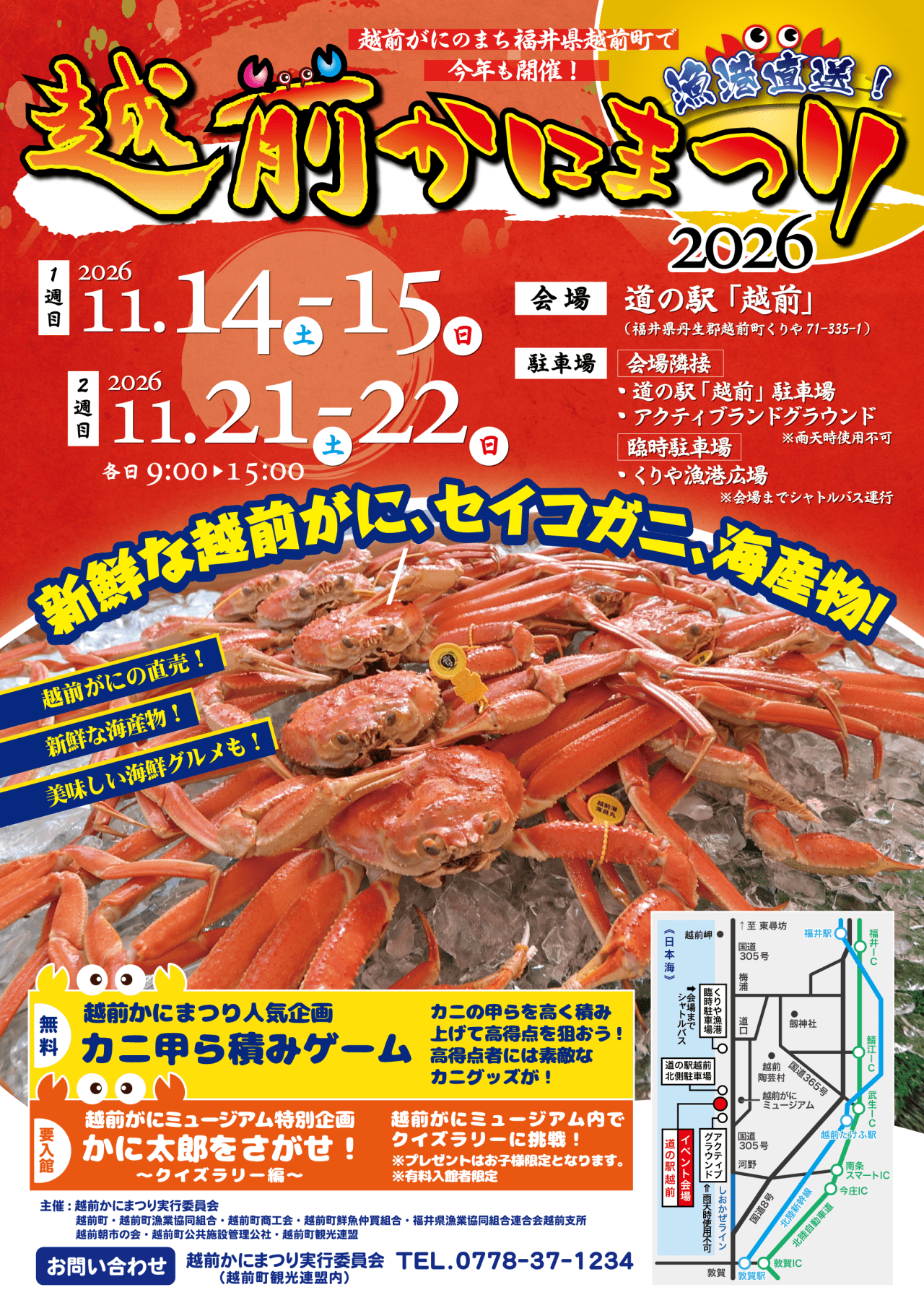
يقام في 14-15 و21-22 نوفمبر 2026 في فوكوي: بيع مباشر لسلطعون إيتشيزين ذي العلامة الصفراء، وحساء سيكو في القدور الكبرى، وتاريخ ملكي مع نصائح الوصول.
لا شيء يبشر بحلول أوائل الشتاء على بحر اليابان مثل الافتتاح الرسمي لموسم صيد سلطعون الثلج. At midnight on November 6 each year, fishing vessels set sail from Fukui Prefecture's Echizen coast before anywhere else in Japan. The male snow crabs landed here are famously known as "Echizen-gani", boasting an unrivaled historical pedigree and culinary prestige among all of Japan's branded crabs. In Echizen Town, which accounts for roughly 70% of Fukui's Echizen crab catch, the premier food festival celebrating the beginning of the season is the Echizen Crab Festival 2026.
The 2026 festival takes place across two consecutive weekends: Saturday–Sunday, November 14–15, and Saturday–Sunday, November 21–22 (4 days total) at the special outdoor venue of Michi-no-Eki Echizen Nigiwai Square. Freshly landed male Echizen crabs and female Seiko crabs are sold on the spot at discounted harbor prices. Tens of thousands of gourmet travelers gather from across the nation to savor steaming bowls of signature "Seiko Crab Soup" simmered in massive cauldrons, charcoal-grilled seafood, and freshly steamed crab shells.
This comprehensive guide provides everything you need to know about Echizen Crab Festival 2026: event dates, venue details, the 500-year history since the Muromachi period, the century-long tradition of crabs presented to the Imperial Household, Japan's original "Yellow Tag" branding introduced in 1997, the ultra-exclusive "Kiwami" grade awarded to fewer than 0.5% of catches, comparisons with San'in's Matsuba crab, and practical travel checklists to beat the crowds.
[Echizen Crab Festival 2026: Fast Facts]
• Dates: Saturday–Sunday, November 14–15 & Saturday–Sunday, November 21–22, 2026 (4 days total)
• Hours: 9:00 AM – 3:00 PM daily
• Venue: Michi-no-Eki "Echizen" Nigiwai Square (71-335-1 Kuriya, Echizen Town, Nyu District, Fukui Prefecture)
• Admission: Free (food, beverages, and merchandise sold separately)
• Highlights: Direct harbor-price sales of male Echizen and female Seiko crabs, signature Seiko crab soup, charcoal seafood grilling, steamed crab shells, and local processed marine delicacies
• Fishing Season Opening: Friday, November 6, 2026 (Male crab season runs through March 20; female Seiko crab season ends in late December)
من فترة موروماتشي إلى القصر الإمبراطوري: تاريخ أقدم سلطعون يحمل علامة تجارية في اليابان#
The earliest written record in Japanese history referring to crab under an explicit brand name dates back to 1511 (Eisho 8), in the diary Sanetaka-koki by court noble Sanetaka Sanjonishi. The diary mentions receiving crabs from Echizen Province explicitly described as "Echizen Crab", confirming that more than five centuries ago, Echizen's crab was already cherished in the imperial capital of Kyoto as an extraordinary luxury gift.
Solidifying its peerless status is the tradition of "Imperial Offering Crabs", established in December 1910 (Meiji 43). Conceived by the Governor of Fukui, premium Echizen crabs landed at Mikuni Port were presented to Crown Prince Yoshihito (later Emperor Taisho). For over 110 years since, Echizen-gani has remained the only snow crab in Japan annually presented to the Imperial Household. Offered crabs are meticulously selected by veteran brokers for shell fullness, flawless shape, ideal weight, and luster before being boiled with precision salt adjustments in oversized kettles.
In modern times, Echizen revolutionized branded seafood when the Echizen Town Fisheries Cooperative introduced the nation's first "Yellow Tag" in 1997 (Heisei 9). To distinguish authentic Fukui catches from cheaper crabs shipped from other prefectures or abroad, bright yellow plastic tags stamped with port names like Echizen or Mikuni were attached to the legs of male crabs. Its resounding success inspired rival ports across Japan—such as San'in's Matsuba crab (blue, white, or red tags) and Ishikawa's Kano crab (light blue tags)—to adopt localized provenance tags.
Furthermore, in September 2018 (Heisei 30), Echizen-gani became the first crab in Japan registered under the Ministry of Agriculture, Forestry and Fisheries' Geographical Indication (GI) Protection System. Today, the yellow tag proudly bears the national GI crest, cementing its prestige as a government-certified culinary treasure.
المنحدرات البحرية العميقة والتيارات المتلاقية: أسرار مصايد الأسماك المعجزة#
Echizen-gani is celebrated for its firm muscle fibers, delicate natural sweetness, and exceptionally rich tomalley (crab miso). These distinctive qualities stem directly from the unique subsea topography and oceanographic environment off the Echizen coast.
1. Steep Subsea Drop-Offs Just Miles from Shore
Unlike shallow coastal waters elsewhere, the seafloor off Echizen plunges abruptly into deep water. The muddy-sand habitats preferred by snow crabs (depths of 200 to 400 meters) sit right outside the harbor entrance. Small bottom-trawl vessels from Echizen Port depart before dawn, cast their nets, and return to port that very evening—enabling "Same-Day Day-Trip Operations". While large boats in other prefectures freeze or chill their catches during multi-day voyages, Echizen crabs are brought to port alive and auctioned the same evening, preserving unrivaled freshness.
2. Rich Feeding Grounds Where Warm and Cold Currents Meet
Beneath the warm surface waters of the Tsushima Current lies cold Sea of Japan deep water maintained at 1–2°C. Plankton flourishes in this thermal mixing zone, providing abundant nourishment for sweet northern shrimp (Amaebi), small fish, and bivalves—the crab's primary diet. Feeding on top-tier marine life on stepped sea shelves concentrates natural sugars within each meat fiber and enriches the crab miso.
3. Less Than 0.5% of Catches! The Legendary "Kiwami" Apex Grade
Established in 2015, the ultra-premium "Kiwami" (Extreme) brand is reserved for crabs meeting astronomical standards: minimum landing weight of 1.5 kg (1.3 kg boiled), carapace width of 14.5 cm or more, and claw thickness of 3 cm or more, coupled with flawless symmetry and shell density. Fewer than 1 in several hundred crabs (less than 0.5%) qualifies. At opening auctions, single Kiwami specimens fetch millions of yen, hailed as the crown jewels of the winter Sea of Japan.
مقارنة الأصناف الإقليمية: إيتشيزين، ماتسوبا، وكانو#
Across the Sea of Japan, male snow crabs are marketed under distinct regional brand names depending on the landing port. The comparison table below highlights their key distinctions:
| Brand Name | Landing Ports / Regions | Tag Color | History, Features & GI Status |
|---|---|---|---|
| Echizen-gani (Fukui) | Echizen Port (Kuriya, Oshima), Mikuni, Tsuruga, Obama | Yellow (Japan's 1st origin tag) | Japan's oldest brand recorded in 1511. Only Imperial Household offering crab. First crab in Japan to receive national GI registration (2018). Supreme freshness via same-day day-trip fishing. |
| Matsuba-gani (San'in) | Kyoto, Hyogo, Tottori, Shimane ports | Blue, white, or red (varies by port) | Collective name for male crabs landed in San'in. Largest distribution volume and wide brand recognition. Tottori promotes its apex brand "Itsukiboshi". |
| Kano-gani (Ishikawa) | Kanazawa, Hashidate, Wajima ports | Light Blue | Named after Kaga and Noto provinces. Known for thick legs, delicate texture, and sweet flavor. Top grade is branded as "Kagayaki". |
| Taiza-gani (Kyoto) | Taiza Port, Tango Peninsula | Green | Landed by only ~5 small day-trip boats. Extremely rare and dubbed the "Phantom Crab" due to scarce catch volumes and stringent post-auction care. |
While all share the same biological species, fishing grounds distance and landing standards craft noticeable nuances in freshness and texture. Echizen-gani remains the undisputed king thanks to its triple crown: pioneering provenance tags, imperial prestige, and rapid same-day coastal catches.
سحر أنثى السلطعون «سيكو»: كنز المأكولات الشهية المتاح لشهرين فقط#
Alongside the majestic male Echizen crab, the co-star of the festival is the female snow crab, locally known as "Seiko-gani" (also called Seko-gani or Kobako-gani).
To protect marine populations, the Seiko crab season is strictly limited to less than two months, from November 6 to December 31. Though less than half the size of males, female crabs harbor a trio of gourmet treasures: brilliant orange unfertilized internal roe called "Uchiko", crunchy external roe clusters called "Sotoko", and intensely concentrated crab miso. Many crab connoisseurs boldly declare Seiko crabs even more delicious than the prized meat of large male crabs.
[Must-Try Delicacy] Famous "Seiko Crab Soup" Simmered in Giant Kettles
Drawing immense queues every morning, the festival's signature dish is Seiko Crab Soup, prepared by simmering hundreds of whole crabs in giant cauldrons. The rich umami broth infused with crab miso, sweet roe, and savory miso broth warms you to the bone in the crisp coastal air. Provided in limited quantities daily, checking line status and meal tickets upon arrival is crucial.
قائمة التحقق الميدانية ودليل المواصلات لمهرجان سلطعون إيتشيزين#
During festival weekends, Route 305 along the Echizen coast experiences heavy traffic. Following this practical checklist guarantees you secure your prized crabs at harbor prices without hassle:
[Echizen Crab Festival 2026 Strategy Checklist]
■ Golden Rules for Arrival
• Arrive by 8:30 AM: Gates open at 9:00 AM. Popular Seiko crab soup and promotional bargain crabs often sell out before noon.
• Bring insulated cooler bags: Purchased fresh crabs and cured seafood can be transported directly (on-site shipping counters are also available).
■ Optimal Itinerary Order
[1] Upon arrival, verify Seiko Crab Soup lines or ticket distribution.
[2] Tour the fresh seafood market tents to compare prices for yellow-tagged Echizen crabs.
[3] Savor freshly boiled Seiko crab shells and grilled seafood skewers before purchasing gifts.
[4] Relax in the adjacent "Echizen Onsen Open-Air Bath Isaribi" overlooking the Sea of Japan.
■ Transport & Parking
• Venue: Michi-no-Eki "Echizen" Nigiwai Square (~300 standard parking spaces + temporary lots).
• By Car: ~45 min from Hokuriku Expressway Tsuruga IC via Route 8 and Route 305; or ~40 min from Takefu IC / Sabae IC via Route 365.
• By Public Transit: From JR Hokuriku Shinkansen Echizen-Takefu Station or Hapi-Line Fukui Takefu Station, board the Fukui Railway Bus (bound for Kareizaki) and alight at "Michi-no-Eki Echizen".
خاتمة: عيشوا دفء ونكهات ساحل إيتشيزين الشتوية الفاخرة
With brisk sea breezes blowing off the stormy waters and fragrant steam rising high from giant cauldrons, the Echizen Crab Festival offers a sensory encounter with Japan's most illustrious seafood heritage. Visit Echizen Town this winter to taste authentic yellow-tagged Echizen crabs fresh from the sea and immerse yourself in the boundless bounty of Fukui.
[المصادر الرسمية]