Sony ELF-MN1 6-Inch Spatial Reality Display: Potential & Rivals Compared
Sony unveiled the 6-inch glasses-free 3D Spatial Reality Display ELF-MN1 (~54,000 JPY, out Dec 11, 2026). Featuring dark-room IR tracking and smartphone USB-C link, here is our full comparison.
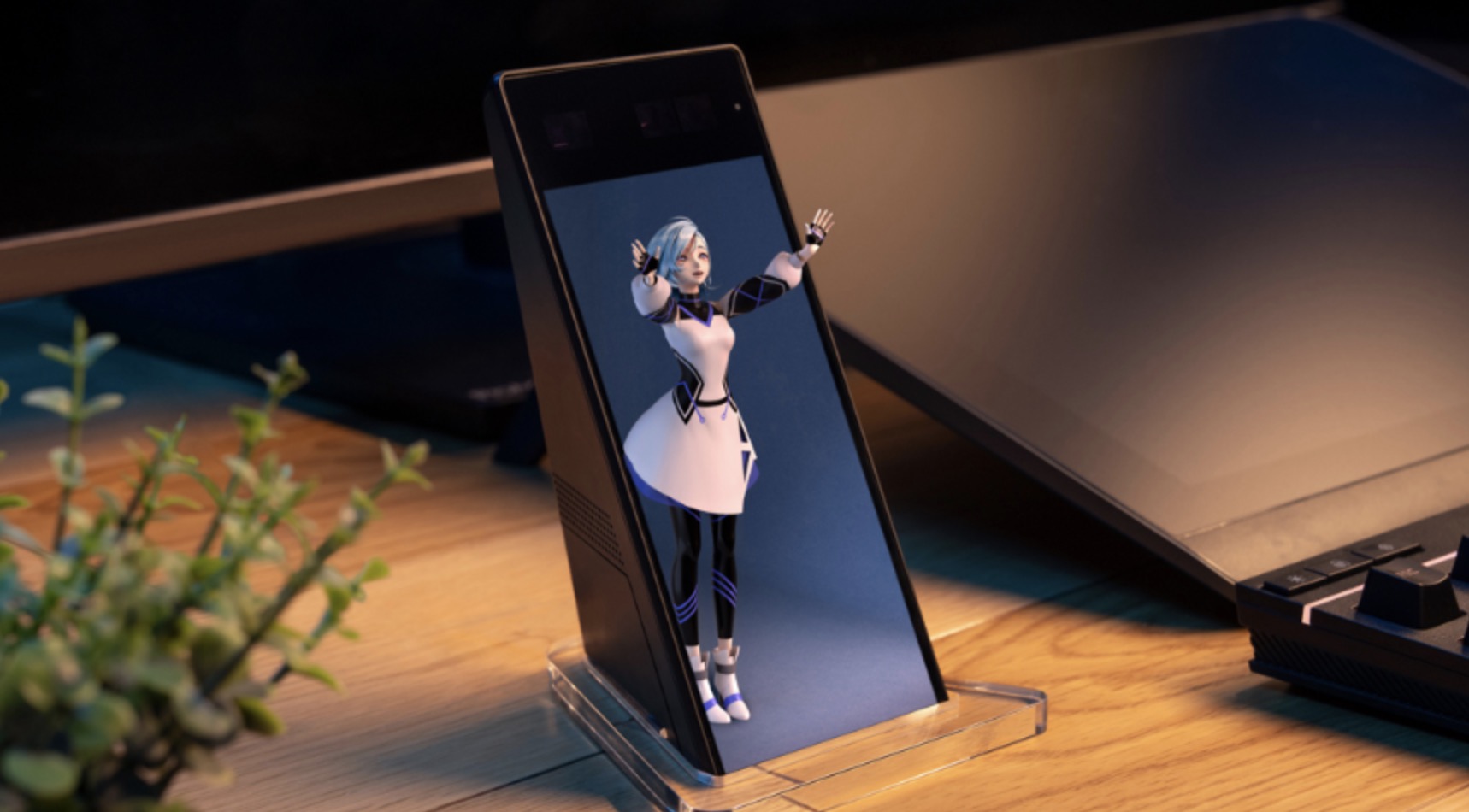
Experiencing lifelike three-dimensional imagery with the naked eye—without wearing specialized glasses or bulky VR headsets—has long been a dream of science fiction, and a major new release is bringing that experience directly onto personal desktops. On October 28, 2026, Sony announced the 'ELF-MN1,' a compact 6-inch Spatial Reality Display expanding its 'XYN' spatial content creation ecosystem. Scheduled for release on December 11, 2026, the unit carries an estimated market price of around 54,000 JPY (including tax).
Whereas Sony's previous Spatial Reality Displays were large-format monitors priced between 200,000 and 550,000 JPY primarily aimed at enterprise and B2B studios, the new 'ELF-MN1' slashes the entry price to roughly one-tenth—into the 50,000 JPY bracket—while enabling single-cable USB Type-C direct connectivity with iOS and Android smartphones as well as Windows PCs. Furthermore, a newly integrated infrared (IR) sensor tracks the user's pupils accurately even in pitch-dark rooms, making it uniquely tailored for personal spaces, digital figure appreciation, and indie 3D creators.
Based on Sony's official release specifications, this article explores the technical breakthroughs and future possibilities of the 'ELF-MN1,' while conducting an in-depth comparison against rival compact light-field displays such as the 'Looking Glass Go' and high-end professional spatial monitors like the 'ELF-SR2' and large-format 'Looking Glass' series.
【Product Highlights】 Sony Spatial Reality Display 'ELF-MN1' Core Specifications
・Product Name / Model:Spatial Reality Display 'ELF-MN1'
・Announced / Release Date:Announced October 28, 2026 / Releases December 11, 2026
・Estimated Market Price:Approx. 54,000 JPY (tax included, open price)
・Screen Size & Resolution:Approx. 6 inches (1080 × 2160 pixels, series-highest pixel density of 403 ppi)
・3D Display Method:High-precision micro-optical lens + High-speed vision sensor (2-viewpoint autostereoscopic)
・Eye-Tracking System:Newly equipped with an Infrared (IR) sensor alongside vision sensors (supports 0-lux dark rooms)
・Connectivity Ports:1× USB Type-C (DisplayPort Alternate Mode), 1× Power USB Type-C (USB PD up to 45W input / supplies up to 15W to connected smartphones)
・Supported Devices & SDKs:Windows PC, iOS / Android smartphones, Unity SDK, OpenXR compliant
・Dimensions & Weight:Approx. 77 × 154 × 94.5 mm (including stand) / Approx. 300 g (350 g with accessories)
From 500,000 JPY Pro Monitors to a 50,000 JPY Personal Device: The Evolution of Spatial Reality#
Sony's journey with the Spatial Reality Display (SRD) began in October 2020 with the launch of the first-generation 15.6-inch 'ELF-SR1' (estimated around 500,000 JPY). Using a high-speed vision sensor mounted above the bezel to track the viewer's left and right pupils in milliseconds, combined with a surface micro-optical lenticular lens, it delivered astonishing depth and parallax to the naked eye.
In June 2023, Sony followed up with the second-generation 27-inch 4K 'ELF-SR2' (approx. 550,000 JPY), adding a super-resolution engine and wide color gamut support (approx. 100% Adobe RGB). The ELF-SR2 earned strong adoption across B2B fields including automotive clay-model replacement reviews, architectural visualization, 3D medical CT/MRI surgical planning, and museum exhibits.
Nevertheless, both previous models required not only a substantial hardware budget but also a workstation equipped with a high-end discrete GPU, placing them out of reach for general consumers and solo creators. The third-generation 'ELF-MN1' fundamentally dismantles those barriers. By condensing the panel into a smartphone-sized 6-inch vertical display at a razor-sharp 403 ppi and supporting plug-and-play smartphone connection, Sony is expanding its 'XYN' spatial platform from professional studios directly into bedrooms and home desks.
Innovative Technologies of the 'ELF-MN1' and Four Transformative Possibilities#
Far from being a mere downsized budget version, the 'ELF-MN1' incorporates dedicated engineering designed specifically for everyday personal living spaces. Four major possibilities stand out:
1. Dark-Room & Bedside 3D Enabled by the New Infrared (IR) Sensor
Previous Spatial Reality Displays relied solely on visible-light cameras, meaning eye-tracking performance degraded in dimly lit rooms. By adding a dedicated IR sensor, the ELF-MN1 maintains pinpoint pupil tracking even in 0-lux darkness—perfect for gaming setups with ambient lighting turned off or displaying a 3D character on a nightstand before sleep.
2. Smartphone Direct Link & Power Delivery for Digital Figures and Fandom ('Oshikatsu')
Connecting a DisplayPort Alt Mode-capable iPhone or Android device via a single USB-C cable outputs 3D visuals immediately. When connected to a 45W USB PD power adapter, the display supplies up to 15W of pass-through charging to the smartphone, allowing continuous display of digital figures—such as Gugenka's 'HoloModels'—like a living 3D acrylic stand.
3. Seamless Acrylic Stand Aesthetics & Embodied AI Companions
A transparent acrylic base blurs the visual boundary between the screen and the desk surface. Combined with the built-in speaker and microphone, pairing the display with conversational large language models (LLMs) and voice synthesis makes it an ideal physical vessel for interactive desktop AI assistants and virtual partners.
4. Practical 3D Sub-Monitor for Indie Creators
Weighing just 300 grams, it tucks neatly beside any standard monitor. With official Unity SDK and OpenXR support, VTuber modelers, VRChat avatar creators, and indie game developers can inspect 3D proportions, shaders, and lighting instantaneously without repeatedly putting on a VR headset.
【Personal Rivals Compared】 Sony 'ELF-MN1' vs. Compact Glasses-Free 3D Competitors#
In the 6-inch personal autostereoscopic display category, notable pioneers include Looking Glass Factory's 'Looking Glass Go' and the character summoning device 'Gatebox.' While the 'ELF-MN1' and 'Looking Glass Go' share a similar 6-inch form factor and ~50,000 JPY price point, their optical architectures represent two fundamentally different philosophies.
The core distinction lies between 'single-viewer precision optimization (eye-tracking lenticular)' and 'multi-viewer simultaneous viewing (light-field).' Sony's ELF-MN1 tracks a single user's eyes and dedicates every pixel exclusively to that viewer's left and right perspectives, achieving virtually zero crosstalk and ultra-crisp 403 ppi clarity. Conversely, Looking Glass Go projects 45 to 100 simultaneous light-field views across a wide viewing cone without camera tracking—allowing multiple people to peer at the 3D image simultaneously, though with softer per-view resolution compared to Sony's targeted approach.
【Compact Personal 3D Display Comparison】 Sony ELF-MN1 vs. Key Competitors
| Product Name | 3D Optical Technology | Screen & Key Features | Price Range & Best Use Cases |
|---|---|---|---|
| Sony ELF-MN1 | High-speed vision + IR eye-tracking sensor + Micro-optical lens (Single-viewer 2-view) | 6-inch (403 ppi). Works in 0-lux darkness, direct smartphone USB-C link & 15W charging, built-in mic/speaker. | Approx. 54,000 JPY. Ultra-sharp personal desktop figures, 3D asset inspection, dark-room ambiance. |
| Looking Glass Go | Light-field technology (projects up to ~100 simultaneous perspectives; no eye-tracking needed) | 6-inch (1440 × 2560). Standalone Wi-Fi cloud playback mode, foldable stand, ultra-thin portable body. | Approx. 50,000–60,000 JPY. Multi-person desktop sharing, AI avatars, 2D-to-3D hologram photos. |
| Looking Glass Portrait | Light-field technology (45–100 views with thick refractive optical block) | 7.9-inch (1536 × 2048). Built-in Raspberry Pi for standalone playback; pioneering creator model. | Approx. 60,000–70,000 JPY. Digital art installations, holographic photo frames, 3D character art. |
| Gatebox | Cylindrical rear-projection transparent screen system (2D Pepper's Ghost style depth) | Projects characters floating inside a capsule chamber. Specialized in voice interaction and smart home control. | Approx. 150,000+ JPY. Living with virtual characters, interactive retail/event reception. |
【Professional Equipment Comparison】 High-End Spatial Displays in Enterprise Studios#
While the 'ELF-MN1' targets personal desks and mobile connectivity, professional production pipelines—spanning industrial CAD design, medical imaging, film VFX, and commercial exhibitions—rely on high-end spatial displays ranging from several hundred thousand to several million yen. Examining these professional tiers clarifies the broader hierarchy of the spatial display market.
1. Sony Flagship 'ELF-SR2' (27-inch) / 'ELF-SR1' (15.6-inch)
Sony's flagship 27-inch 4K ELF-SR2 offers ~100% Adobe RGB color accuracy and hardware calibration for architectural BIM reviews, automotive styling, and surgical simulation. Supported by plugins for Maya, Blender, ZBrush, Unreal Engine, and Unity, it serves as the ultimate studio workstation for creators who start on the ELF-MN1.
2. Looking Glass Professional Series (16-inch / 32-inch / 65-inch)
Where group viewing without glasses is mandatory—such as trade shows, museums, and executive design reviews—Looking Glass Factory's large-format displays dominate. The 'Looking Glass 16" Spatial Display' features a 4K OLED panel, while the 'Looking Glass 32"' and massive 'Looking Glass 65"' boast 8K resolution capable of presenting life-size 3D holograms to dozens of viewers simultaneously.
3. Acer 'SpatialLabs View Pro' Series & All-in-One Laptops
Acer combines stereo eye-tracking cameras with switchable lenticular lenses that toggle instantly between standard 2D monitor mode and glasses-free 3D mode. Models like the 27-inch 'SpatialLabs View Pro 27' and creator laptops give mobile professionals a versatile 2D/3D hybrid workflow.
【Pro Equipment to Personal Units】 Comprehensive Spatial & Glasses-Free 3D Display Comparison
| Model Name | Size & Resolution | Viewers & Tracking Method | Price Bracket & Primary Applications |
|---|---|---|---|
| Sony ELF-MN1 (New Release) | 6-inch / 1080 × 2160 (403 ppi) | 1 viewer (Vision + IR sensor; 0-lux dark support) | Approx. 54,000 JPY. Personal desktop, smartphone 3D apps, indie dev sub-monitor, compact retail POP. |
| Sony ELF-SR2 (Pro Flagship) | 27-inch / 3840 × 2160 (4K) | 1 viewer (High-speed vision eye-tracking) | Approx. 550,000 JPY. Industrial CAD review, medical 3D imaging, professional 3DCG studios, museum kiosks. |
| Acer SpatialLabs View Pro 27 | 27-inch / 3840 × 2160 (4K, 2D/3D switchable) | 1 viewer (Stereo camera eye-tracking with IR) | Approx. 450,000–500,000 JPY. Hybrid 2D/3D professional creation, architectural & manufacturing review. |
| Looking Glass 16" Spatial Display | 16-inch / 4K OLED | Multiple viewers (45–100 view light-field) | Approx. 600,000 JPY (~$4,000 USD). Small-team 3D design collaboration, luxury showroom presentations. |
| Looking Glass 32" / 65" Spatial Display | 32-inch / 65-inch / 8K Resolution | Large groups (Up to dozens of viewers; light-field) | Several million JPY (Enterprise quote). Global expos, commercial digital signage, scientific visualization. |
Synergy with Sony's 'XYN' Spatial Ecosystem & Buyer's Selection Guide#
A pivotal context behind the 'ELF-MN1' is Sony's overarching spatial content initiative, 'XYN.' Alongside the 'mocopi' mobile motion-capture system, high-definition XR head-mounted displays, and spatial capture solutions, Sony is building an end-to-end pipeline for capturing and crafting 3D assets. The ELF-MN1 serves as the most accessible everyday display output for that ecosystem.
【By Use Case】 Which Spatial Display Should You Choose?
- For displaying favorite 3D characters or custom avatars on your desk with maximum clarity via smartphone or PC:Choose the newly announced Sony 'ELF-MN1.' Its 403 ppi density, dark-room IR sensor, and ~54,000 JPY price make it unmatched for personal enjoyment.
- For sharing 3D visuals with family or multiple guests simultaneously from different angles without glasses:Choose the multi-view light-field 'Looking Glass Go' (personal) or 'Looking Glass 16" / 32"' (commercial).
- For professional CAD engineering, medical visualization, and color-critical 3DCG modeling at scale:Choose the 27-inch 4K professional monitors—Sony 'ELF-SR2' or 'Acer SpatialLabs View Pro 27.'
Winter 2026: When Glasses-Free 3D Shifts from Studio Gear to Everyday Life#
Until now, glasses-free 3D displays were either expensive studio equipment reserved for enterprise budgets or experimental gadgets requiring compromises in resolution. By packing its acclaimed high-speed eye-tracking and micro-optical lens technology into a 6-inch, 403 ppi frame with smartphone plug-and-play and dark-room tracking, Sony's 'ELF-MN1' redefines how we interact with digital 3D creations.
Ahead of its December 11, 2026 release, hands-on preview exhibitions will be held at Sony Stores across Japan (Ginza, Sapporo, Nagoya, Osaka, and Fukuoka Tenjin). Step up and witness digital characters transcending the flat screen to inhabit your everyday space.
【Official Sources & References】