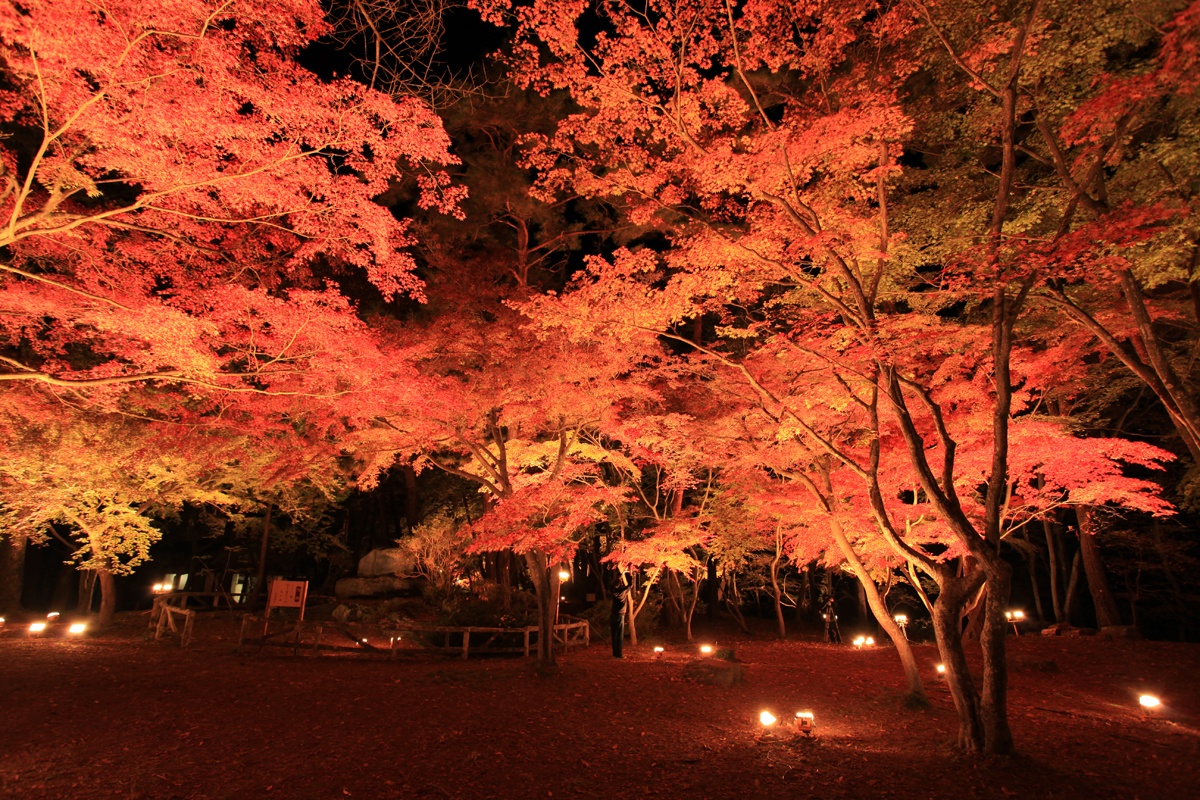
Nagatoro Autumn Leaves Festival 2026: Iwadatami & Moonstone Lights
Held from Nov 1–30, 2026, in Nagatoro, Saitama, this festival features the breathtaking Iwadatami rocks, Arakawa riverboat cruises, and magical illumination at Tsuki-no-Ishi Momiji Park.
As autumn deepens, Nagatoro Town in Chichibu District, Saitama Prefecture—cradled by the crisp mountain air of the Chichibu ranges and the pristine waters of the Arakawa River—becomes blanketed in fiery vermilion and radiant gold. The "Nagatoro Autumn Leaves Festival 2026," held throughout November from Sunday, November 1 to Monday, November 30, attracts hundreds of thousands of visitors annually as one of the premier day-trip autumn destinations in the Greater Tokyo area.
With an abrupt cold snap arriving this year, local foliage has begun turning earlier than usual, promising prime viewing conditions by mid-November.
From the magnificent contrast of autumn foliage mirrored on the water against the "Iwadatami" rock terraces—a designated National Place of Scenic Beauty and Natural Monument—to the thrilling riverboat views on the classic "Nagatoro Line Kudari" navigated by skilled boatmen, and the enchanting evening illuminations at "Tsuki-no-Ishi Momiji Park," Nagatoro's autumn charms enchant visitors day and night. This comprehensive guide covers the 2026 schedule, geological and cultural heritage, key scenic spots, comparative advantages, and essential tips for a smooth visit.
[Nagatoro Autumn Leaves Festival 2026 Highlights]
・Festival Period: Sunday, November 1 – Monday, November 30, 2026
・Peak Foliage: Color begins late October; peak colors from mid- to late November
・Main Venues: Tsuki-no-Ishi Momiji Park, Nagatoro Gorge (Iwadatami & Chichibu Sekiheki), Mt. Hodo, Hodosan Shrine, Saitama Museum of Natural History
・Evening Illumination: Friday, November 6 – Sunday, November 29, 2026 (16:00–21:00 at Tsuki-no-Ishi Park and select sites)
・Park Admission: 500 yen for junior high school students and older (re-entry passport valid throughout the period); free for elementary school students and younger
Major Venues & Highlights Overview 2026#
Below is a comparative breakdown of key venues during the 2026 festival, highlighting the diverse geological and scenic profiles concentrated within Nagatoro.
| Venue Name | Key Highlights & Scenic Features | Dates & Illumination Hours | Admission & Access |
|---|---|---|---|
| Tsuki-no-Ishi Momiji Park | A dense canopy of Japanese maples creating a tunnel of red and gold. Primary venue for evening illuminations. | Nov 6 – Nov 29 (Lit from 16:00 to 21:00) | 500 yen (Re-entry passport) 5-min walk from Kami-Nagatoro Station |
| Iwadatami & Nagatoro Gorge | National Scenic Monument featuring crystalline schist terraces and river reflections beneath the Chichibu Red Cliff. | Open all day throughout the festival (Daytime river cruise recommended) | Free walking access (Cruise fare separate) 5-min walk from Nagatoro Station |
| Mt. Hodo & Hodosan Shrine | Panoramic views of the Chichibu peaks from the 497m summit. Reverent autumn foliage across historic shrine grounds. | Ropeway runs daytime Shrine torii and approach illuminated at night | Shrine grounds free (Ropeway fare applies) 15-min walk from Nagatoro Station |
| Saitama Museum of Natural History | Adjacent to Tsuki-no-Ishi Park. Garden maple forest illumination alongside an illuminated giant Megalodon skeleton model. | Nov 6 – Nov 29 (Outdoor lit 16:00–21:00) | Outdoor garden free (Museum general admission 200 yen) 5-min walk from Kami-Nagatoro Station |
| Kanaishi Suikan-kyo Aqueduct | Pedestrian-only suspension aqueduct offering a 360-degree panoramic vantage point overlooking the gorge and passing riverboats. | Open all day throughout the festival (Sunset views particularly stunning) | Free 15-min walk from Nagatoro Station |
Born of the Earth: The Cradle of Japanese Geology and Ancient Waters#
What sets Nagatoro apart from any other foliage destination in Japan is the seamless coexistence of dramatic geological formations sculpted over hundreds of millions of years and lush riparian deciduous ecosystems.
The bedrock of Nagatoro is composed of high-pressure crystalline schist (part of the Sambagawa Metamorphic Belt) pushed up to the surface. In 1878 (Meiji 11), German geologist Dr. Heinrich Edmund Naumann—acclaimed for his discoveries of the Naumann elephant fossils—conducted geological fieldwork here with students from the University of Tokyo, marking the foundational step of modern earth sciences in Japan. Nagatoro was thus dubbed the "Cradle of Japanese Geology" and was officially designated both a National Place of Scenic Beauty and a Natural Monument on December 9, 1924 (Taisho 13). Having celebrated its centennial in 2024, its conservation legacy endures proudly today.
The very name "Nagatoro" derives from the serene, deep, and slow-moving pool of river water known as "Toro," stretching uninterrupted for an extended distance. This mirror-like surface reflects the precipitous red cliffs ("Chichibu Sekiheki") and the golden foliage of Japanese maples and oaks, producing an irreplaceable landscape found nowhere else.
Literary Heritage: Kyoshi Takahama's Footsteps on the "Moonstone"#
Nagatoro's breathtaking scenery has inspired literary figures and artists for generations. Renowned poets and authors visited throughout the Meiji, Taisho, and Showa eras, immortalizing its pristine beauty in verse and prose.
The name of the festival's central venue, "Tsuki-no-Ishi Momiji Park," originates from a stone haiku monument honoring the preeminent modern haiku master Kyoshi Takahama. Visiting Nagatoro in 1940 (Showa 15), Kyoshi was captivated by the flat, glistening crystalline schist bathed in moonlight along the riverbank and composed:
[Kyoshi Takahama's Famous Verse on the Monument]
"Koko ni ware kuku o todomubeki tsuki no ishi"
("Here upon this moon-like stone, I shall leave my verse.")
Likening the pale, bluish stone illuminated by the moon to a celestial fragment, Kyoshi's poetic vision remains engraved on the green-schist monument erected in the autumn of 1953 in the heart of the park, enveloped by vivid scarlet maples.
Similarly, beloved author and poet Kenji Miyazawa visited Nagatoro during a student geological excursion in September 1916 (Taisho 5) while attending Morioka Imperial College of Agriculture and Forestry. Struck by the beauty of the banded crystalline schist along the Arakawa River, he penned postcards containing tanka poems to his close confidant Kanai Hosaka—including the celebrated verse comparing the striped rocks to an elegant Hakata obi sash, now commemorated with a monument beside the Museum of Natural History. Modern industrialist Eiichi Shibusawa likewise championed the development of the Chichibu Railway to invigorate the regional economy and cultural tourism.
Comparative Analysis: Why Nagatoro Stands Out Among Autumn Resorts#
Within the Kanto region, travelers have many autumn options, such as Mt. Takao, Nikko, Okutama, and the Yoro Valley. Nagatoro distinguishes itself through several decisive advantages:
1. Dynamic River-Level Perspective (Nagatoro Line Kudari)
Unlike destinations centered on arduous mountain hikes, Nagatoro invites visitors to view foliage from the water aboard traditional wooden riverboats. Gazing upward at the towering Chichibu Red Cliff mirrored on the river while listening to the rhythmic splash of the boatman's pole offers an unparalleled sensory adventure.
2. Compact, Flat Walking Routes
While deep mountain gorges often require navigating steep, strenuous terrain, Nagatoro's core attractions—from Kami-Nagatoro Station through Tsuki-no-Ishi Park, the Iwadatami terraces, and Nagatoro Station—are linked by flat, comfortable walking paths within an easy 15- to 20-minute stroll. This makes it exceptionally accessible for families with small children and seniors alike.
3. Outstanding Value with the Re-Entry Passport
Admission to the Tsuki-no-Ishi Momiji Park illumination is just 500 yen for junior high school students and older, designed as a multi-entry passport valid throughout the entire festival run. Visitors can enjoy daylight foliage, relax at cafes or visit Hodosan Shrine in the afternoon, and return at nightfall for the illumination without purchasing a second ticket.
Nagatoro Autumn Leaves Festival 2026 Practical Field Guide#
To maximize your enjoyment and avoid common travel bottlenecks, keep the following practical tips in mind:
[Essential Field Guide & Five Golden Rules]
・Timing Your Peak Visit: Color progression typically begins around early November, peaking between November 15 and 25. Check daily updates on the official Nagatoro Tourism Association social channels.
・Prefer Public Transit: On weekends and holidays during the festival, National Route 140 and local parking lots around Nagatoro Station experience severe traffic gridlock. Taking the Chichibu Railway via Kumagaya or Yorii, or accessing via the Seibu Chichibu Line, ensures a stress-free trip.
・Confirm River Cruise Status: Riverboat operations can be paused or modified due to fluctuating water levels following heavy rain or strong winds. Check early morning operating bulletins from Chichibu Railway on the day of your visit.
・Prepare for Evening Chills: Due to the inland Chichibu Basin microclimate, temperatures drop precipitously after dusk. While daytime can be mild, evening illuminations often drop below 10°C (and sometimes near 5°C). Bring heavy coats, scarves, and gloves.
・Savor Local Culinary Specialties: Warm your body with regional delicacies, including handmade soba noodles, Chichibu miso pork rice bowls, steaming "miso potato" skewers, and natural shaved ice featuring seasonal autumn chestnut and sweet potato flavors.
Conclusion: An Autumn Journey Through History and Light#
From the ancient bedrock sculpted by the Arakawa River to the tranquil maple groves cherished by literary masters, and the radiant golden and crimson evening illuminations, Nagatoro Autumn Leaves Festival 2026 brings together geological grandeur and cultural warmth during one unforgettable month.
Whether embarking on an easy day excursion from Tokyo or combining your visit with an overnight stay in the hot springs of Chichibu, Nagatoro promises memories that linger long after the leaves have fallen. This autumn 2026, immerse all your senses in the timeless beauty of Nagatoro.